

Architecture
Architecture historical pictures album
An idea is salvation by imagination.
Frank Lloyd Wright
Introduction
Overview
Today- Skylon Tower - Niagra
- Jefferson Memorial
- Fallingwater
- Princeton U. Chapel window
- California Building
- Larkin Building
- Wainwright Building
- Eiffel Tower
- Westmnister - House of Parliament
- Millford Plantation
- Spiral stair - Auburn
- The Arc de Triomphe
- Citadelle Laferriere
- U.S. Capitol
- Mission Santa Barbara
- Monticello
- Kenmore Home - Millbrook
- Montpelier
- Mount Vernon
- Alamo
- The Governor's Palace - Williamsburg
- Chahar Bagh Iranian College
- The House of seven gables
- Taj Mahal
- Church Santa Maria Della - Venice
- Edinburg Scotland - Eidyn stronghold
- Castillo de San Marcos - St. Augustine
- Chateau de Chambord
- Stirline city - Scotland
- Blarney Castle
- Bodium Castle
- Albi Cathedral
- Stained glass - Tewkesbury Abbey
- Caernarvon Castle
- Denvegan Castle
- Norte Dame Cathedral
- Taos Pueblo
- Windsor castle
- Pisa Cathedral & tower
- Saint Martindu Abbey
- St Michels Chapel
- Five-storied Pagoda Nara, Japan
- Santa Sofia - Constantinople
- Chuch of Daphni
- Petra
- Pont DuGard Aqueduct
- Temple of Jupiter
- Temple of Apollo - Delphi
- Temple of Apolla - Epicurius
- Temple of Concordia - Sicily
- Acropolis - Athens
- Dionysus Theater
- Gate of Ishtar
- Great Wall of China
- Assyrian Temple
This page provides fifty plus images to use to discuss architecture. They are arranged in chronological order. Which generally shows how designs change in response to science and technology. Compare the architecture to the changes in science & technology.
Enjoy!
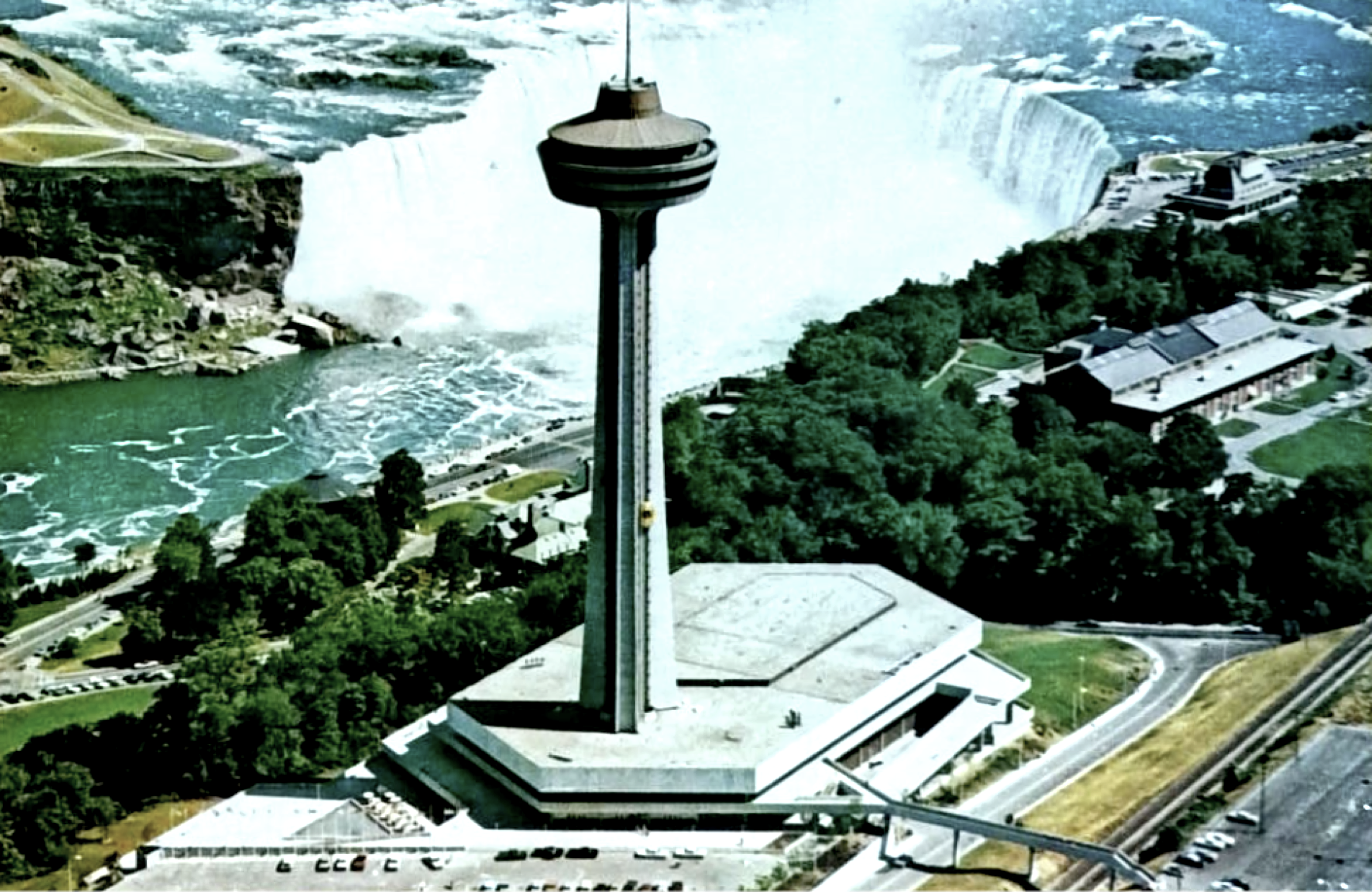
Skylon Tower - Niagra Falls - Built 1964 - 1965
The Skylon Tower
Designed by a Toronto architectural firm Bregman and Hamann with the construction done by the Pigott Construction Company of Hamilton, Ontario.
Largely financed by Charles Richard Reese, the son of the man who invented Reese's Peanut Butter Cups.
It was built using a "slip-form" technique to allow for a continuous pour of concrete into a mold that moves up slowly so that the main column of the toweris finished in nine days!
Yellow Bug elevators take you to the top on the outside of the building. They are the very first glass-enclosed outside elevators in all of Canada.
A top is an observation deck to see all the way to Toronto and Buffalo.
Adining room at the top rotates 360 degrees every hour allowing guests to see both the American and Canadian views without leaving their seats
Jefferson Memorial - Built 1939 - 1943

Jefferson's memorial
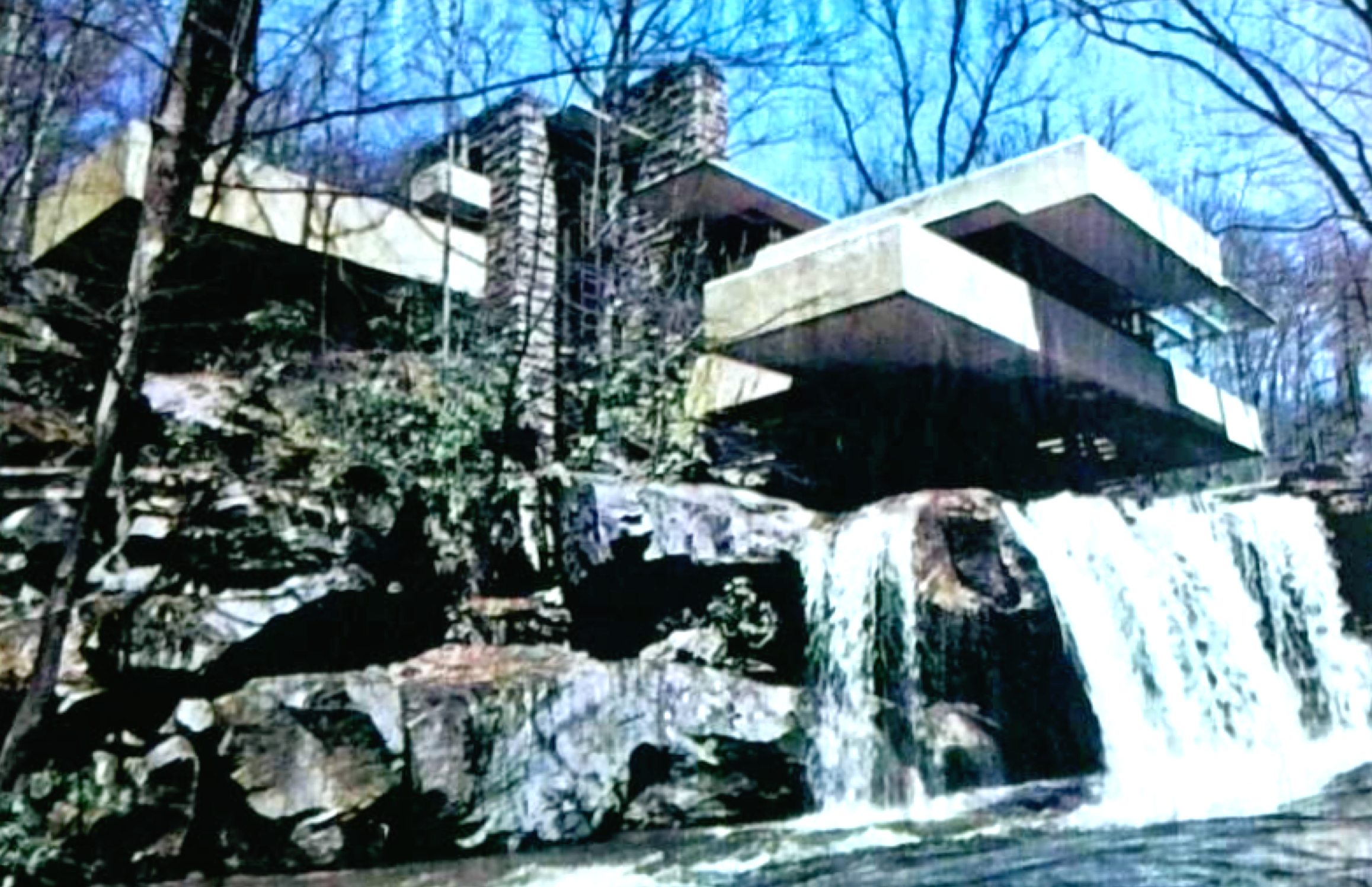
Fallingwater - Built 1935
Fallingwater
Fallingwater at Mill Run, Pennsylvania is designed in 1935 by the Frank Lloyd Wright.
In the mountains about 70 miles southeast of Pittsburgh where local craftsmen quarried stone right from the property to build it.
It is built as a private weekend vacation cabin for the Kaufmann family.
Princeton University Chapel window - Built 1920
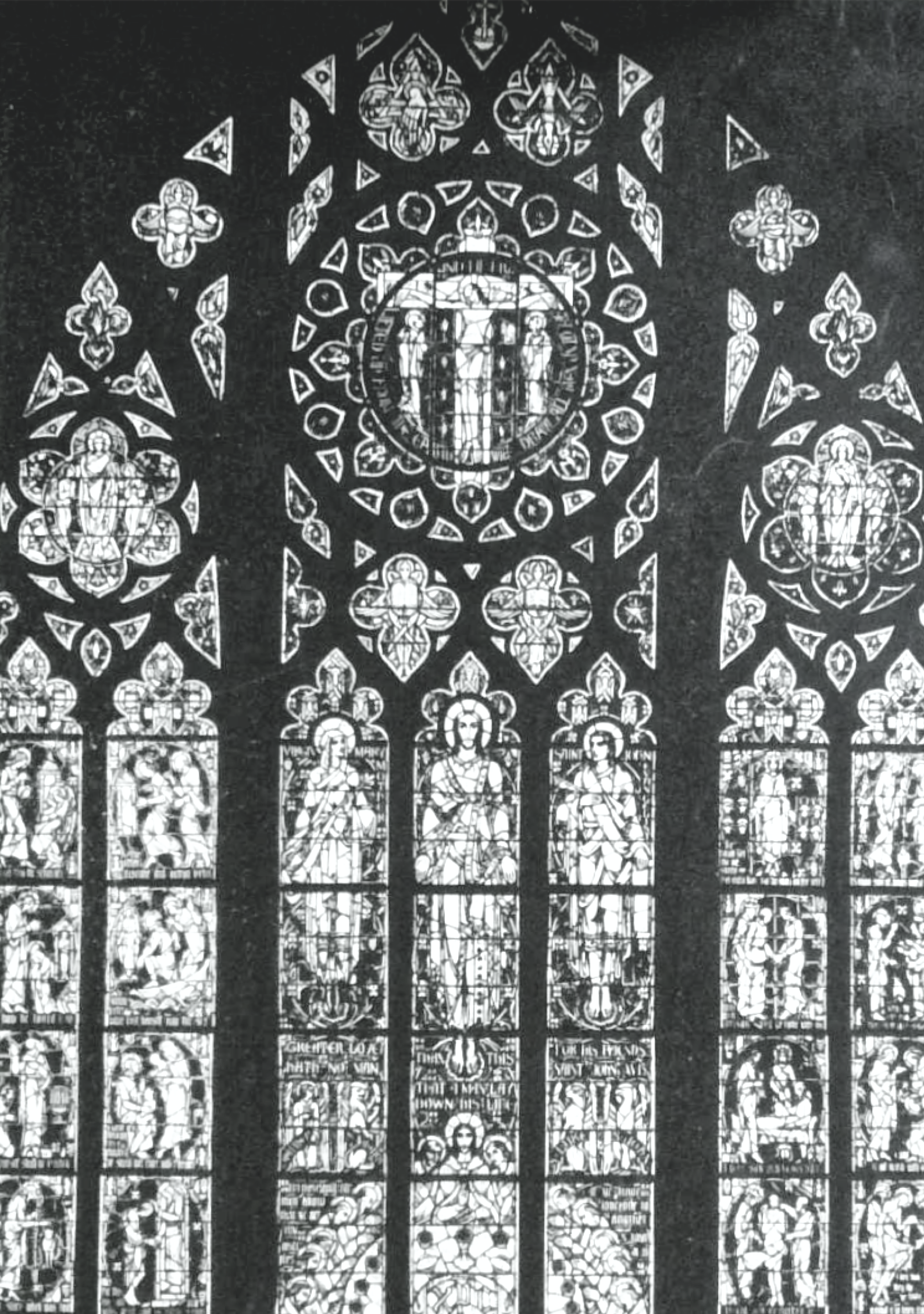
The Great East Chapel window - Princeton University
Designed by Charles J. Connick, a legendary American stained-glass artist famous for using brilliant, deep blue glass.
Is one of the most valuable collections of stained glass in the Western Hemisphere. Several unique details make it stand out:
The morning sun rises pours through this glass, bathing the gray stone interior in a glowing shower of multicolored light.
It represents The Love of Christ and was the center of a major religious feud during its creation in the 1920s.
The university's president, John Grier Hibben, a conservative Presbyterian, wanted traditional strict imagery. However, the Milbank family (who paid for the window) didn't. The two fought over the designs settling on a narrative that illustrates the Sermon on the Mount, acts of mercy, and the life of Christ.
The window reads like a comic strip. With dozens of tiny, detailed scenes. You read four long vertical panels from left to right, and the individual pictures in the panels from top to bottom. It culminates at the top with a large rose window depicting the Crucifixion.
️This East Window does not stand alone. It is the emotional anchor for the entire building's artistic layout, which features four giant vitrine windows each facing a cardinal direction and celebrating a different pillar of human spiritual life:
- East Window: Love (The compassionate life of Christ)
- West Window: The Second Coming of Christ
- North Window: Endurance (Christ the Martyr)
- South Window: Teaching (Christ the Teacher
California Building - Built 1915

The California Building in San Diego, CA
It now houses the Museum of Us.
Is built in 1915 for the Panama-California Exposition.
Designed by the Bertram Goodhue.
Larkin Building - Built 1904 - 1906
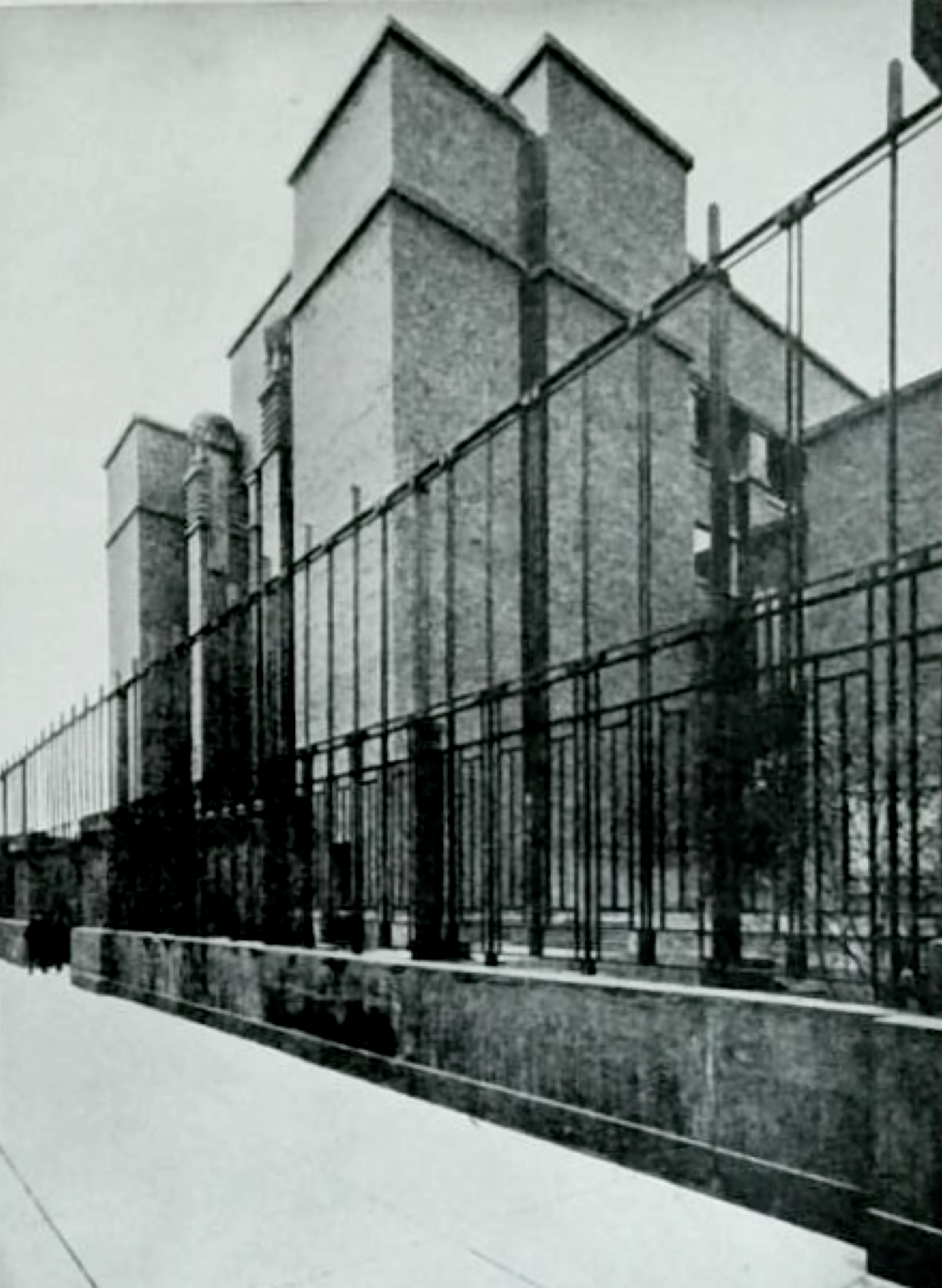
Larkin Building - Buffalo, New York
A famous office building designed by architect Frank Lloyd Wright.
It was built as the headquarters for the Larkin Soap Company, a massive mail-order business owned by John D. Larkin.
A modern masterpiece of architecture.
It had the first air-conditioned office spaces in history. With the air being washed and cooled.
The air is cleande becasue of the dirty coal soot coming from nearby train tracks and factories.
Frank Lloyd Wright designed the built-in metal desks, chairs, and light fixtures. Suspended toilet bowls that hung from the bathroom walls to make cleaning the floors easier.
The outside looked like a dark-red brick fortress. However, the inside opened up into a beautiful, five-story central courtyard flooded with natural light from a giant glass skylight.
Sadly gone today: demolished in 1950.
Wainwright Building in St. Louis - Built 1890 - 1891
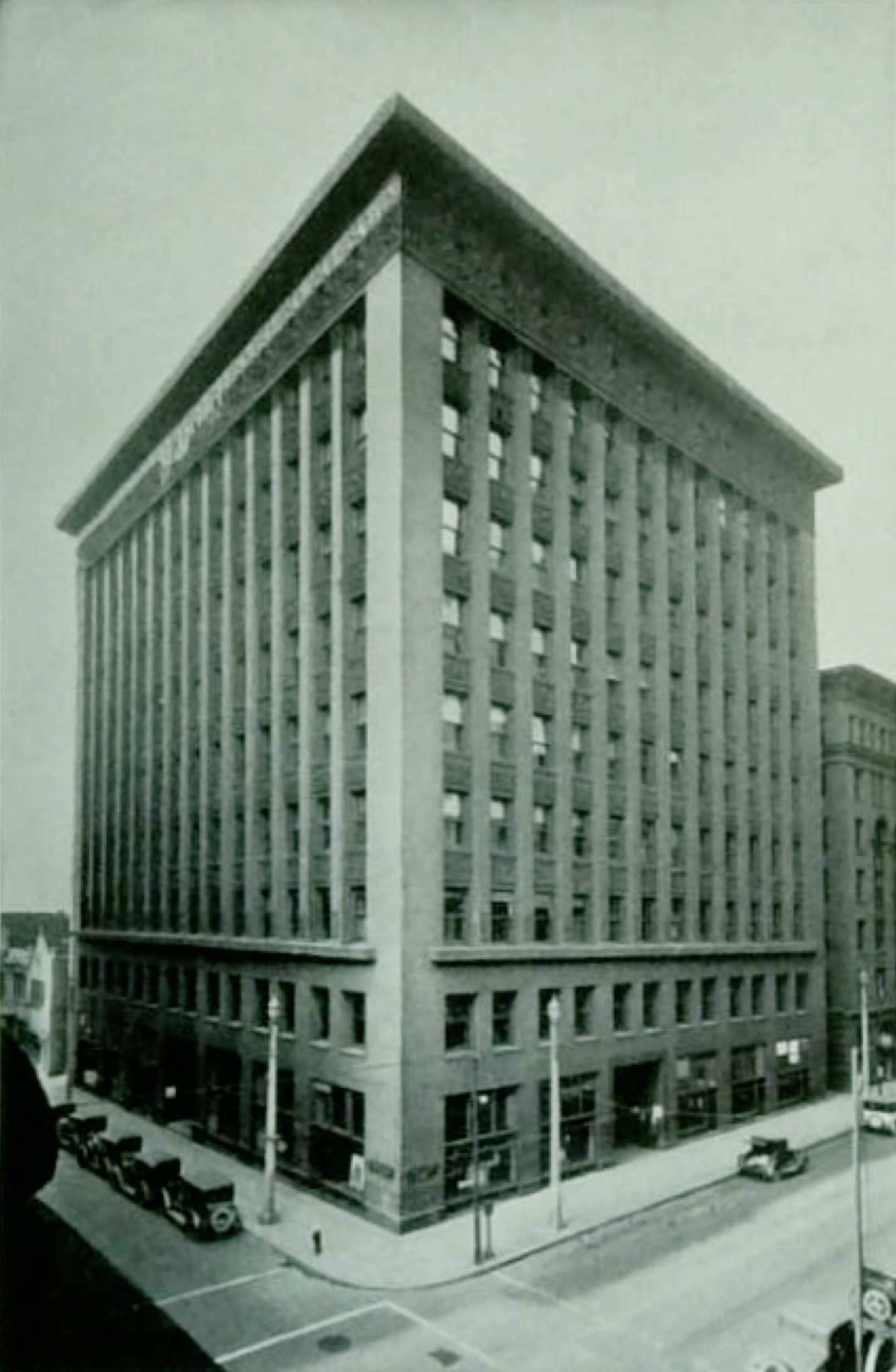
Wainwright Building
It is known as the first skyscraper that is designed and built by the partnership of Dankmar Adler and Louis Sullivan commissioned by Ellis Wainwright, a wealthy local beer brewer who needed office headquarters for the St. Louis Brewers Association.
Sullivan is famously nicknamed the Father of Skyscrapers.
Louis Sullivan coined his most famous rule:
form follows function
when explaining his design for the Wainwright Building.
Designed Like a Classical Greek Column three parts:The Base: The first two floors feature large, open windows for street-level shops.The Shaft: The next seven floors feature repetitive vertical brick pillars for the offices.The Capital (The Top): The attic level is crowned with a massive, decorative roof slab.
The building is covered in, custom-designed red terra cotta panels. Look closely and you will see deeply carved patterns of intertwined leaf scrolls, foliage, and geometric shapes framing the circular windows at the top.
In the 1970s, the building is almost torn down. Architects and historical groups rallied to save it. The State of Missouri bought the property, fully renovated it, and uses it today as a functional state office building.
Eiffel Tower - Built 1889
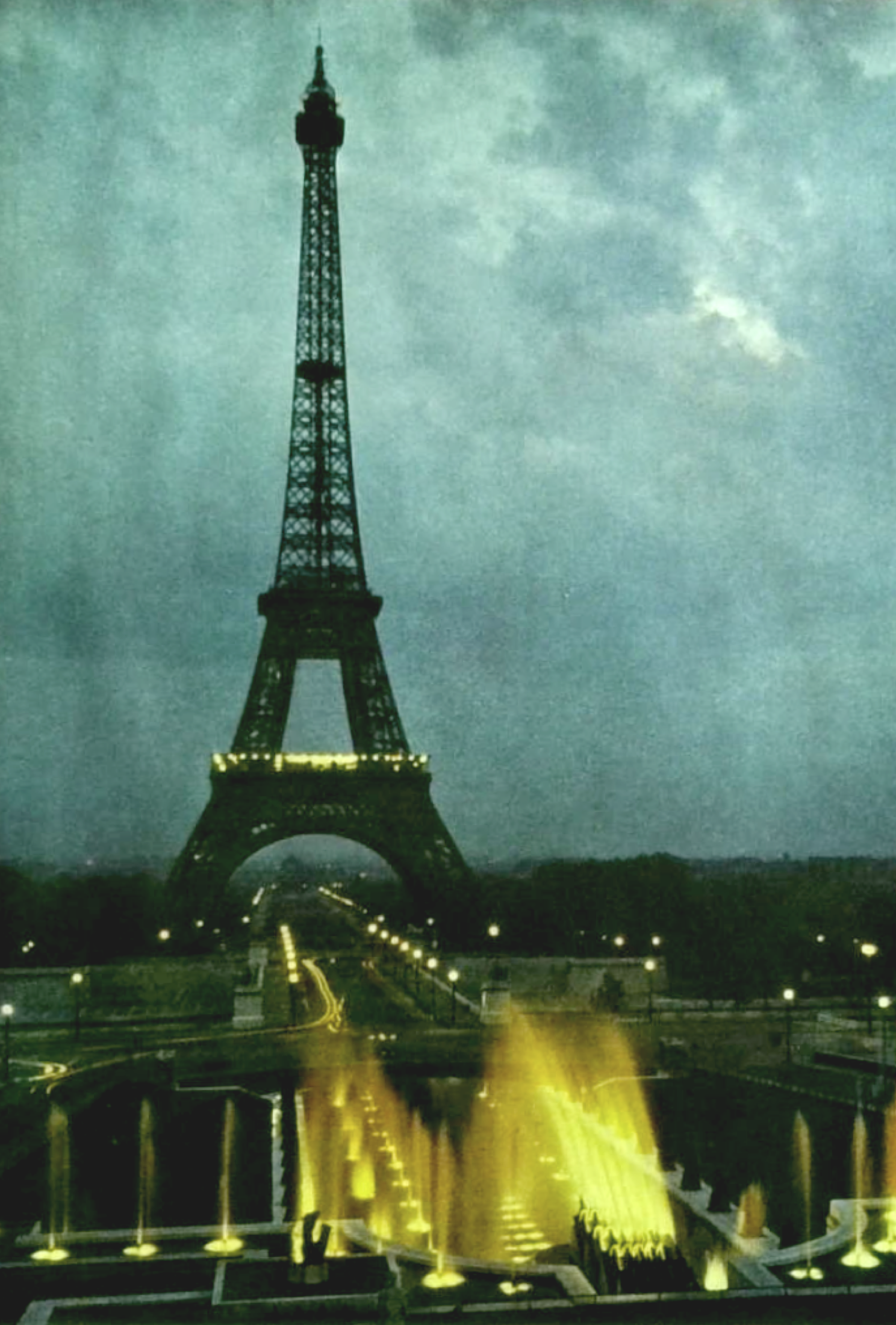
Eiffell Tower
Construction began on January 28, 1887. The tower was completed in record time and officially opened on March 31, 1889.
It is built as the grand entrance arch for the 1889 World's Fair (Exposition Universelle) in Paris, France.
Gustave Eiffel gets credit for the tower, however, two engineers in his company actually came up with the original design.
Maurice Koechlin and Émile Nouguier
Showed the drawings to Gustave Eiffel and bought the rights to the design, and managed the construction project.
Stephen Sauvestre is also hired to add the beautiful decorative arches and glass pavilions to make the iron tower look more attractive to the public.
Westminster The House of Parliament - Built 1840
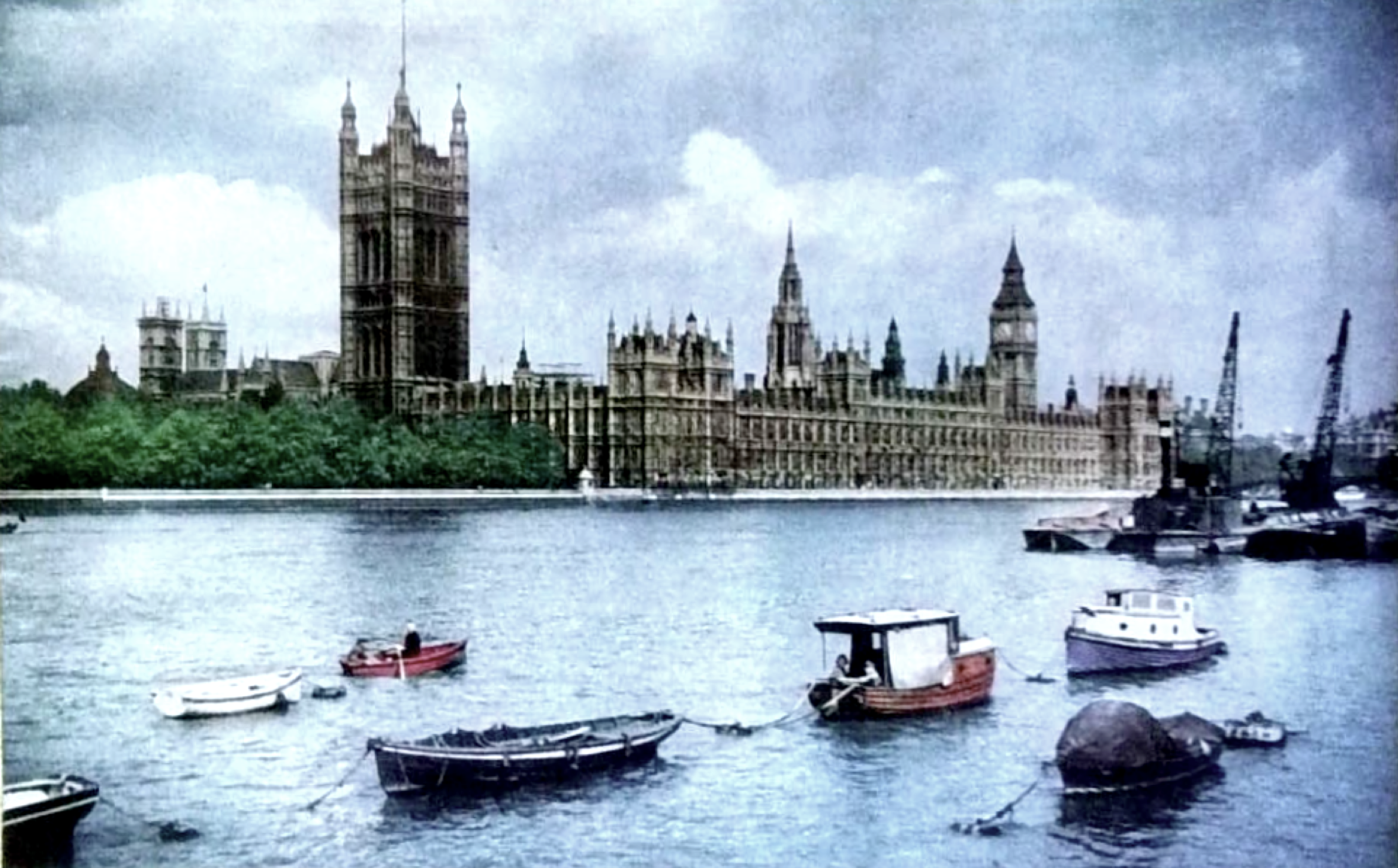
The Houses of Parliament
The Houses of Parliament (the Palace of Westminster) in London is built between 1840 and 1870 by architects Sir Charles Barry and Augustus Pugin.
After a massive fire destroys the medieval palace in 1834 this famous Gothic Revival building is constructed.
Millford Plantation - Pinewood, South Carolina - Built 1839 - 1841
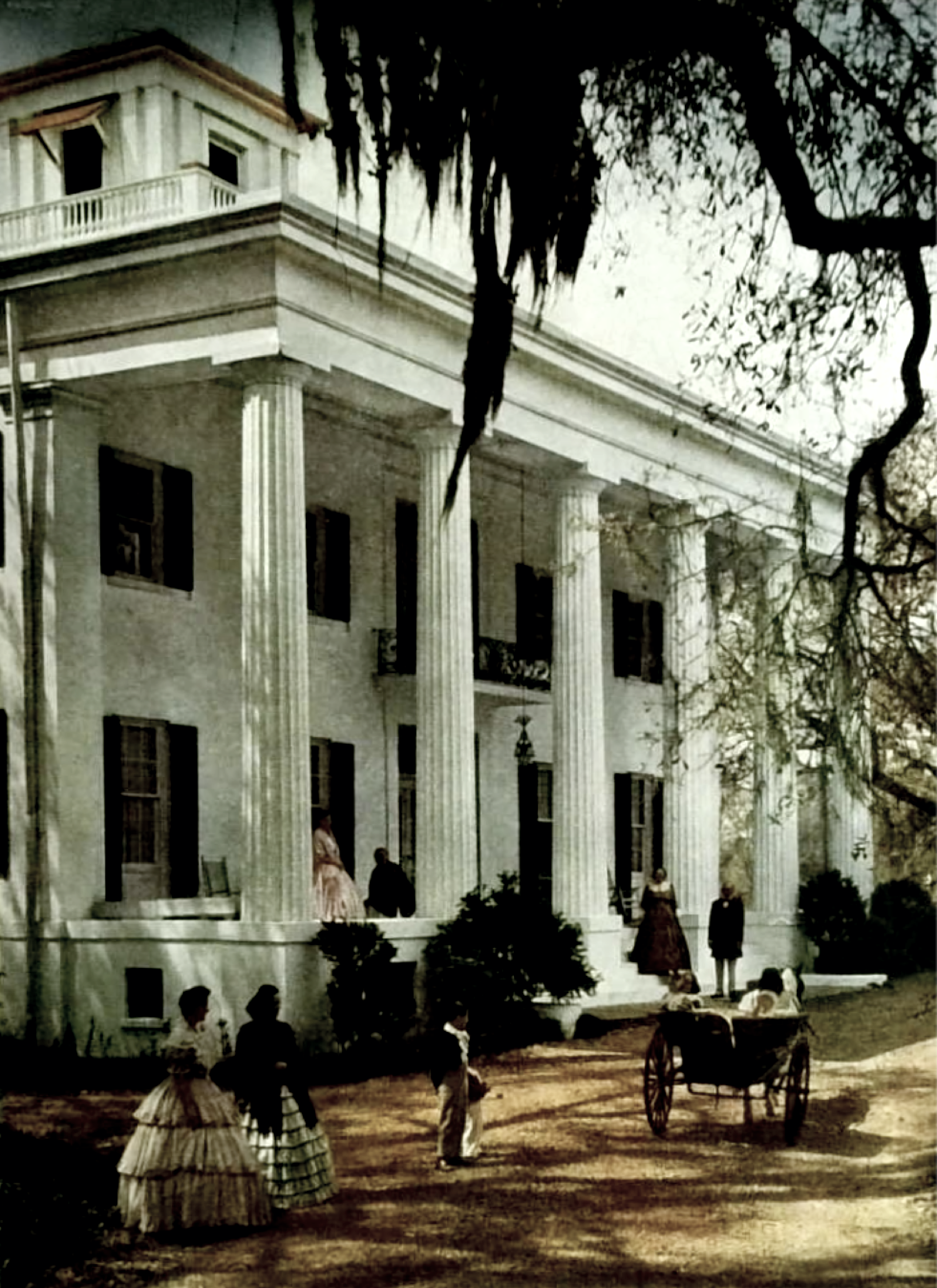
The Milford Plantation
The Milford Plantation is widely regarded as one of the finest and most magnificent examples of Greek Revival architecture in the United States.
It is built for Laurence Manning and Susan Hampton Manning.
They spent a fortune building it in such a remote, out-of-the-way country location, his neighbors mockingly called it "Manning's Folly".
It is saved from destruction by a letter during the final months of the Civil War in 1865.
The walls are two feet thick. They are made of handmade bricks coated in stucco.
It is a time capsule with its enormous collection of original, high-end 1840s furniture made by the famous New York craftsman Duncan Phyfe.
It features a majestic self-supporting circular staircase that winds up through a rear curved alcove without any visible center supports.
Spiral staircase inside Auburn, in Natchez, Mississippi - Built - 1812
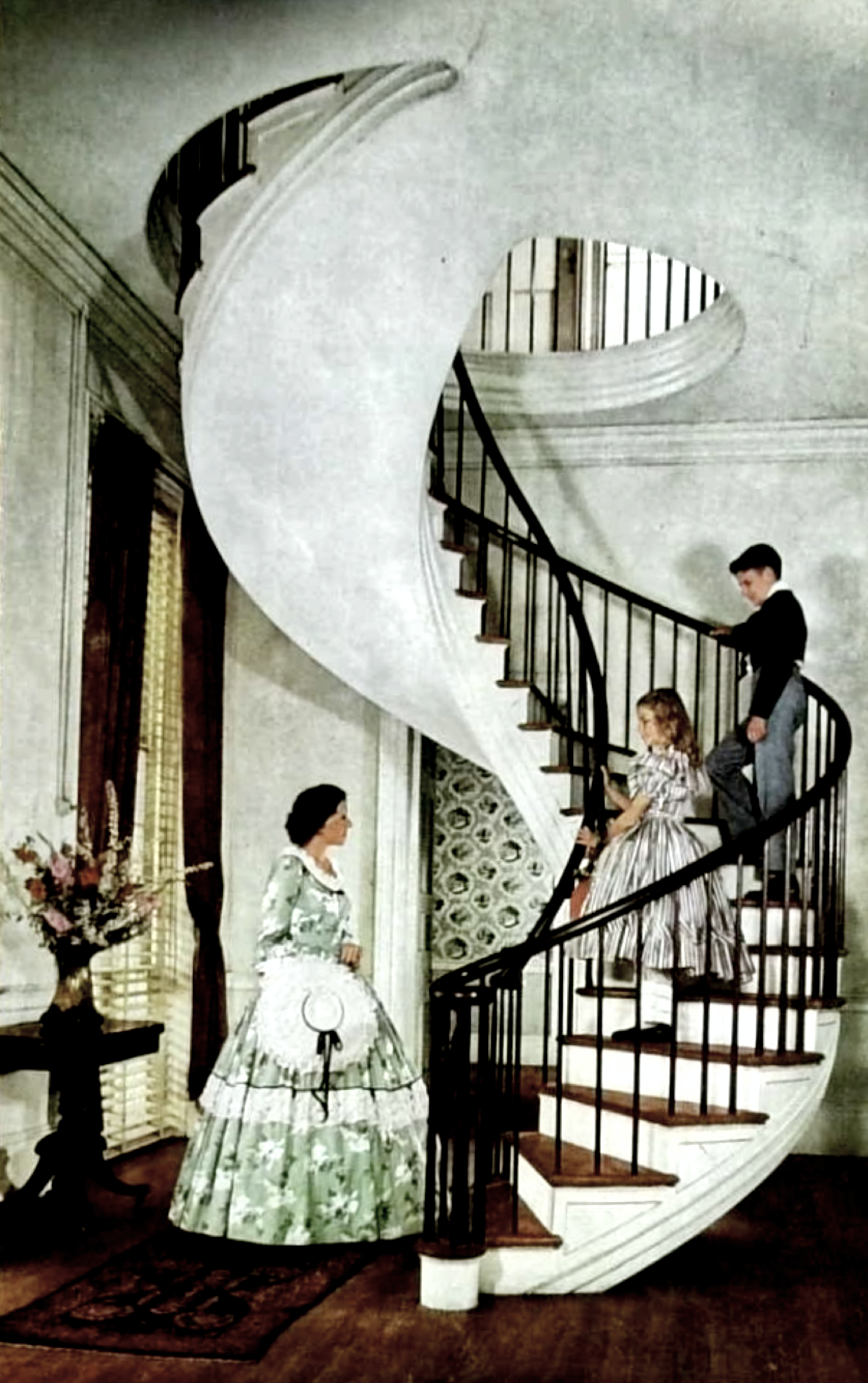
Spiral staircase inside Auburn, a historic antebellum mansion located in Natchez, Mississippi.
The mansion, designed by architect Levi Weeks for a Lyman Harding. It is later purchased by Dr. Stephen Duncan.
This striking, freestanding spiral staircase winds gracefully from the ground floor up to the second-floor gallery without any center pillar or wall support beams. It is held up entirely by its own precise engineering and geometry.
The Arc de Triomphe Built 1806 -1836

The Arc de Triomphe
The Arc de Triomphe, stands at the western end of the Champs-Élysées in Paris.
It is commissioned by Napoleon Bonaparte in 1806. Dedicated to the glory of the French armies and those who fought and died in the Revolutionary and Napoleonic Wars, it is completed and inaugurated in 1836.
It is designed by architect Jean-François Chalgrin who is inspired by the Roman Arch of Titus. Its construction is delayed by Napoleon's fall from power in 1815. And work is paused for years before being completed under King Louis-Philippe in 1836.
Citadelle Laferrière (Citadelle Henri Christophe) or s
S
mply the Citadel - Built 1805- 1820

Citadelle Laferrière
Constructed 1805 - 1820.
It is built after Haiti win its independence from France.
Built in northern Haiti, on the Bonnet à l'Évêque mountain near the town of Milot.
It is 3,000 feet above sea level to lookout for enemy ships.
U.S. Capitol in Washington D.C. - Built 1793 - 1826
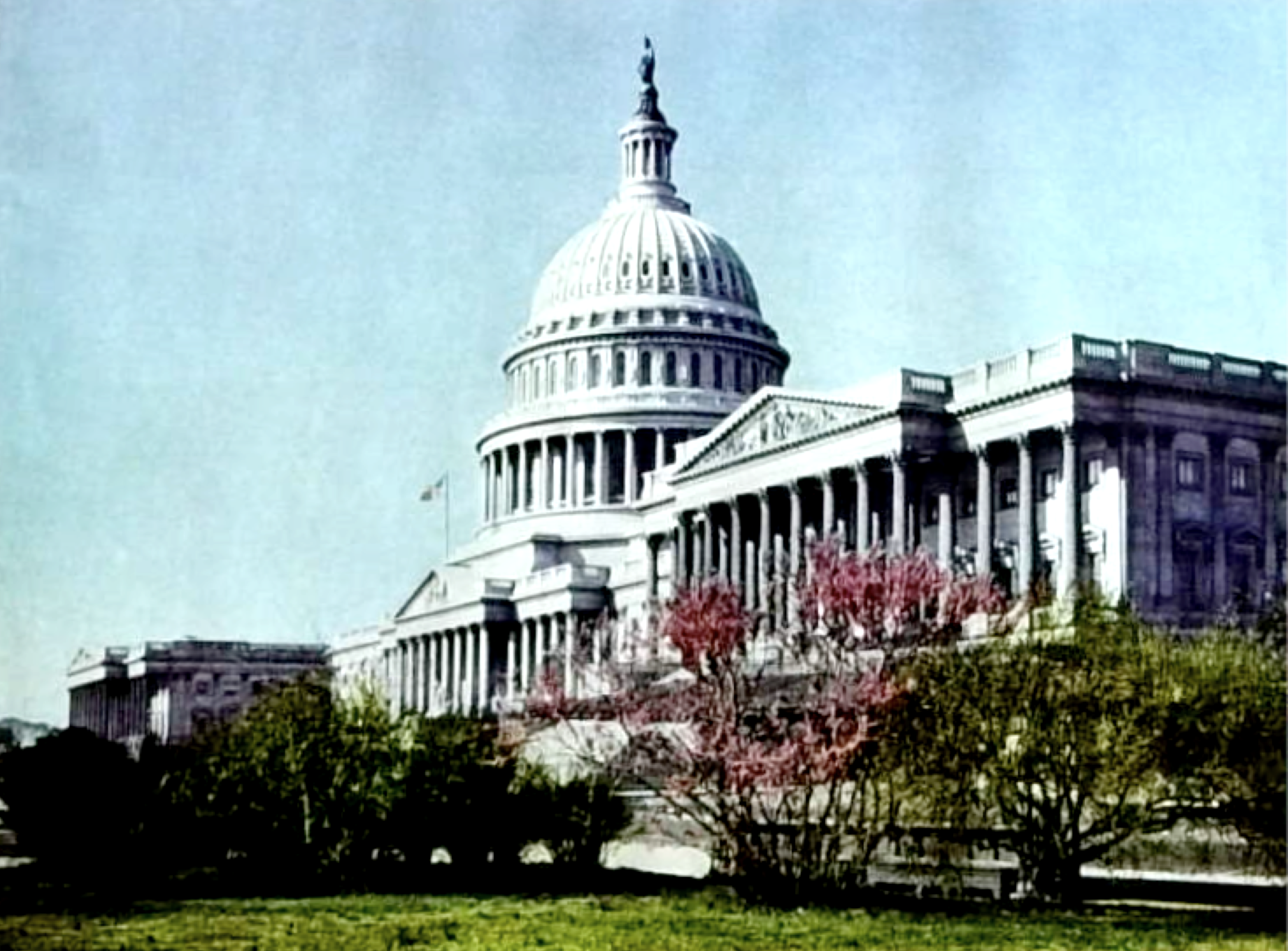
U.S. Capitol
Construction first began in 1793 with the original core building finished in 1826, but the massive iron dome is not completed until 1866.
September 18, 1793 President George Washington laid the first foundation stone
1800 The government moves from Philadelphia to D.C. when only the north wing was finished.
1814 During the War of 1812, British troops set fire to the gutting the interior.
1850s–1860s Congress needs more space so the building is extended, and the white cast-iron dome is built during the American Civil War.
A doctor and amateur architect Dr. William Thornton won a public contest to design the building.
Later, legendary professional architects Benjamin Henry Latrobe, Charles Bulfinch, and Thomas U. Walter took over to rebuild it and design the famous dome.
The government hired out enslaved African Americans from local plantation owners. These men did the grueling work of blasting heavy sandstone out of quarries, towing it on boats up the river, sawing wood, and laying the brick walls. Immigrant Craftsmen: Skilled stonemasons and artists were brought over from Europe, especially Italy and Scotland, to carve the intricate stone designs and paint the grand murals inside.
The Dome is an Illusion as it looks like heavy, white marble to match the rest of the building, but it is actually made entirely of cast iron. It weighs 8.9 million pounds! It is actually two separate domes nestled inside each other.
The National Statuary Hall has a unique semi-circular shape. Due to the acoustic curve of the ceiling, if you stand on one exact spot on the floor and whisper, a person standing on the opposite side of the room can hear you loud and clear.
President Abraham Lincoln refused to stop construction on the Capitol dome during the Civil War. He stated that if people saw the building of the Capitol going on, it would be a sign that the Union would continue to stand.
A Slave Helped Cast the Statue on Top: The bronze statue sitting at the very peak of the dome is called the Statue of Freedom. The master craftsman in charge of figuring out how to cast and assemble the statue is a brilliant enslaved man named Philip Reid. By the time the statue is lifted to the top of the dome in 1863, Reid had been legally freed.
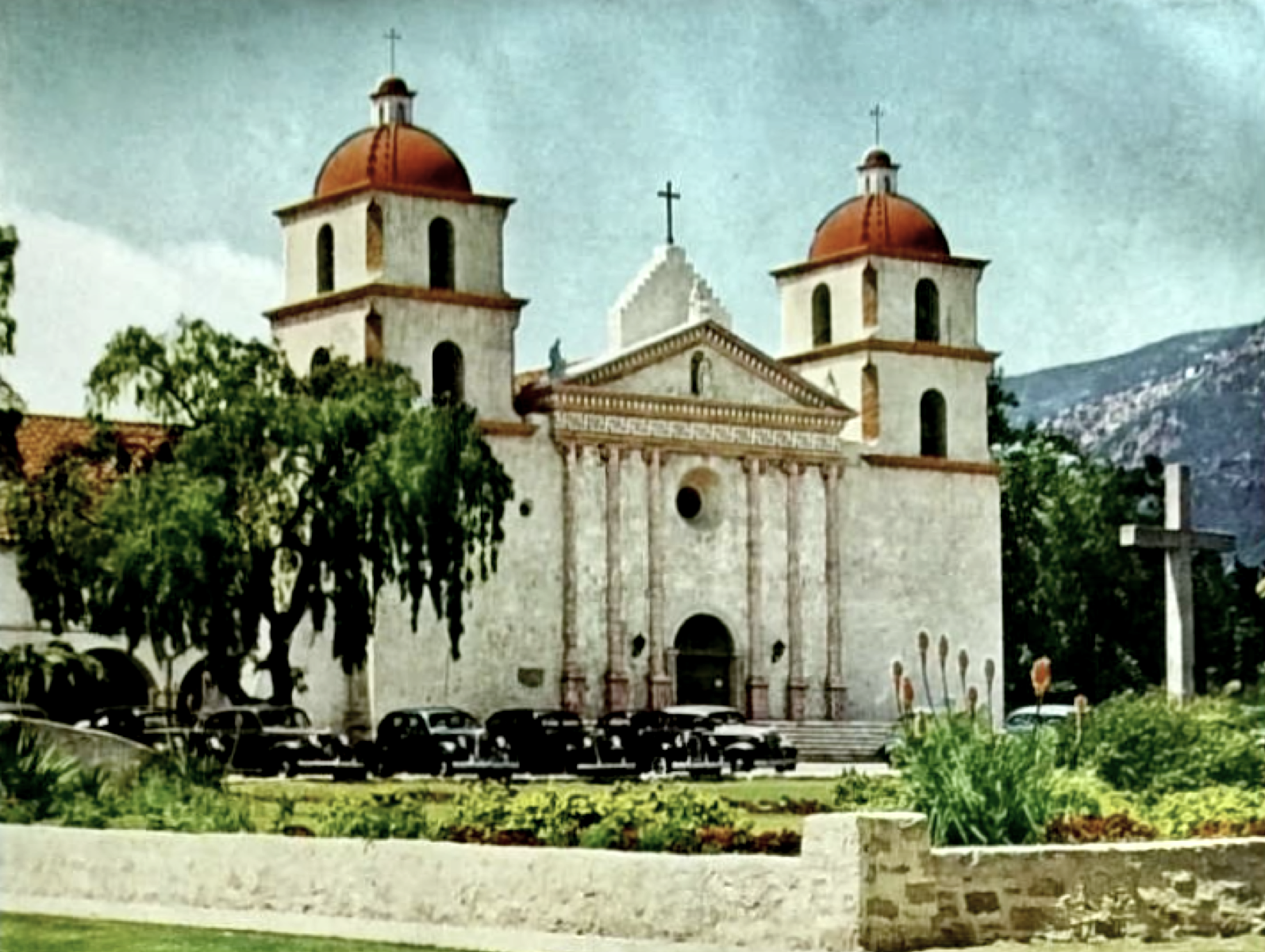
Mission Santa Barbara, CA - Built 1786 - 1820
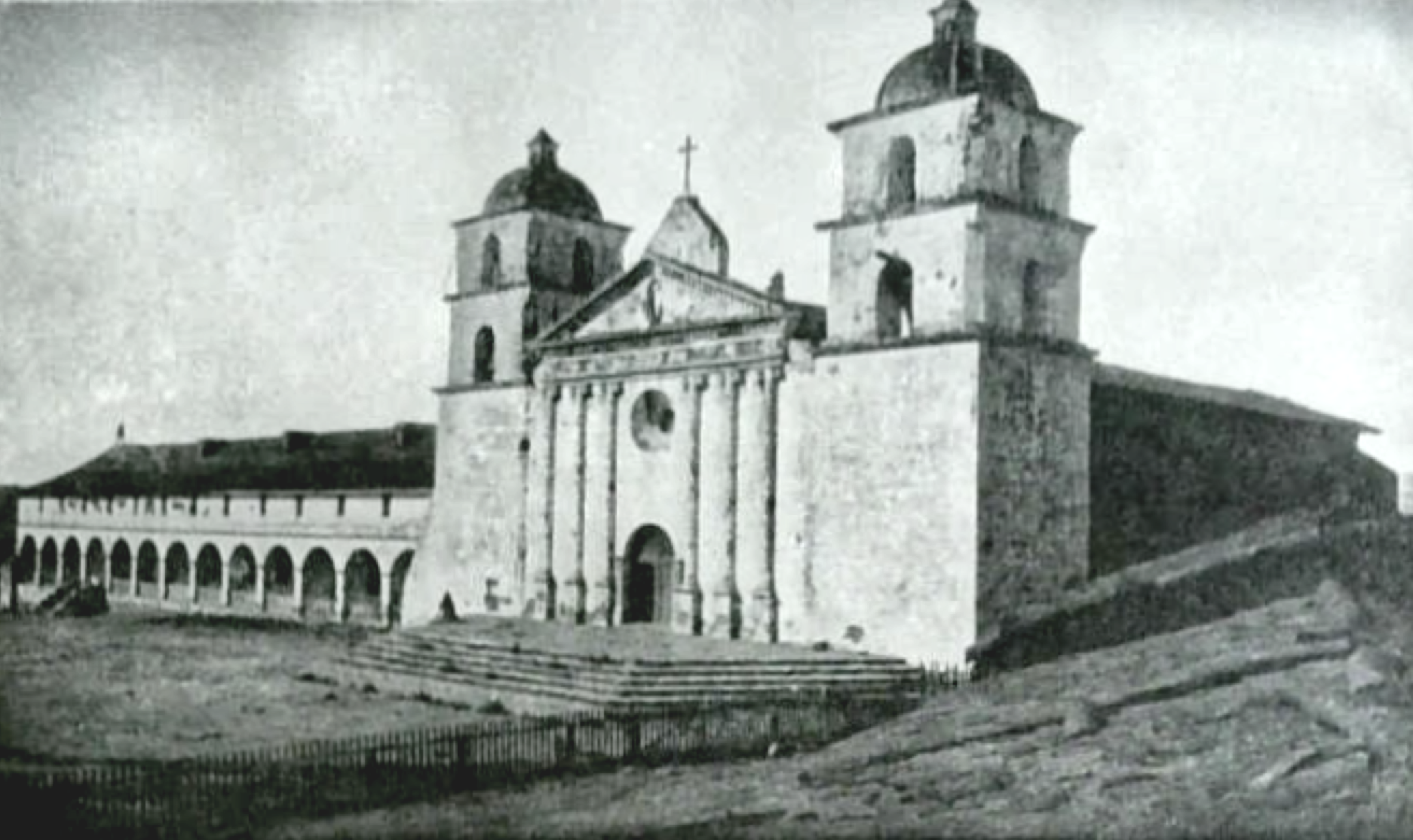
Mission Santa Barbara, CA
Father Fermín Lasuén, Spanish Franciscan priest, built the mission with forced labor of the local Chumash Native Americans and master builder Jose Antonio Ramirez.
Its nickname: The Queen of the Missions, because of its twin bell towers, and symmetrical design.
Out of all 21 historic Spanish missions in California, Santa Barbara is the only onecontinuously run by the Franciscan friars since the very day it was built. Never abandoned, ruined, or closed its doors. It survived two giant earthquakes: in 1812 and 1925.
The mission is home to a massive library archive that holds almost all of the original historical documents and letters from the founding of the entire California mission chain.
Monticello - Built 1769 - 1809
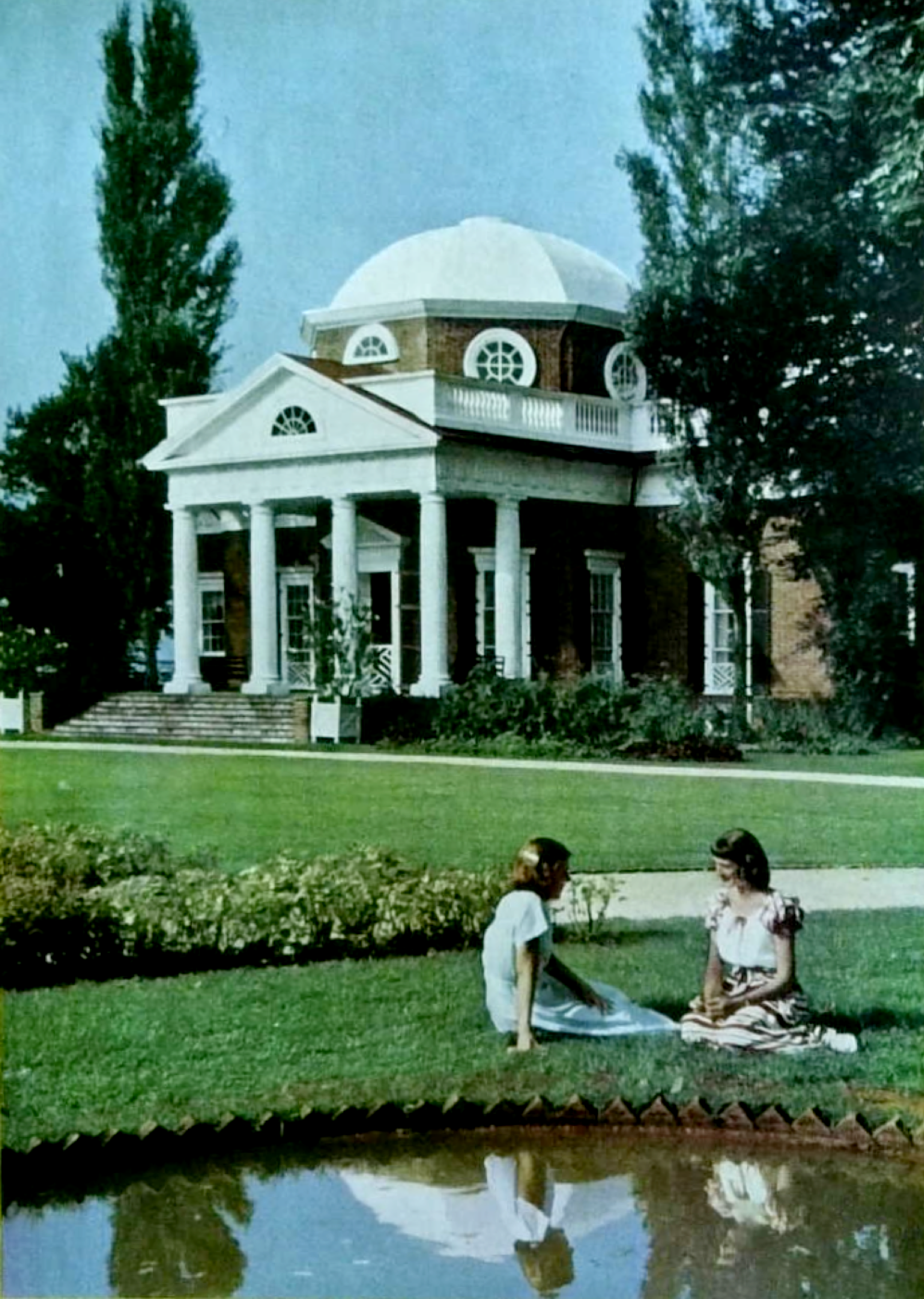
Montecello main entrnce
Construction on Thomas Jefferson's famous home, Monticello, begins in 1769 and finishing in 1809.
Jefferson constantly changed the house but there are two main phases:
The First Monticello (1769–1784) - level the mountaintop & and brickwork started in 1769. Finished before Jefferson goes to Europe in 1784.
The Second Monticello (1796–1809): Added the dome and more rooms.

Entrance closeup

Monticello, side view
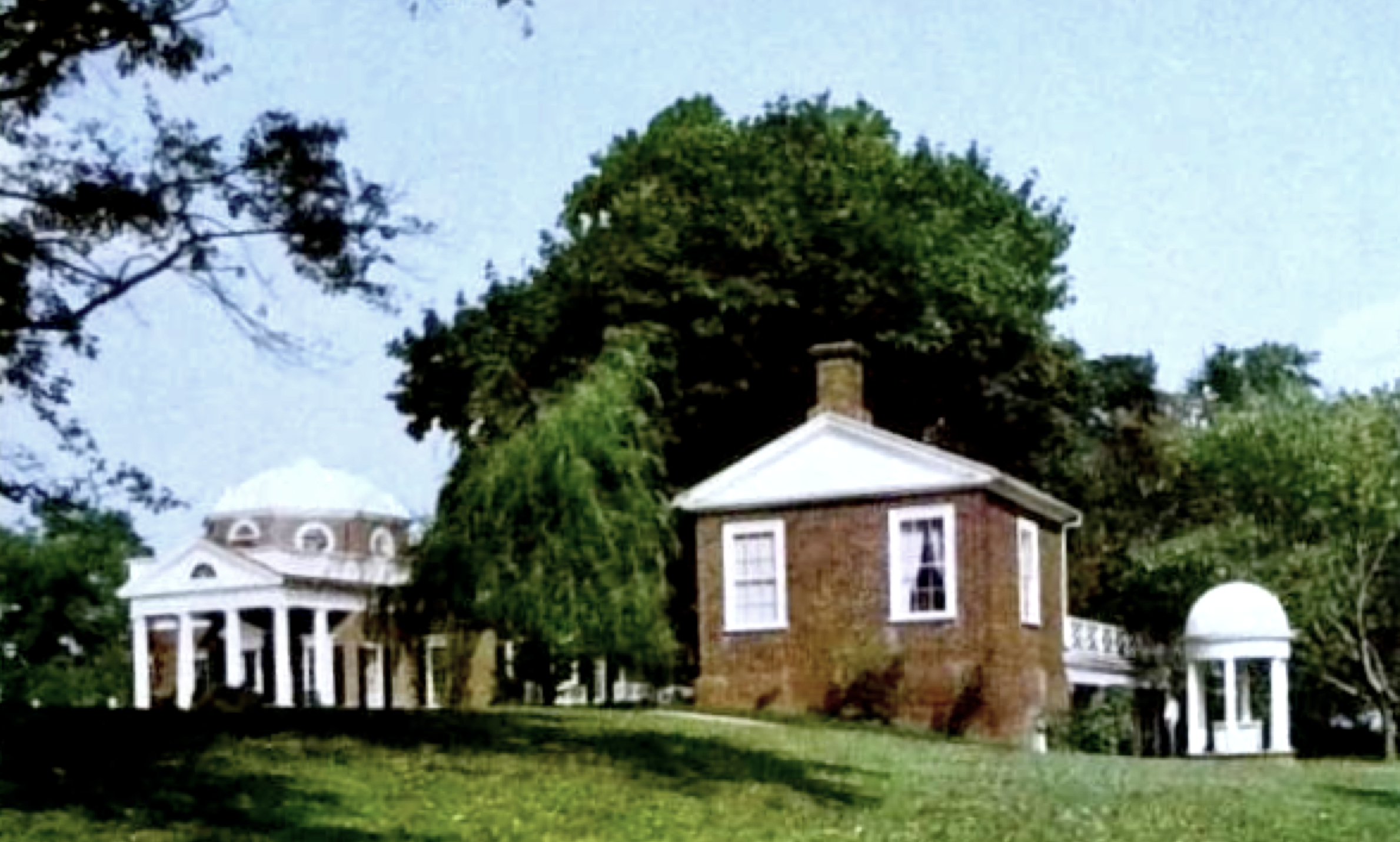
Montecello lodge
Monticello interiors
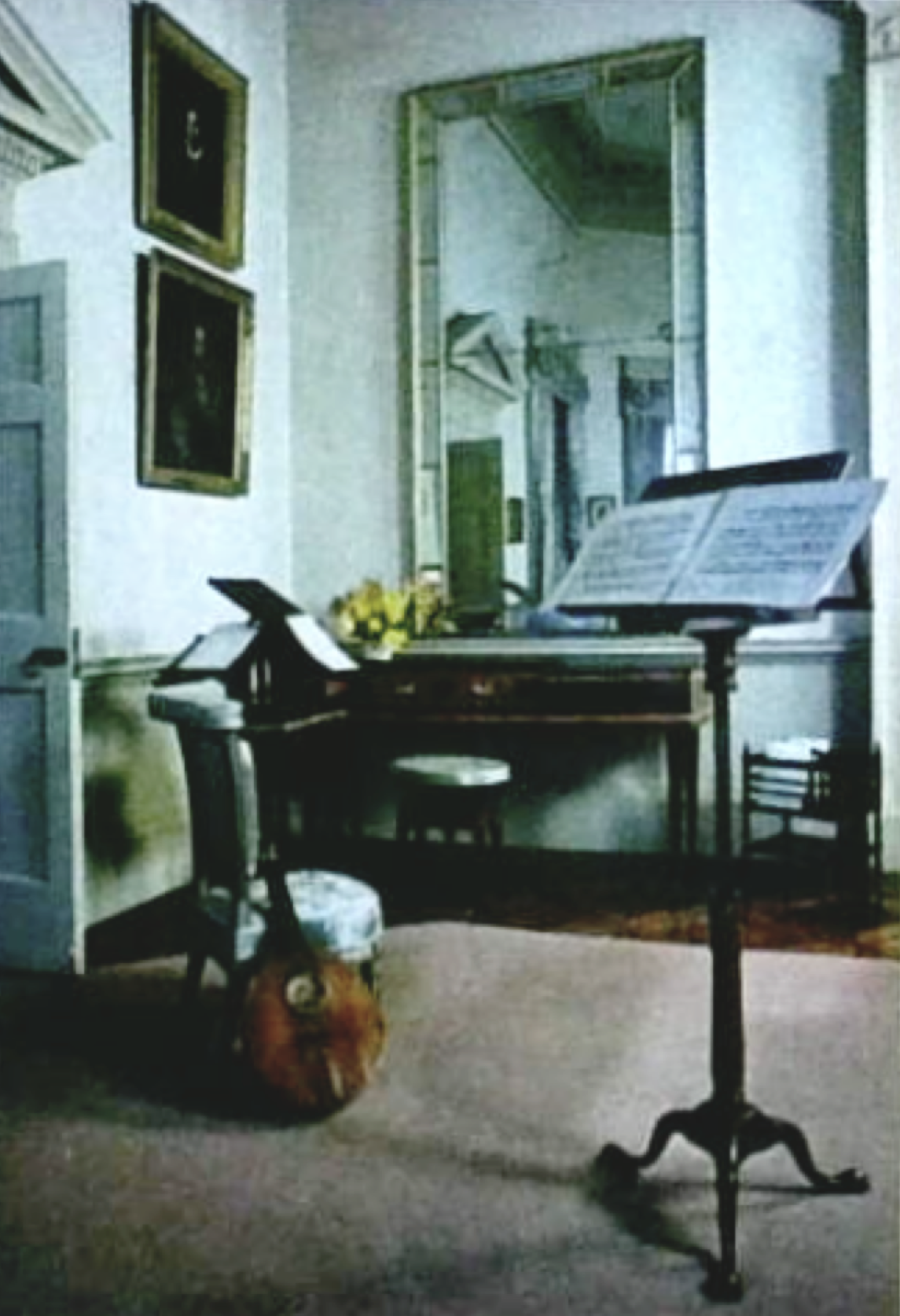
Montecello music room
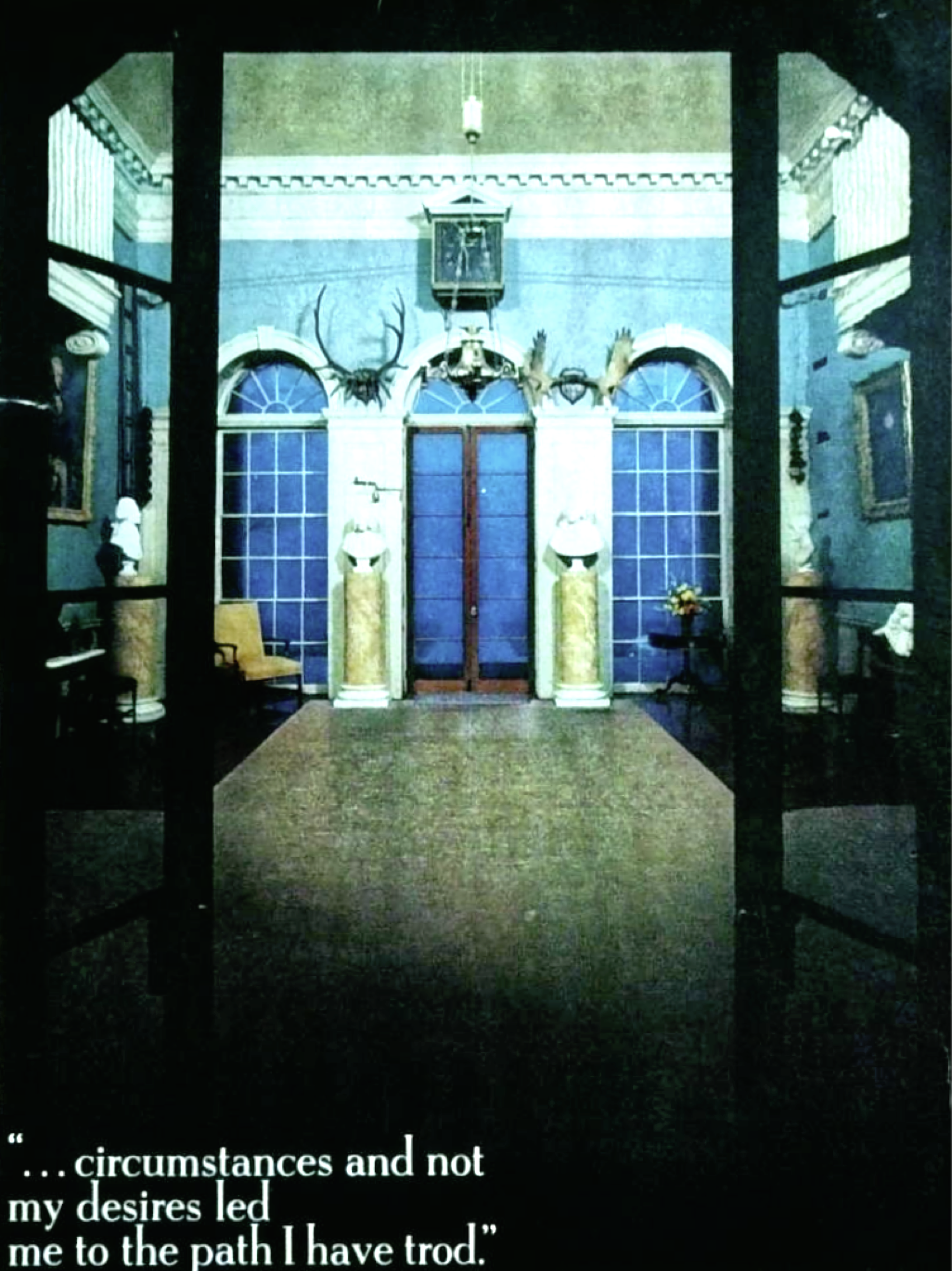
Montecello museum
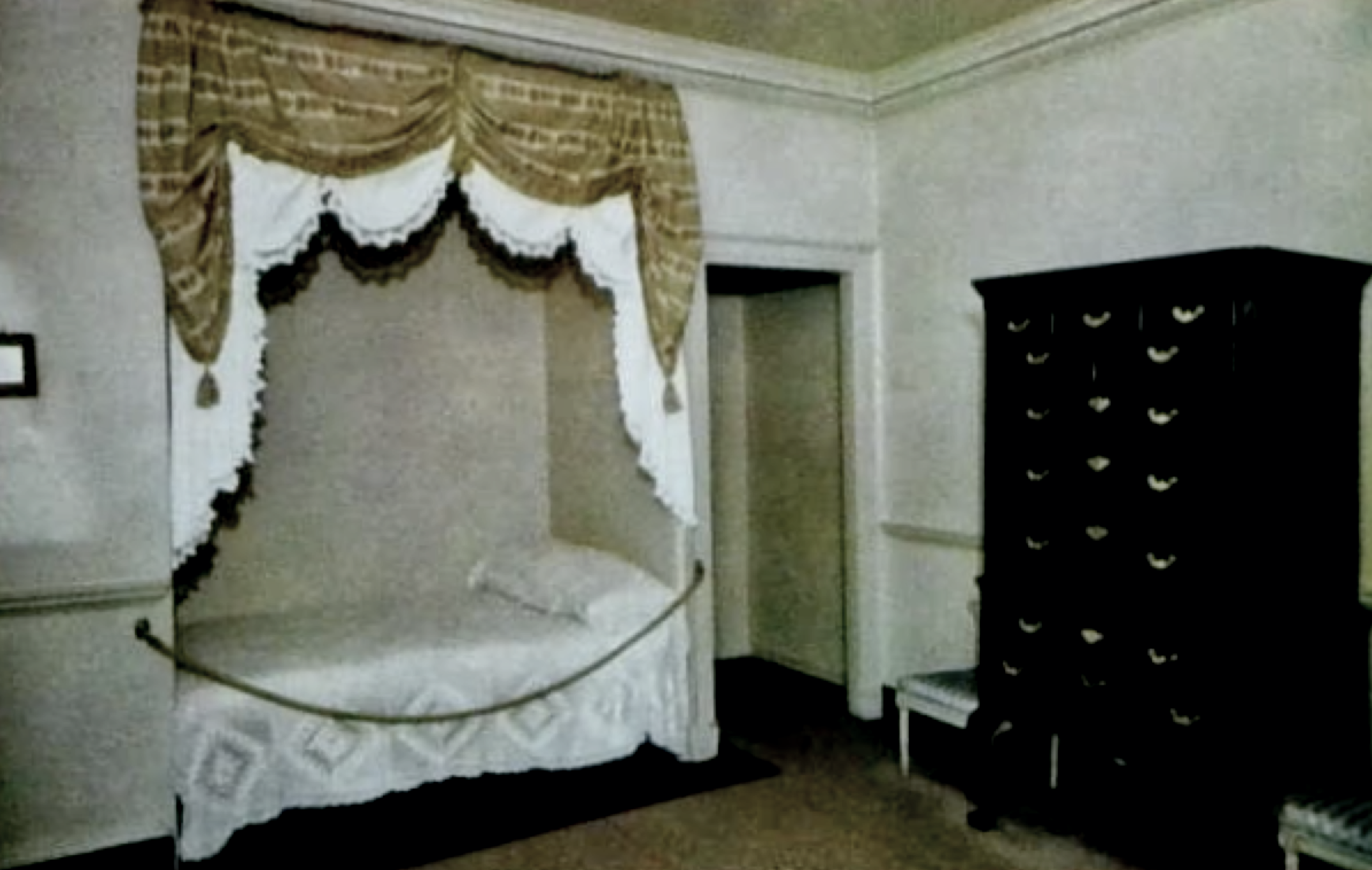
Montecello Marth's bedroom
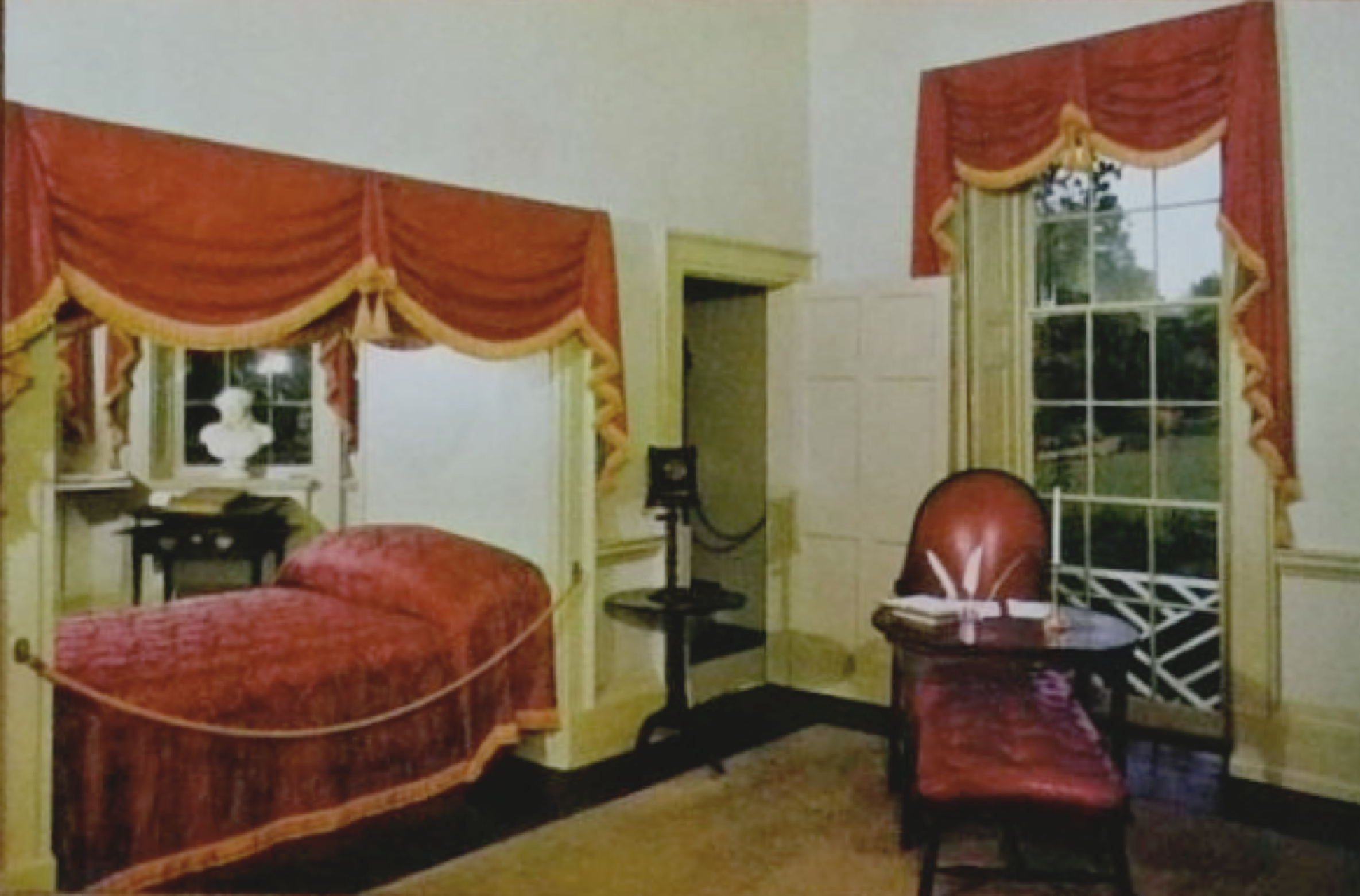
Montecello Jefferson's bedroom
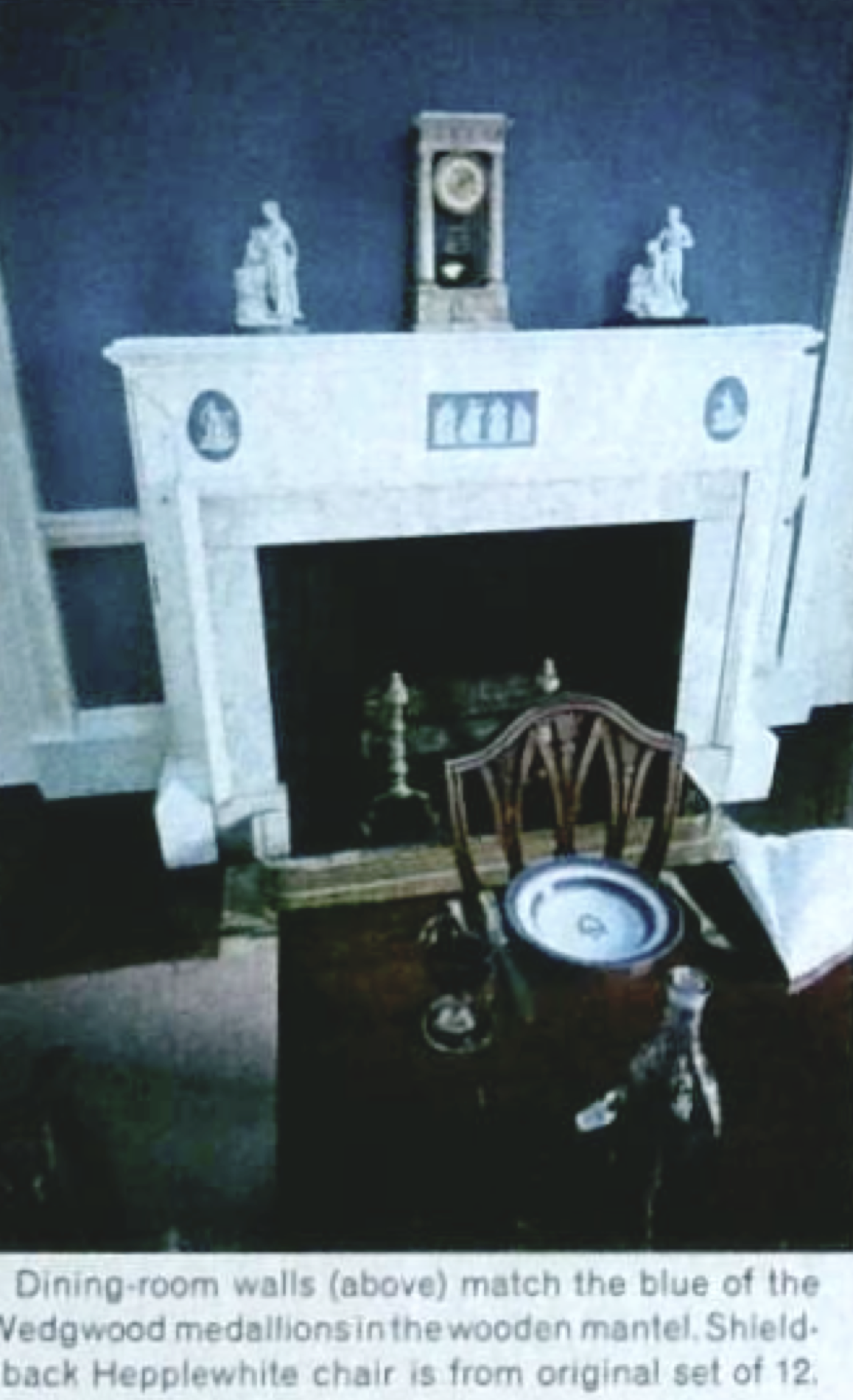
Dining room fireplace
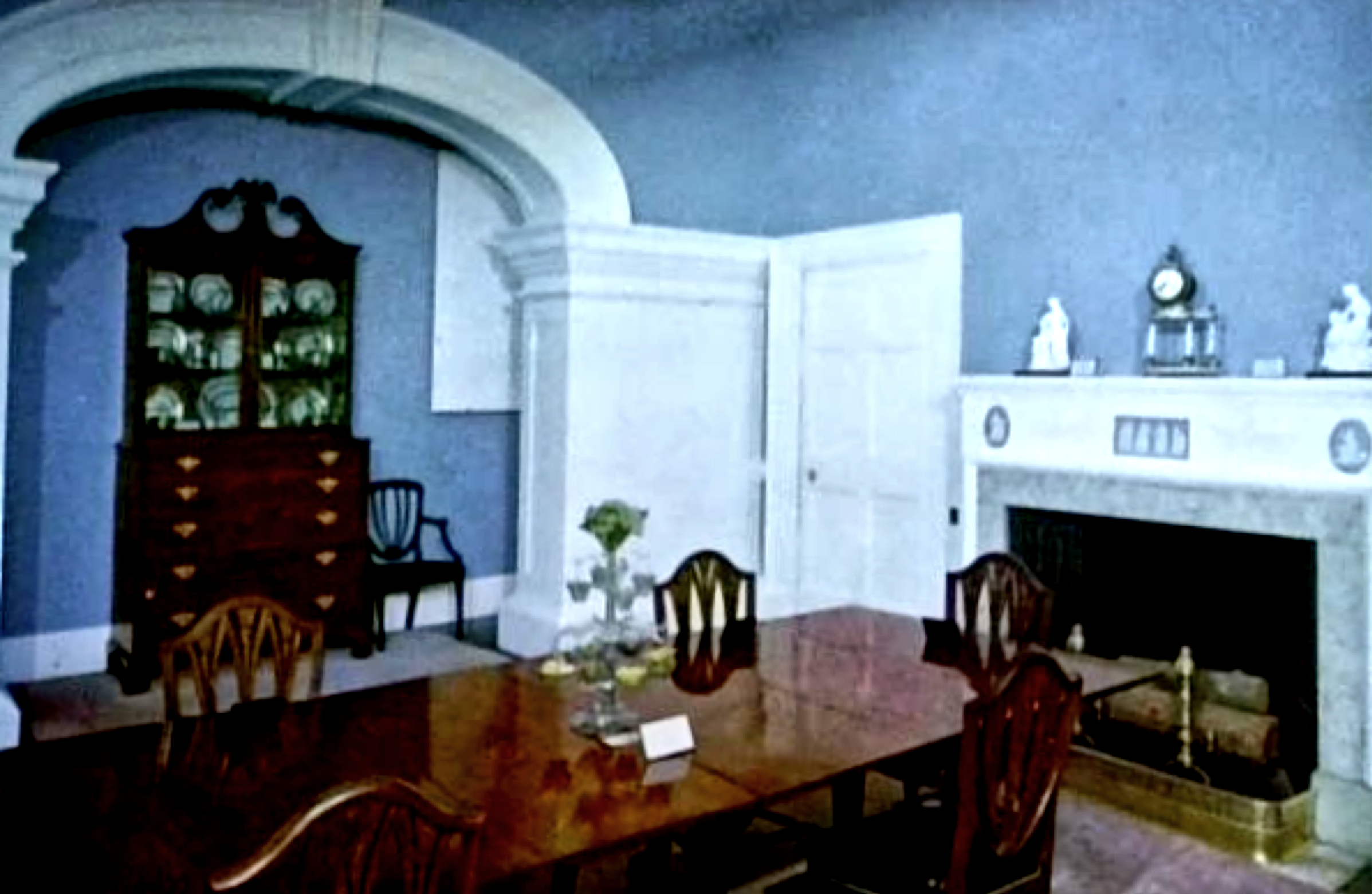
Dining room
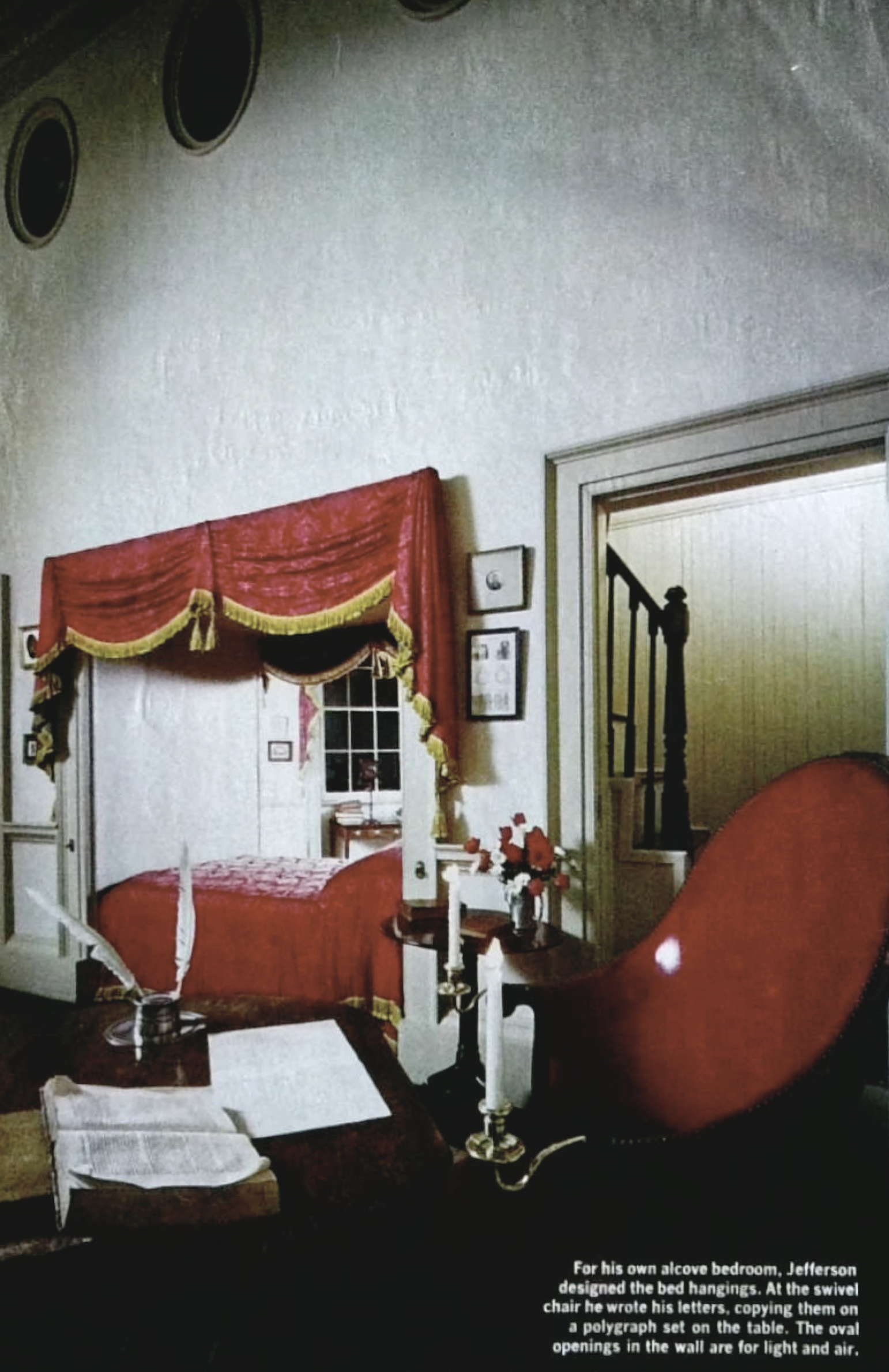
Jefferson's bedroom
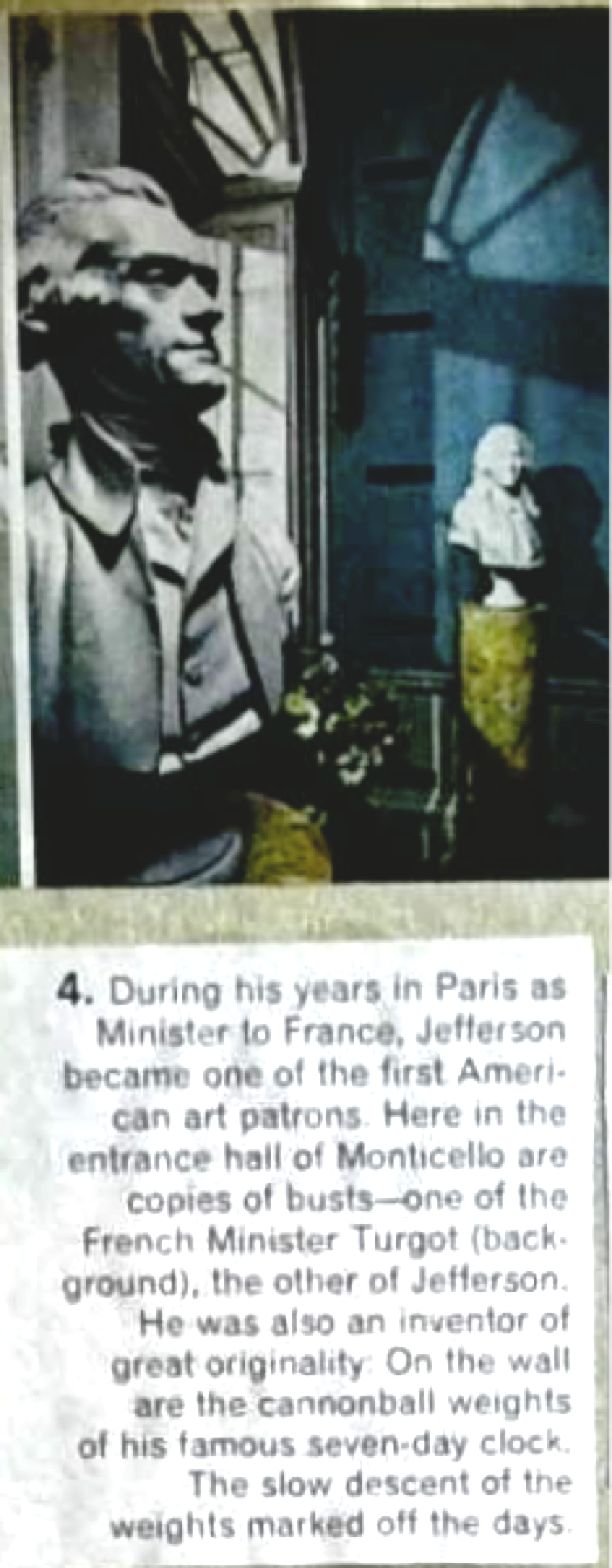
Jefferson's bust and clock

Jefferson's eagle

Jefferson's coffee pot
Jefferson's dumb waiter
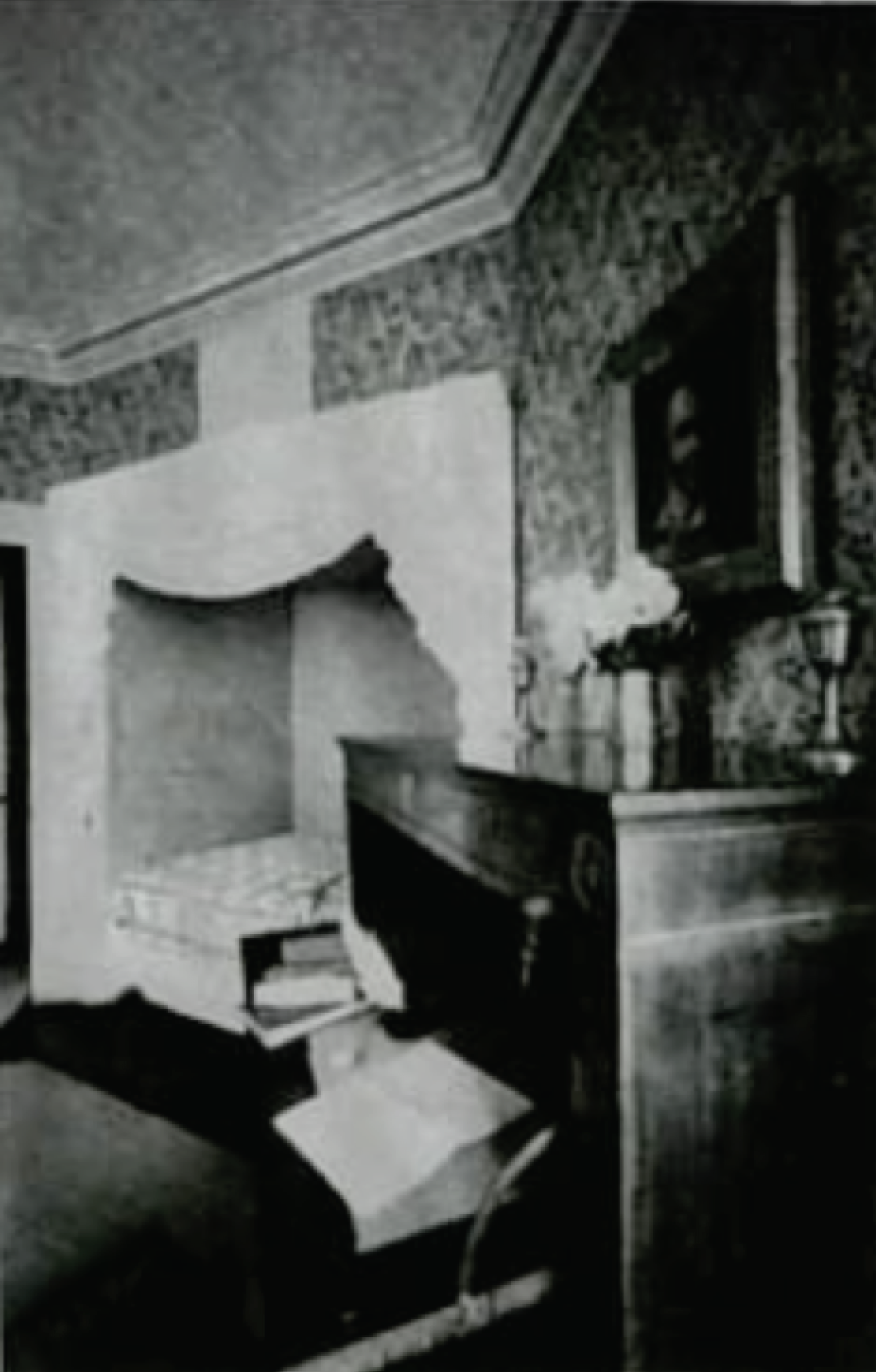
Jefferson's guest room
Kenmore Home Fredericksburg - Built 1769 - 1775

Millbrook - Kenmomre
A brick mansion built for Fielding Lewis and Betty Washington Lewis, George Washington's only sister.
It features beautiful detailed decorative plaster ceilings. However, the identity of the craftsman who made them remains a secret.
Fielding Lewis, a true patriot used his wealth to fund a gun factory to supply the American Revolution. Because the government never paid him back, he died in deep debt, and the family had to sell the estate.
It survived the Civil War and the 1862 Battle of Fredericksburg. It was hit by at least seven cannonballs and later used as a temporary field hospital for wounded soldiers.
The Lewises didn't actually call it Kenmore! They called it Millbrook. Samuel Gordon renamed it "Kenmore" in 1819 after his family's ancestral home in Scotland.
Montpelier - Built - 1764 - 1812
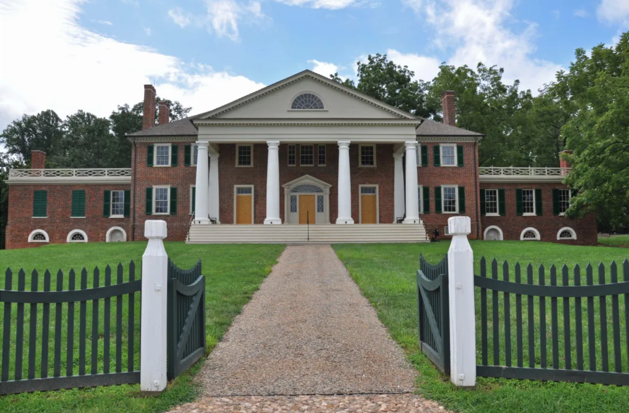
Montpelier
James Madison Sr., his father, , builds the first brick section of the home in 1764.
James Madison and his wife, Dolley Madison, add additional rooms twice.. The heavy labor of cutting timber, making bricks, and constructing the home is done by enslaved workers .
In 1901, the wealthy duPont family buys Montpelier, paint it pink, and expand it to 55 rooms. In 2003, a preservation project tore down the duPont additions and architects carefully restored the home back to the exact 22-room layout that James and Dolley Madison lived in.
The Constitution room, or Jame's upstairs library is where he comes up with the ideas for the Three Branches of Government and drafts the Virginia Plan, which forms the foundation of the U.S. Constitution.
Dolley is famous for hosting giant, lively parties at Montpelier.
The ice house temple is a beautiful, classical-style garden temple on the property with a deep ice house hidden directly underneath. This allowed the Madisons to serve cold drinks and fresh ice cream during hot Virginia summers.
Mount Vernon - Built 1734 - 1778

Mount Vernon
Mount Vernon in 1734 is originally a one-and-a-half-story house built by Augustine Washington.
George Washington took over the property in 1754 after his father dies.
Over the next decades, he expands the house into the 21-room estate.
The famous copper weather vane isshaped like a dove of peace.
George Washington commissioned it in 1787, as the Constitutional Convention is wrapping up, to show his hopes for the new peaceful nation.
It features a giant porch facing the Potomac River. A unique architectural feature for American homes at the time and became a popular spot to relax.
He instituted crop rotation in his farming.
Alamo - Buit 1718

Alamo
The Alamo is originally constructed in 1718 as the Spanish mission San Antonio de Valero by Franciscan missionaries (led by Father Antonio de Olivares) and the local Indigenous population, under the authority of the Spanish government.
The famous limestone chapel is built in 1744.
The Governor's Palace - Built 1707 - 1722
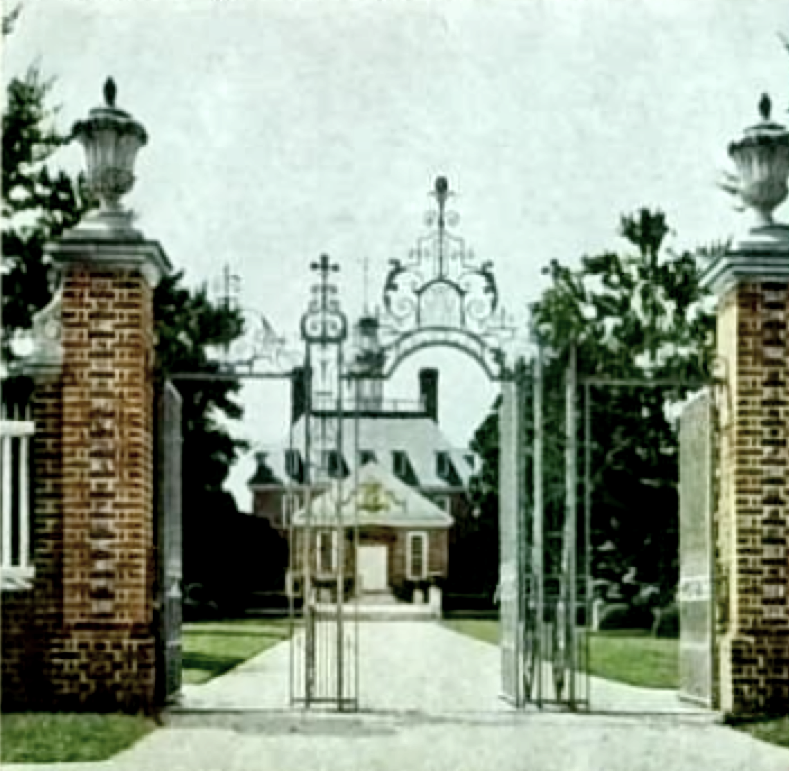
The Governor's Palace
The Governor's Palace in Colonial Williamsburg, Virginia.
This view captures the building framed through its grand, ornate wrought-iron entrance gates. The brick pillars holding up the gates are famous for featuring carvings of the British lion and Scottish unicorn.
Built from 1706 and 1722, it served as the official residence for the royal British governors of the Virginia Colony.
Famous residents: After America declared independence: Patrick Henry and Thomas Jefferson.
The original building accidentally burned down in 1781. The beautiful palace you see today is a accurate reconstruction, with the help of Thomas Jefferson's own drawings, that is rebuilt in the 1930's by Colonial Williamsburg to bring the historic capital back to life.
Chahar Bagh Iranian college Built 1704 - 1714
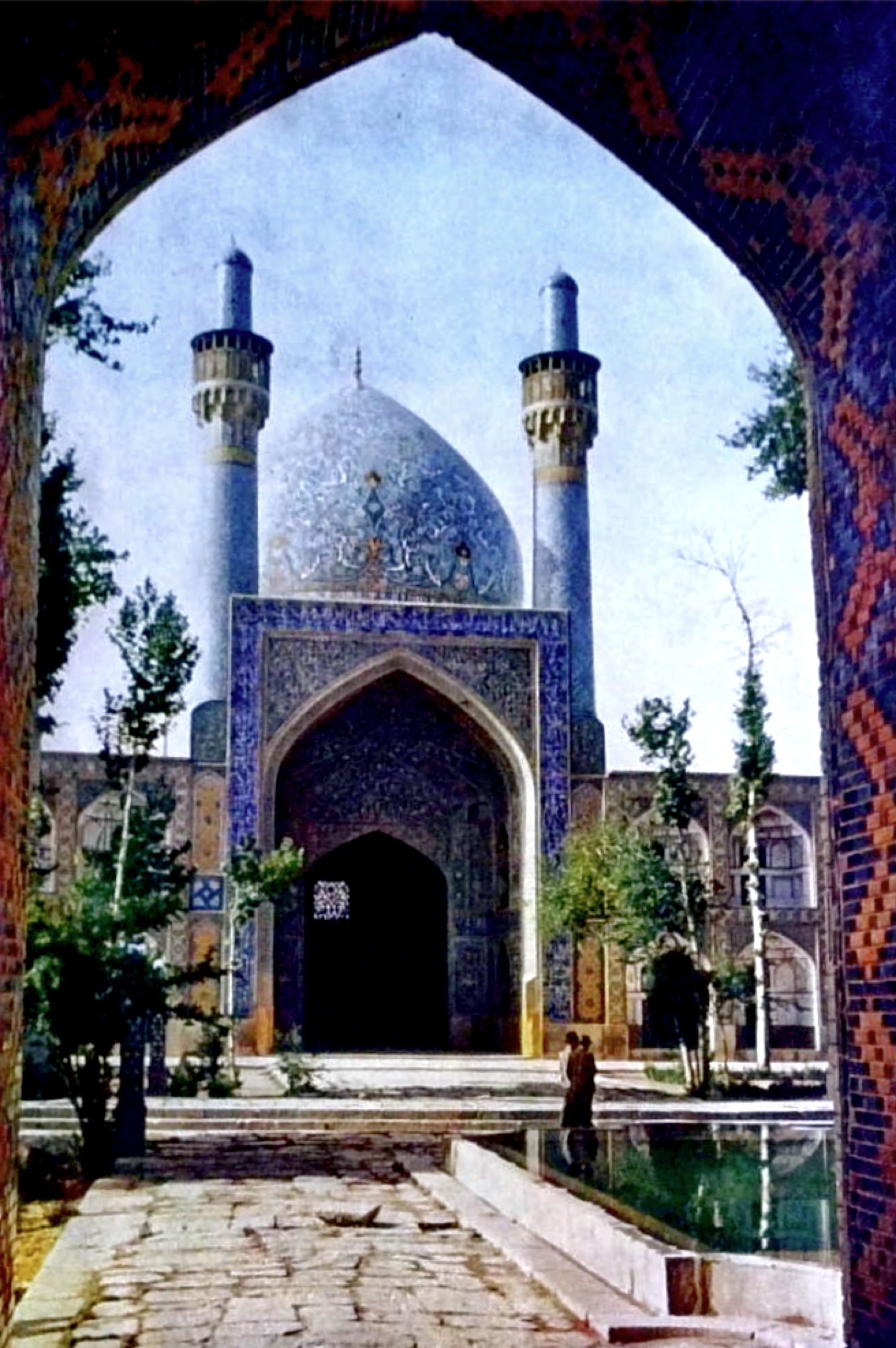
The Chahar Bagh Madrasa
The Chahar Bagh Madrasa, the Madraseh Soltani, and the Madar-e Shah Madrasah, which means "Mother of the Shah" school in Isfahan, Iran.
It is built between 1704 and 1714 by order of the mother of Shah Sultan Husain.
It serves as a theological school for students.
Architecture: A classic Persian garden layoutwith a large central pool, surrounded by lush trees, beautiful blue and turquoise tile mosaics, and a prominent dome flanked by two minarets.
The House of seven gables in Salem MA - Built 1668
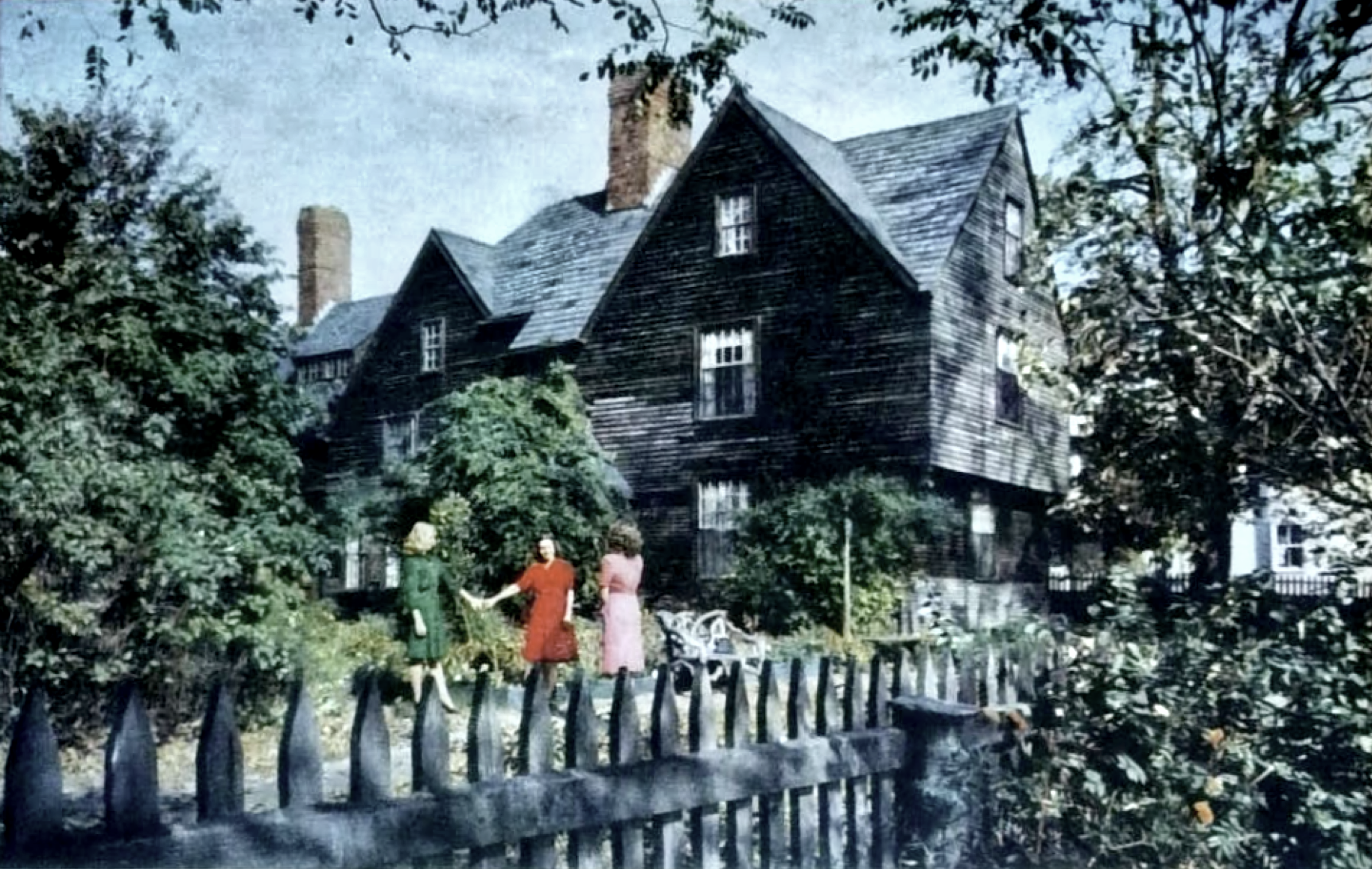
The House of seven gables
The House of seven gables, a traditional New England home of the times.
It is built for Captain John Turner I and his wife, ELizabeth, a wealthy New England sea captain. Three generations of the Turner family lived there before it is sold to another maritime family, the Ingersolls.
Captain Ingersoll's daughter, Susanna, id Nathaniel's cousin who he loved visiting. It is those visits that inspired his 1851 gothic novel, The House of the Seven Gables.
As the owners modernized the house they removed gabels to make more room. Therefore, it probably didn't have seven gables when Nathaniel visited.
Taj Mahal - Built 1632 - 1648 CE
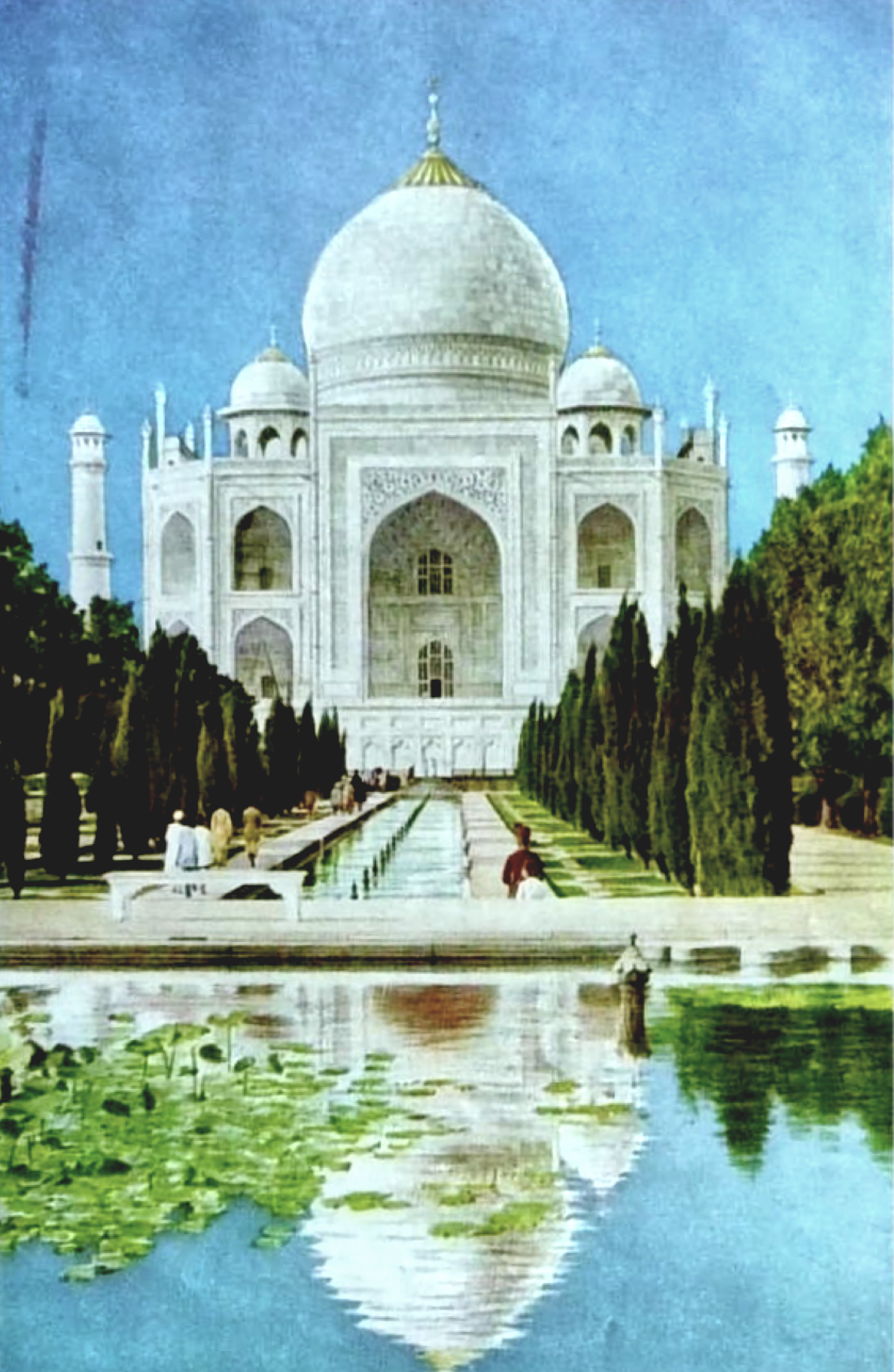
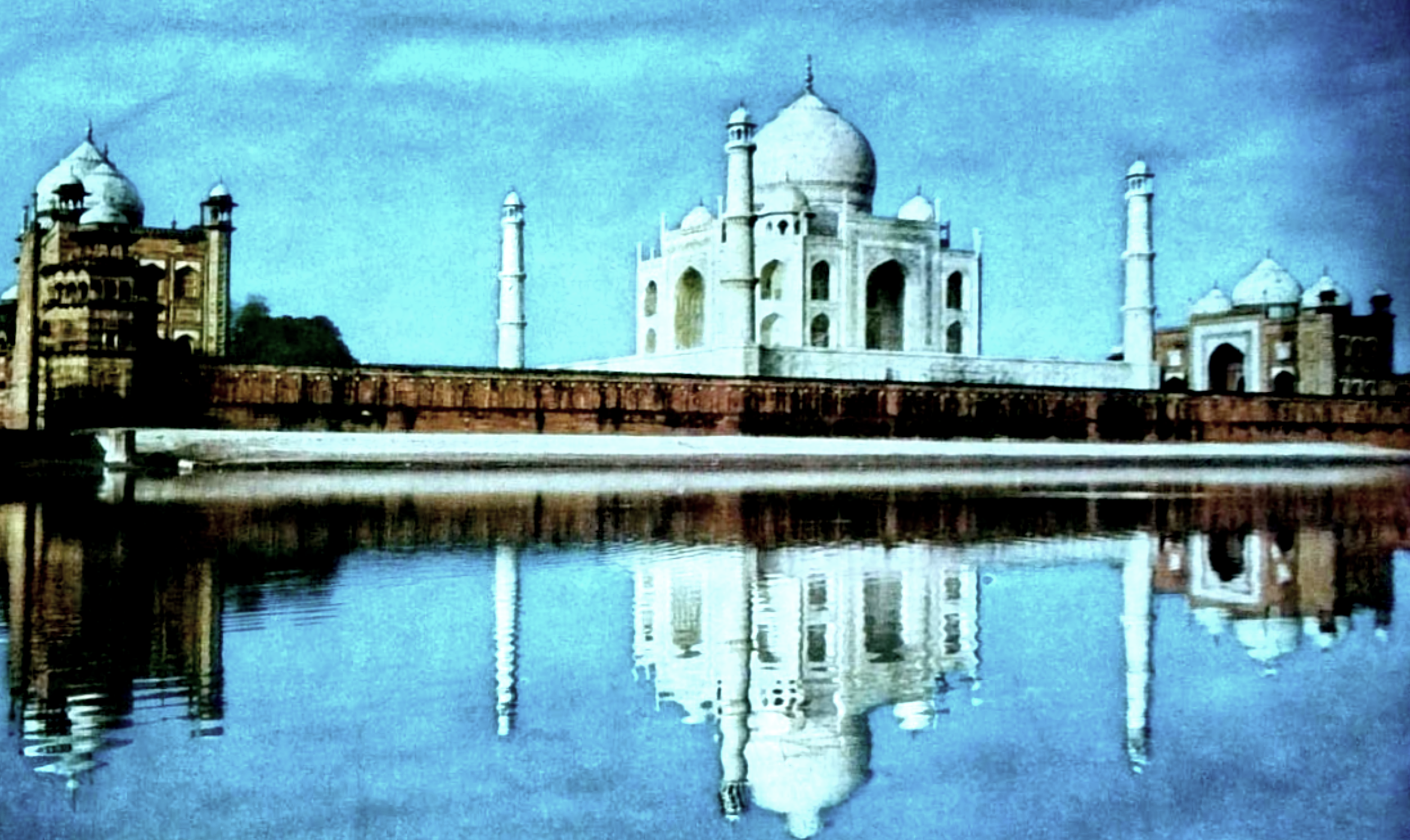
Taj Mah Hall
Emperor Shah Jahan built the Taj Mah Hall in Agra, India.
It is widely considered the most beautiful masterpiece of Mughal architecture.
It is commissioned by the Emperor as a grand mausoleum for his favorite wife, Mumtaz Mahal, who died in childbirth.
Its white marble facade features intricate semi-precious stone inlays and perfect bilateral symmetry.
Church Santa Maria Della Salute along the Grand Canal Venice Built 1631 -1687
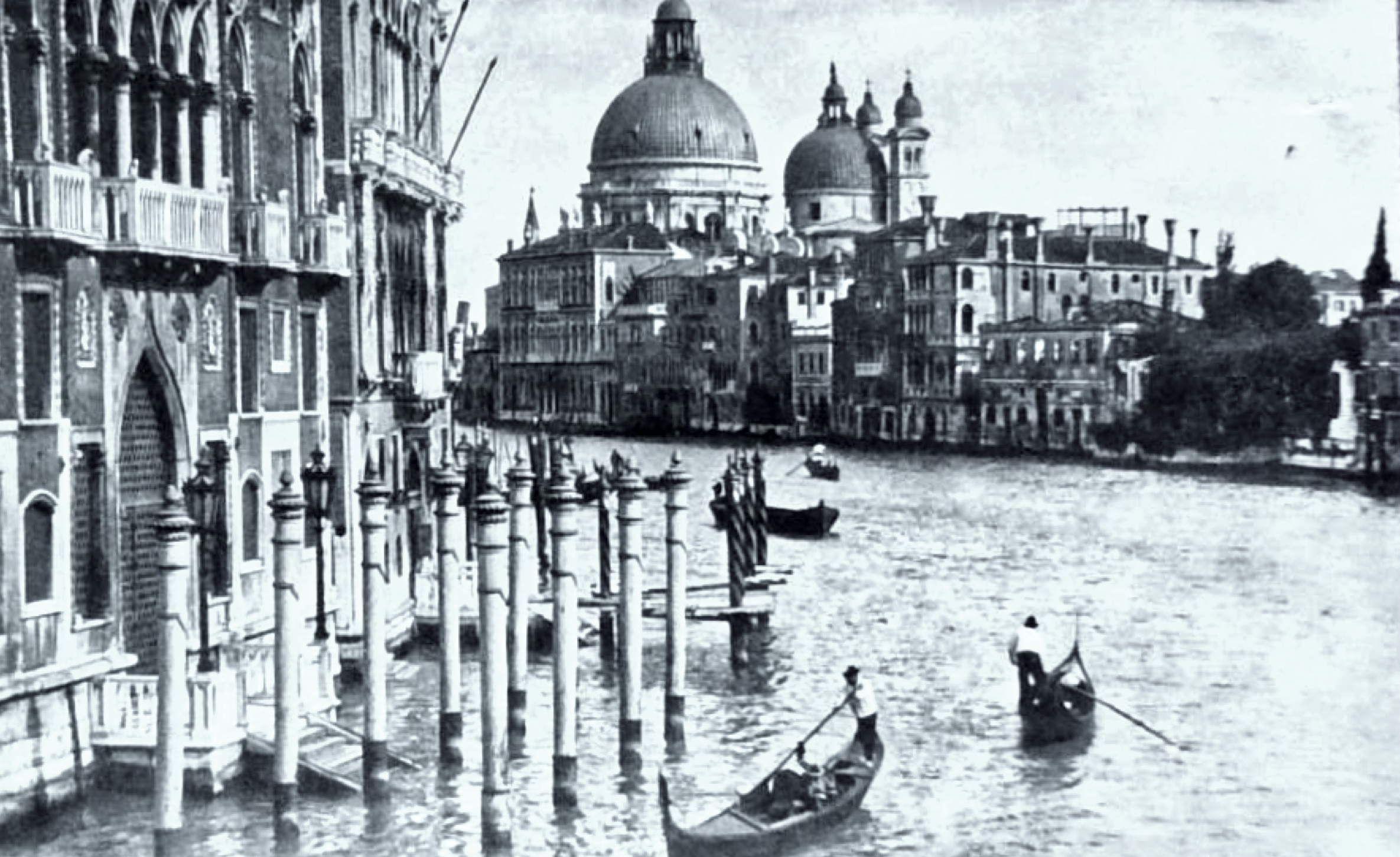
Church Santa Maria Della Salute
It is designed by the Baroque architect Baldassare Longhena.
Commissioned by the Republic of Venice as a thank-you offering to the Virgin Mary for saving the city from an outbreak of the Black plague.
Edinburgh, Scotland - Built 1570

Edinburgh, Scotland
The site of Edinburgh is inhabited by tribes in 900 BC – 600 AD when Ancient Celtic tribes built wooden and dirt hill forts on the rock to protect themselves.
Around 600 AD, it was known as Din Eidyn (the stronghold of Eidyn).
Around 1130 King David I built a formidable royal castle.
It included St. Margaret's Chapel to honor his mother. It is officially the oldest surviving building in the city of Edinburgh.
1509–1511 King James IV built the grand Great Hall, a massive room for lavish royal banquets and state events. It features a spectacular, historic wooden hammer-beam roof.
1570 After a massive siege destroyed much of the medieval castle, Regent Morton built the, heavy stone Half Moon Battery wall that gives the castle its modern shape today.
Castillo de San Marcos - St, Augustine, in Florida
Built 1565 - 1668
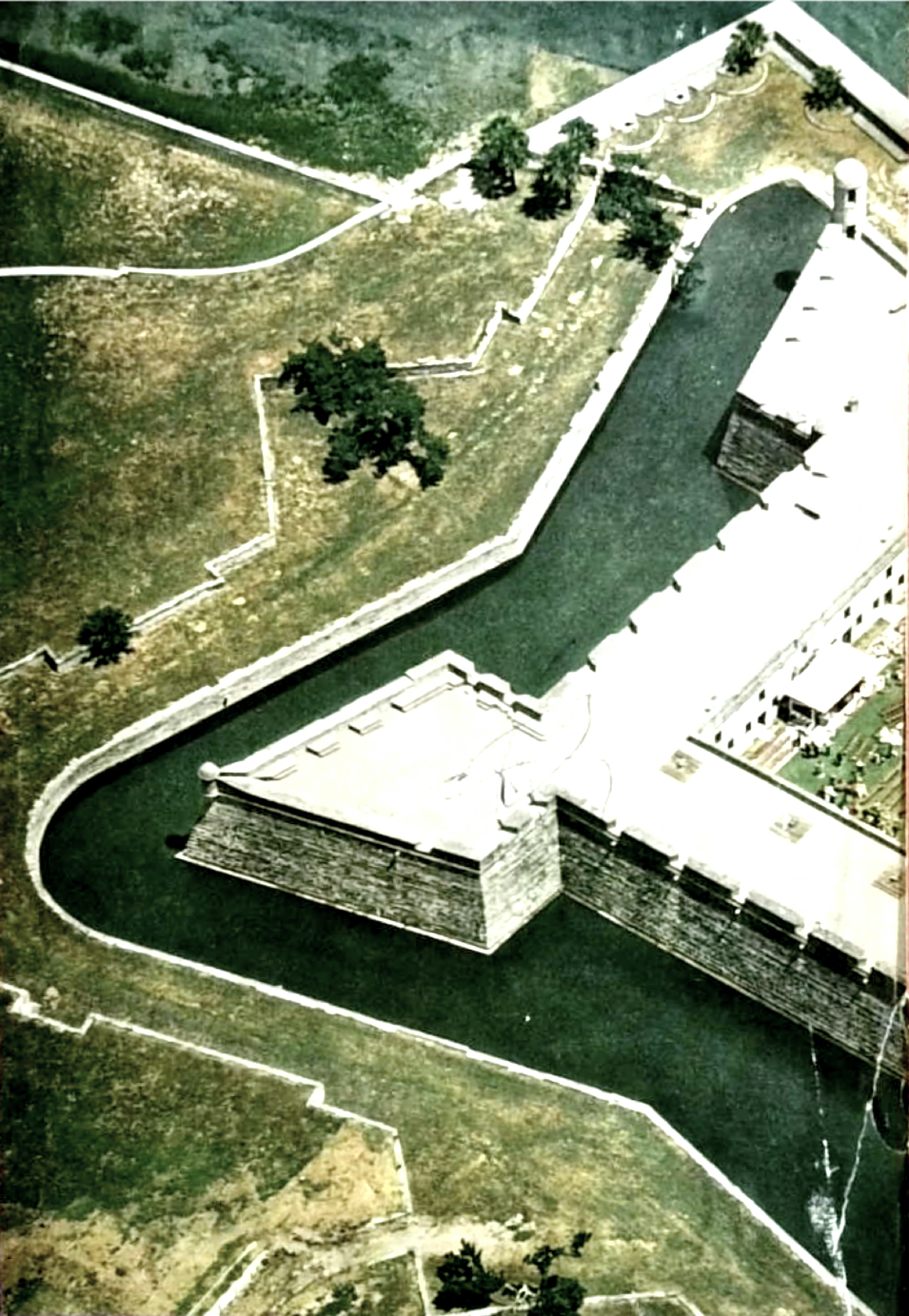

Castillo de San Marcos - St, Augustine, in Florida
The fort is ordered built by the Spanish Governor, Francisco de la Guerra y de la Vega, after raid by English pirates who destroy the town's wooden defenses in 1668.
Designed by a Spanish military engineer, Ignacio Daza. The heavy labor of cutting stone, burning oyster shells for cement, and building the thick walls was done by Native Americans from Spanish missions, skilled workers from Cuba, and Spanish soldiers.
The entire fort is made from coquina, Spanish for small shells. Coquina is a rare, natural limestone formed over thousands of years from millions of tiny clamshells stuck together. The walls literally swallowed cannonballs as they are soft enough to act like modern foam and absorb the cannonballs, which became harmlessly buried inside the walls!
Despite being surrounded and attacked multiple times by the British and other enemies, it is never captured in battle. Every time it changed ownership between Spain, Great Britain, and the United States over the centuries, it happens peacefully through political treaties.
Before the Spanish finally decided to build a permanent stone fortress, they built nine different wooden forts on the site. Every single one of the nine wooden forts is destroyed by wood rot, native termites, severe tropical storms, or being burned down by enemy pirates.
When the United States finally purchased Florida from Spain in 1821, the U.S. Army rename it Fort Marion in honor of Francis Marion, a famous hero of the American Revolutionary War.
The fort kept that name for over a century until the U.S. government officially restored its original Spanish name, Castillo de San Marcos, in 1942
The Château de Chambord - Built 1519
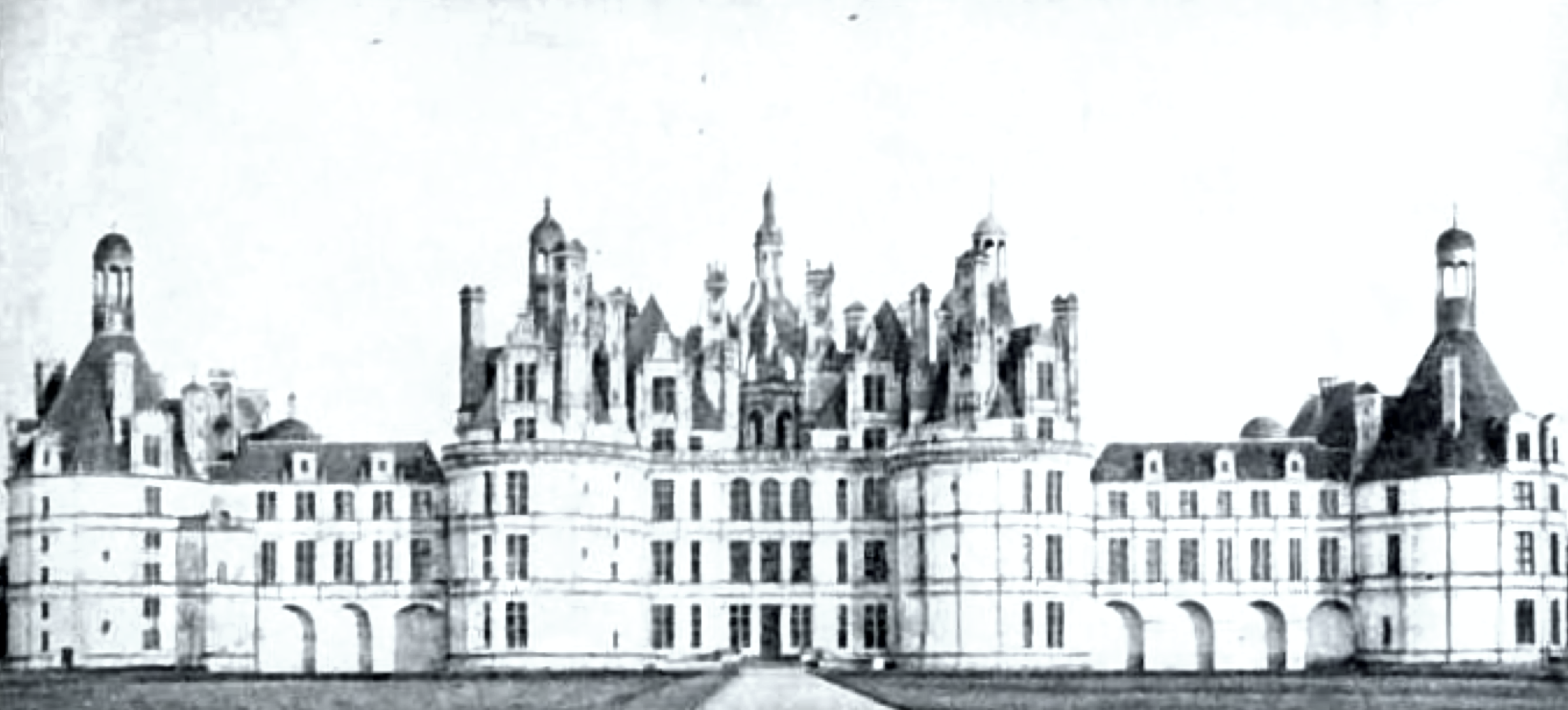
The Château de Chambord
The Château de Chambord in the Loire Valley, France.
Construction began in 1519 with the c ore completed around 1547, but successive kings continue to modify and fully complete the estate over the next century.
The original layout is credited to Italian architect Domenico da Cortona.
However, s Leonardo da Vinci heavily influenced the structure.
Stirline city in Scotland Built 1490 - 1600
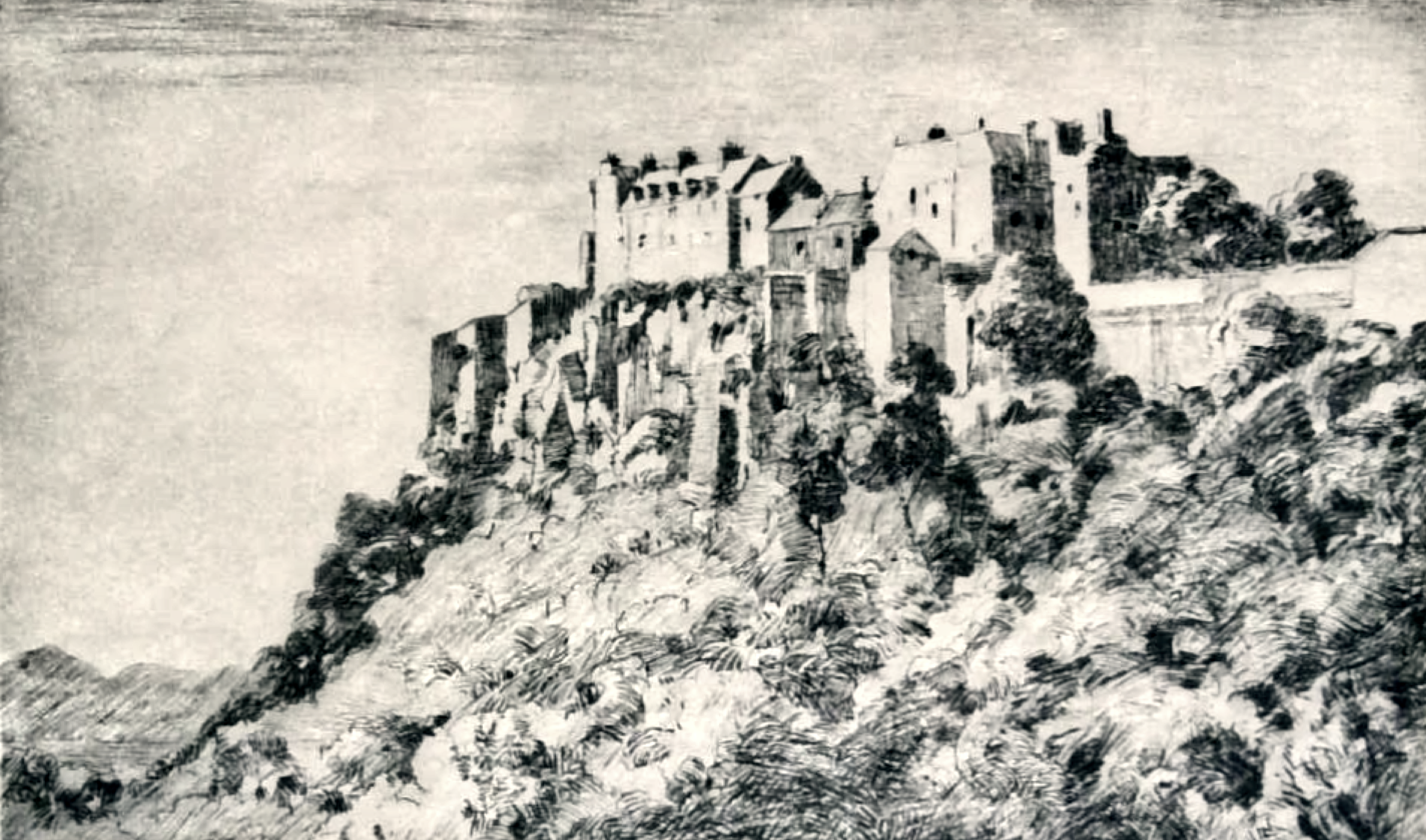
Stirline
Stirline is located in central Scotland along the River Forth, it is the key between the lowlands of Scotland and the Scottish Highlands.
People have fortified the giant volcanic rock for over 3,000 years. These stone structures and palace buildings are built by Stewart kings between 1490 and 1600.
The Battle of Stirling Bridge (1297), where the legendary freedom fighter William Wallace and Braveheart defeated a massive English army.
Just outside the city is Bannockburn, where King Robert the Bruce won Scotland's independence from England at the Battle of Bannockburn in 1314.
Stirling Castle is the primary childhood home of the famous Mary Queen of Scots. She is crowned queen in the castle's Chapel Royal in 1543 when she is just nine months old.
Blarney Castle - Built 1446
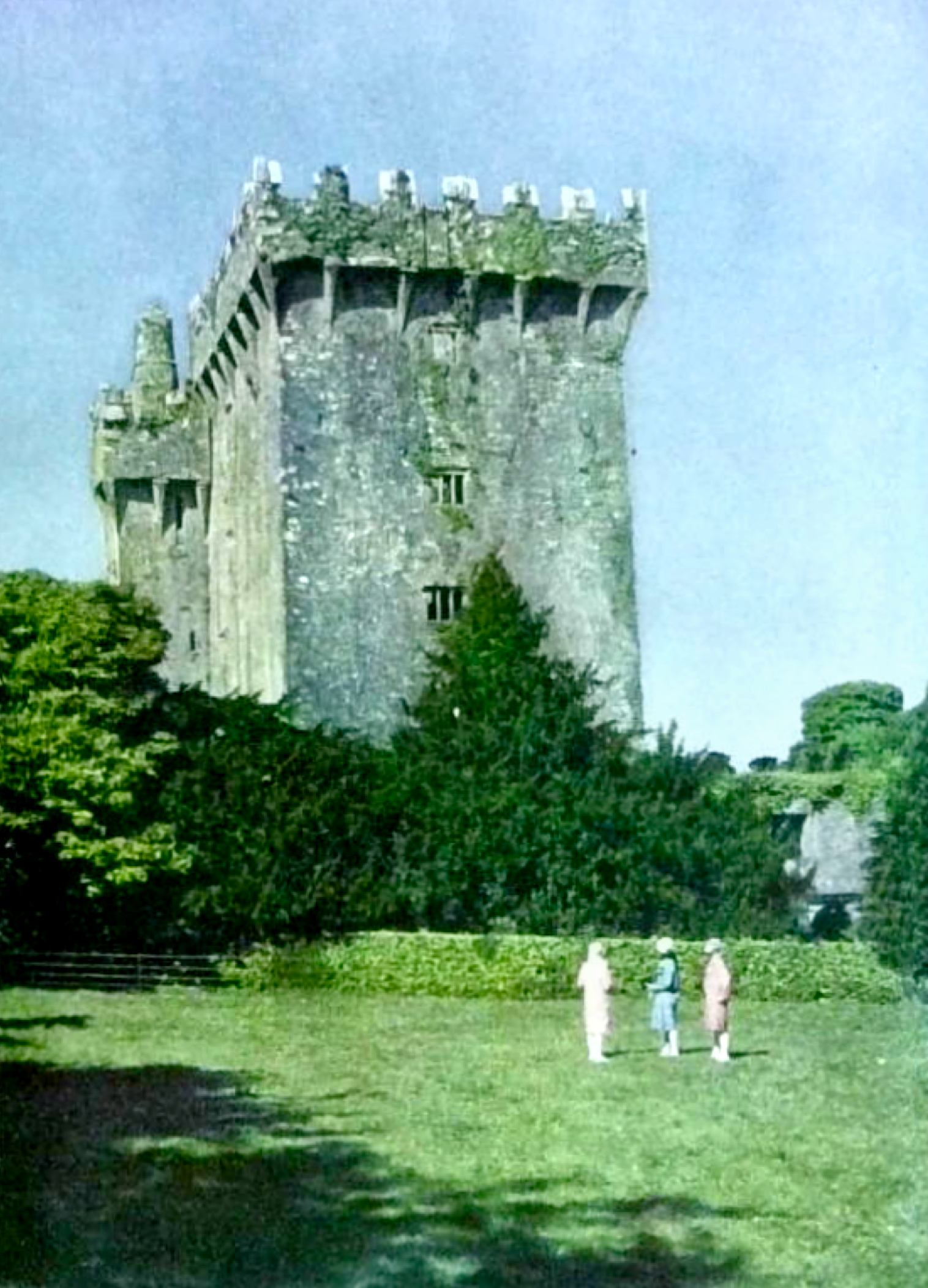
Blarney Castle
Blarney Castle is built in 1446 by Dermot McCarthy (also referred to as Cormac Láidir MacCarthy), the King of Munster. It is the third structure to be erected on the site, following a 10th-century wooden hunting lodge and a 1210 stone fortification .
Famous for housing the legendary Blarney Stone on its battlements. According to folklore, kissing the stone while leaning backward over the edge bestows the "gift of the gab" (eloquence and persuasive flattery) on the kisser.
Bodium Castle - Built 1385
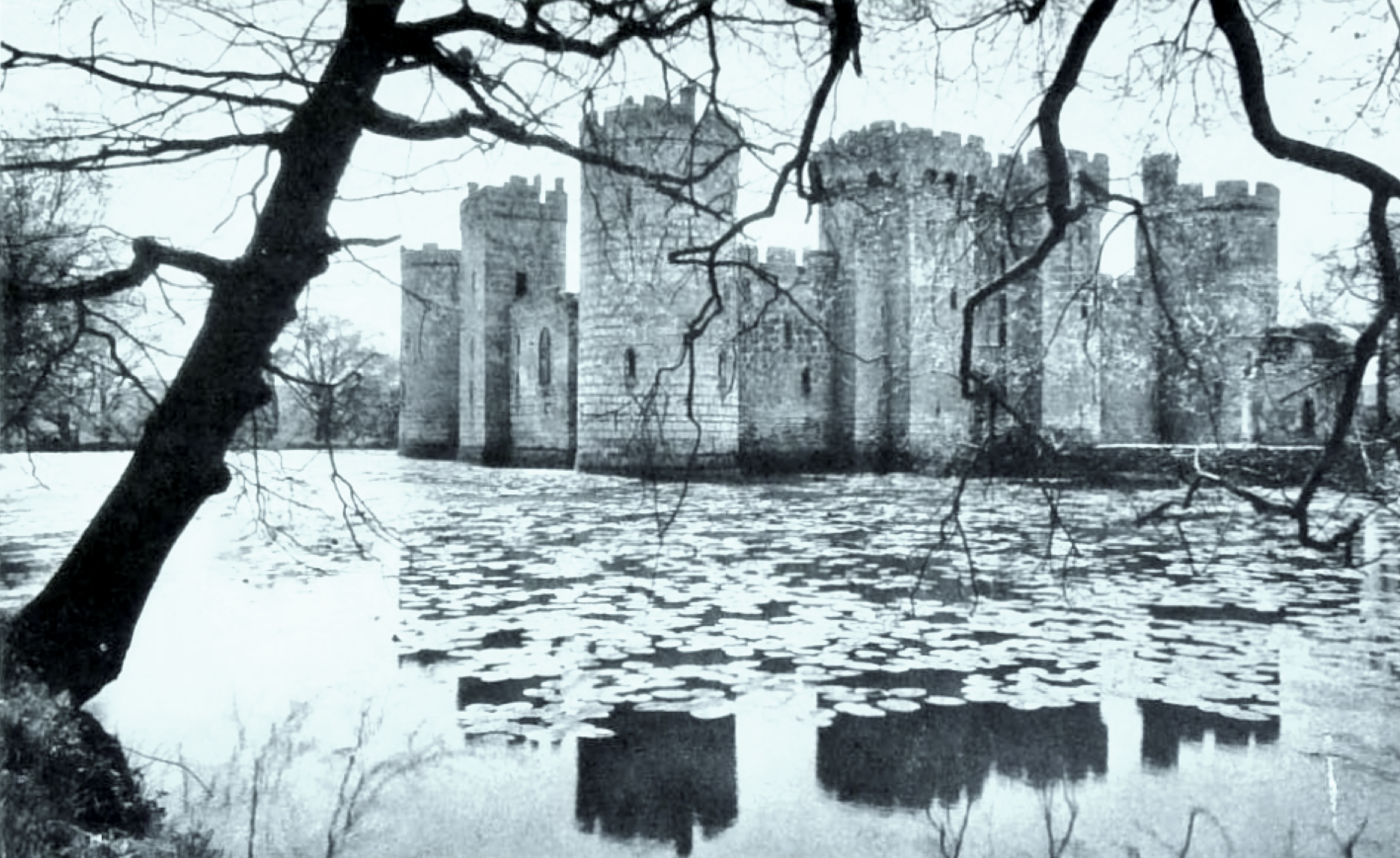
Bodiam Castle
Bodiam Castle, in East Sussex, England, is built in 1385 by Sir Edward Dalyngrigge, a former knight of King Edward III.
He builds the moated fortress during the Hundred Years' War with the permission of King Richard II.
The primary goal is to defend the region against potential French invasions, although its grand scale also flaunts Dalyngrigge's wealth and status.
Albi Cathedral - Built 1355

Albi Cathedral
The impressive, 78-meter (256-foot) donjon-like bell tower of the Albi Cathedral (Cathédrale Sainte-Cécile) in southern France was built It was begun in 1282 and was under construction for 200 years. It is built in two distinct phases:
Lower Base: Built between 1355 and 1366.
It features a massive, stacked square layout with cylindrical corners, giving the cathedral its fortress-like, defensive appearance.
Upper Levels & Spire: Completed in 1492.
This upper section consists of smaller, stacked octagonal tiers topped with delicate flying arches
.The tower's construction was part of a larger 200-year building campaign for the cathedral, which took place from 1282 to 1480
Built in the aftermath of the Albigensian Crusade, the grim exterior resembles a fortress, but the interior is lavishly decorated with art and sculpture, a very ornate choir screen, and walls in bright blues and golds, in a Gothic style.
Stained glass window in the choir clerestory of the Tewkesbury Abbey ( Abbey Church of St. Mary the Virgin) in Gloucestershire, England - Built 1340

Tewkesbury Abbey knight window
The knight is Robert FitzHamon who (around 1070–1107) is a powerful Anglo-Norman nobleman and a loyal knight to King William II (William Rufus) and King Henry I.
He is most famous for leading the Norman conquest of Glamorgan in Wales and for refounding Tewkesbury Abbey in 1092, which is why he is honored with this window inside the church.
Made around 1340 to 1344, a few centuries after FitzHamon died. Paid for by Eleanor de Clare, when the abbey is being restored.
The detailed armor is loved by historians because it shows exactly what real knights wore into battle during the Middle Ages.
You can clearly see his chainmail hood, protective arm guards, matching leg armor, and the yellow surcoat featuring his family's coat of arms.
The white rose border is framed by vertical climbing green vines loaded with white roses, a classic motif used by medieval glass artists.
Other knights depicted in the abbey include:
- Robert FitzRoy (1st Earl of Gloucester)
- Gilbert de Clare (Earl of Gloucester and Hertford)
- Hugh Despenser II (Baron Despenser)
Caernarvon Castle - Built 1283

Caernarvon Castle
Caernarvon Castle is constructed starting in the summer of 1283 by King Edward I of England.
Designed by master architect, James of St George, after Edward's conquest of Wales.The massive stone fortress is built above an earlier Norman motte-and-bailey castle and on the site of an ancient Roman fort.
Additions are made until around 1330.
Denvegan Castle Built 1200-1840
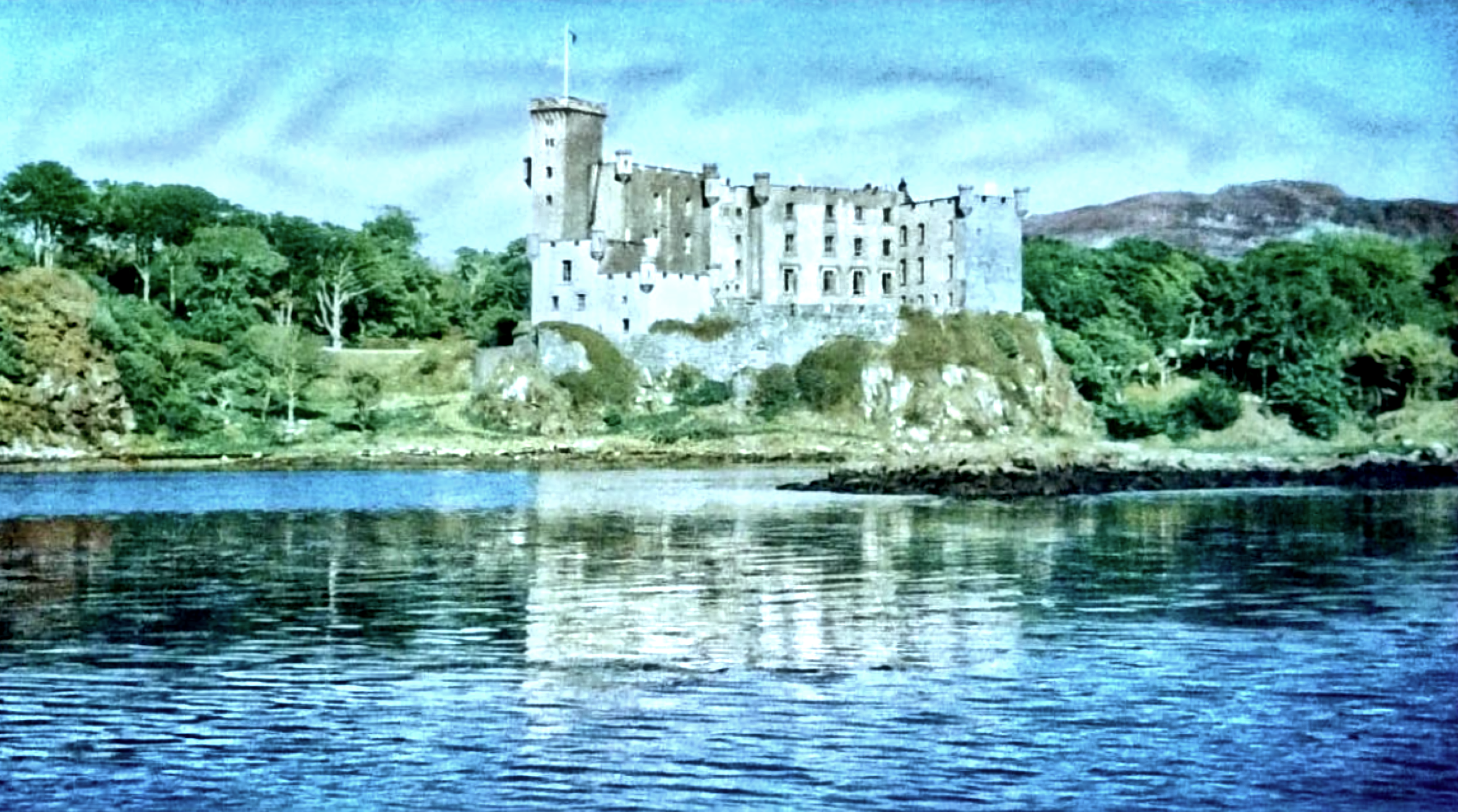
Dunvegan Castle
Dunvegan Castle is on the Isle of Skye in the inlet of Loch Dunvegan in northwestern Scotland.
The structure is built over years.
1200s: The very first curtain wall fortification is built on the rock.
1300s: A massive stone tower house is added.
1500s: The famous "Fairy Tower" is built and houses the fairy flag.
1840s: The 25th Chief hired architect Robert Brown to give the entire castle a makeover. The mock-medieval battlements and towers are added.
Notre Dame Cathedral in Paris - Built 1163 - 1345

Notre Dame Cathedral
The cathedral is started by Maurice de Sully, the Bishop of Paris, who wants a grand new church for the growing city.
The first stone is laid in the presence of King Louis VII and Pope Alexander III.
Because it took generations to build, no single person constructed it. It is built by a team of anonymous medieval stonemasons, carpenters, and master builders.
Pierre de Montreuil, later designs the massive stone pillars and colorful windows.
The statues on the roof are not all the same!
The gargoyles are hollow stone pipes meant to drain rainwater away from the walls.
The monsters that sit on the ledges are grotesques, and for decoration.
After the French Revolution, the cathedral is heavily damaged, neglected, and nearly ruined. In 1831, author Victor Hugo wrote, The Hunchback of Notre-Dame. The story made people fall in love with the building again, and the government funds a massive restoration.
The flying buttresses make it one of the first buildings in the world to use these exterior stone supports. They hold up the heavy roof and allo the walls to be thinner so giant stained-glass windows can be inserted.
TaosPueblo in northern New Mexico. apartments
Built 1000 - 1450

Taos Pueblo
Taos Pueblo in northern New Mexico.
The Native American painter is Albert Looking Elk Martinez (also known as Alberto Martinez or Albert Lujan) painting in the plaza.
The photograph dates to the 1920's.
The pueblo is a multi-storied adobe complex.Recognized as a UNESCO World Heritage Site.
Since it is one of the oldest continuously inhabited communities in North America.
Windsor of England at Berkshire, England,
Built 1070 - 1100
Private residence for the British monarch
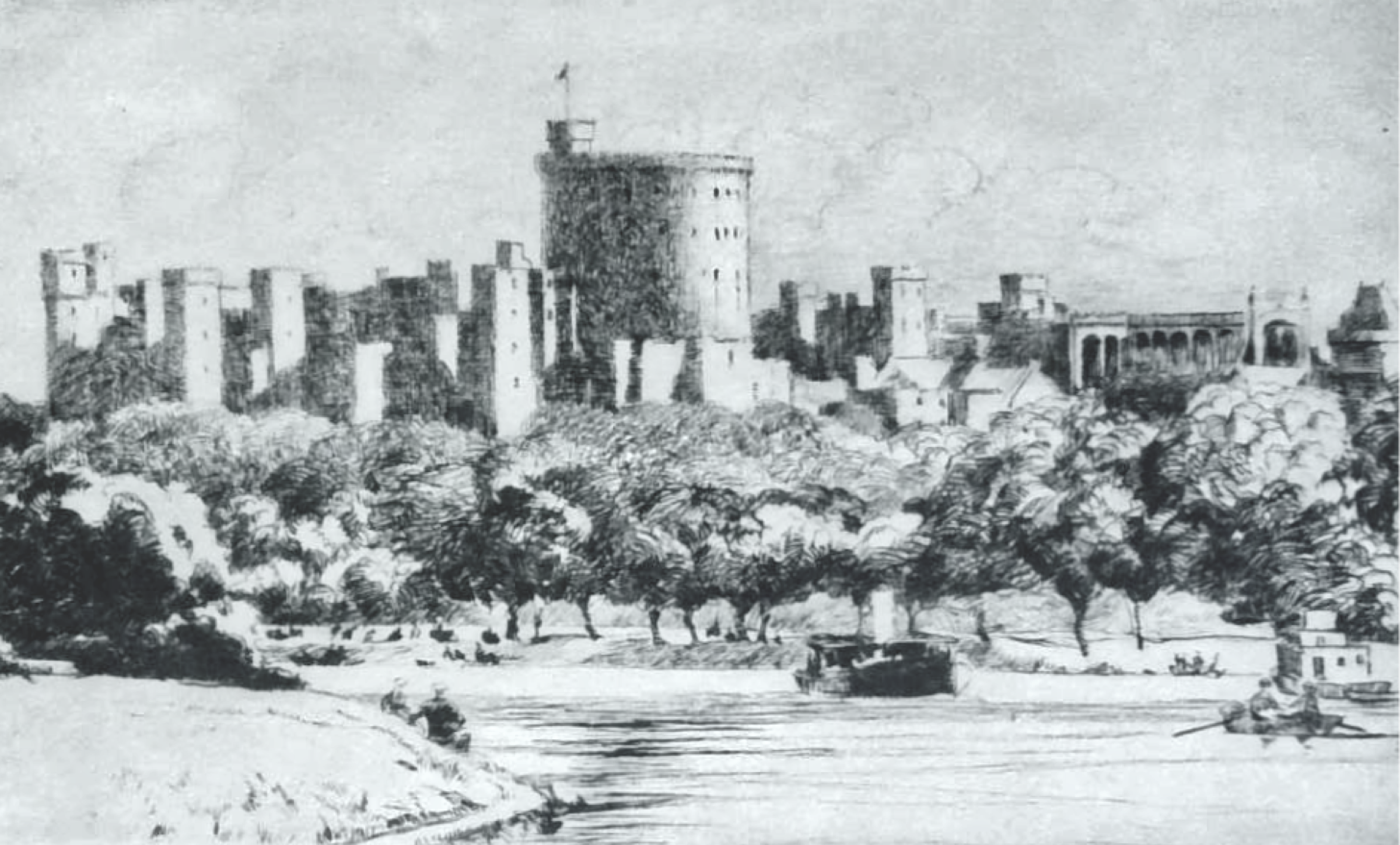
Windsor Castle
The castle is founded by William the Conqueror, the first Norman King of England around 1070. It took about 16 years to complete the original structure. Over the next 900 years, successive kings and queens completely transformed the site. Henry II rebuilt the wooden walls in stone during the late 1100's, Edward III converted it into a grand Gothic palace in the 1300's, and George IV added the ultra-luxurious royal apartments in the 1800's.
It id the longest-occupied palace in Europe - over 900 years.
Since King Henry I moved into the castle in 1110, it has served as a home to 40 different British monarchs, including King Charles III and the late Queen Elizabeth II.
A Hidden Wartime Bunker: During World War II, Windsor Castle was used to protect the royal family from heavy air raids on London. The teenage Princess Elizabeth (later Queen Elizabeth II) and her sister Margaret slept in the dungeons underneath the castle for safety.
To fool enemy spies, the castle lights were completely blacked out, and the historic artwork was secretly removed and hidden.
The Country's Oldest Kitchen: The Great Kitchen at Windsor is the oldest working kitchen in Britain. It has been feeding royalty for over 650 years. To make sure food is never late for the monarch, the kitchen clocks are deliberately kept five minutes fast.
The Ultimate Royal Dollhouse: The castle houses Queen Mary's Dollhouse, which is the largest and most famous miniature house in the world. Built in the 1920s, it has working electricity, elevators that move, flushing toilets, and running hot and cold water through real pipes.
A Final Resting Place: The magnificent St. George's Chapel on the castle grounds is a royal burial site. It holds the tombs of famous historical figures like King Henry VIII and his wife Jane Seymour, King Charles I, and Queen Elizabeth II.
It is also a popular venue for royal weddings, such as Prince Harry and Meghan Markle's wedding in 2018.
Pisa Cathedral & Leaning Tower of Pisa Built 1063- 1093
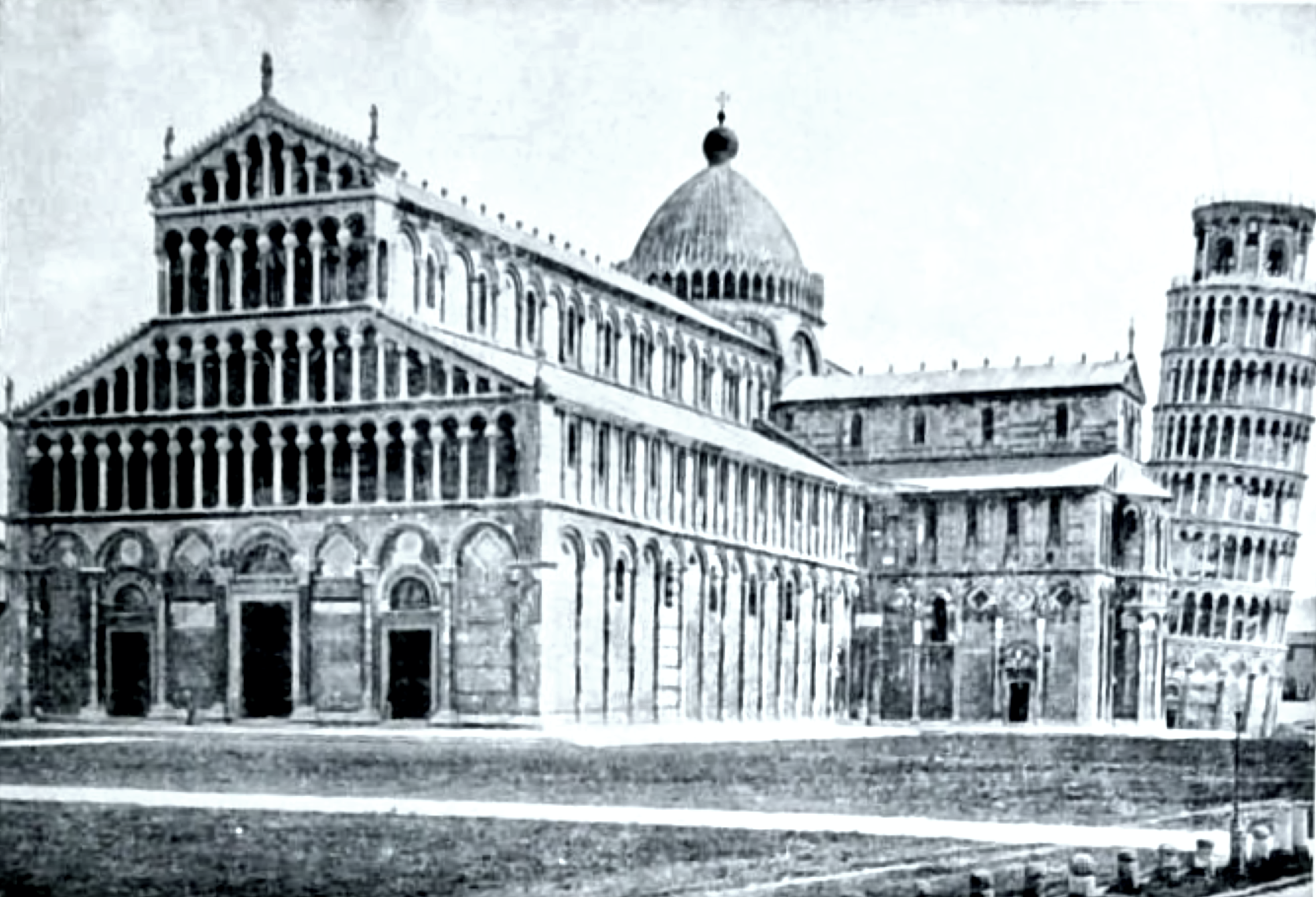
The Pisa Cathedral
The Leaning Tower of Pisa is actually built to serve as the cathedral's bell tower.
Saint Martindu Canigou Pyrenees Abbey
Built 1005 - 1009
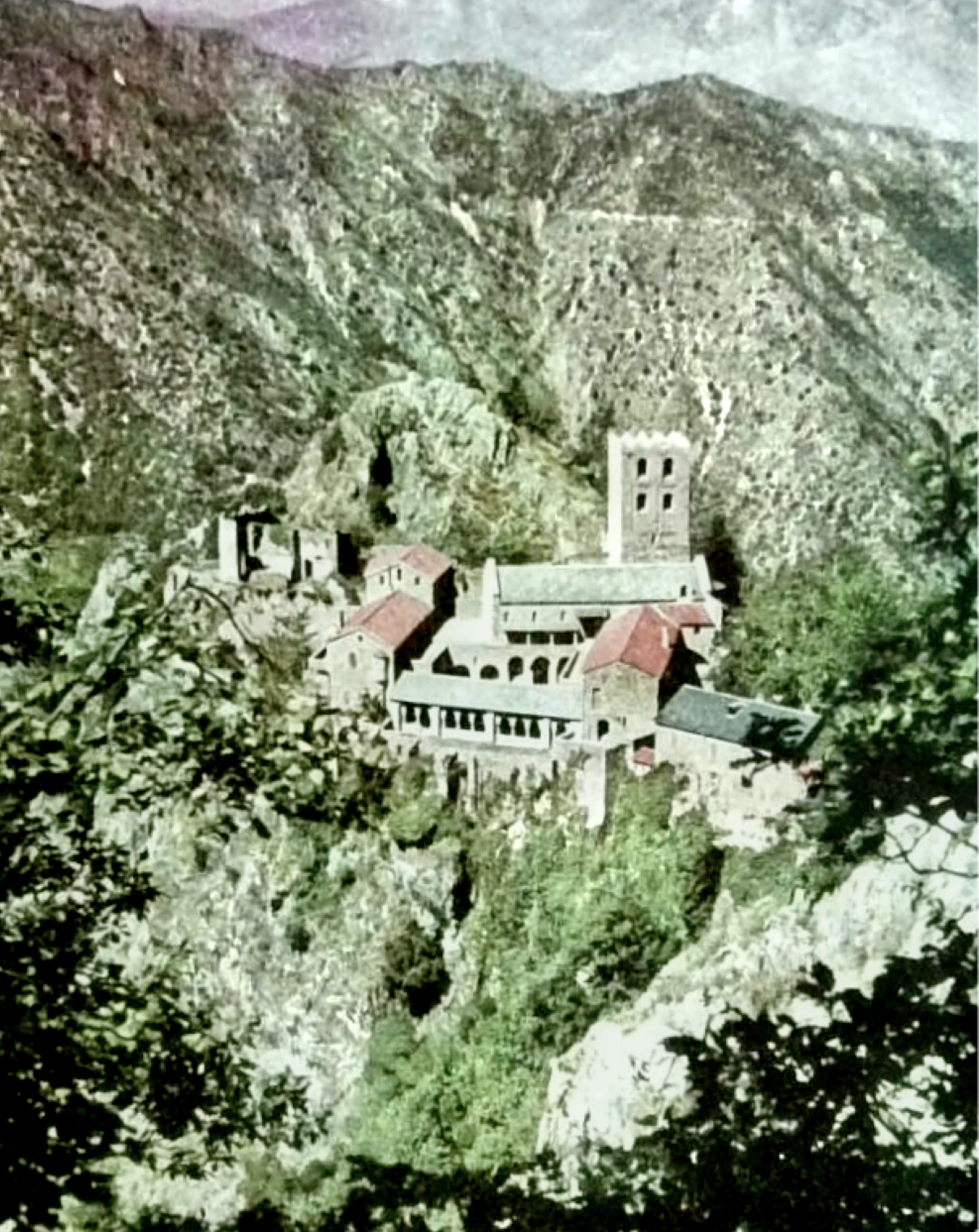
Saint Martindu Canigou
Saint Martindu Canigou Pyrenees Abbey is a medieval monastery high up on a rocky cliff in the French Pyrenees mountains, close to the Spanish border.
First built between 1005 and 1009 by a nobleman Count Guifred II (the Count of Cerdanya) and his brother, Oliba, a prominent Benedictine monk.
Guifred II paid for the construction because he wanted to atonement for a terrible crime. Legend says he murdered his son. Later in life, he gives up his riches, moves into the abbey, and lives there as a humble monk until he dies.
It is built as a two-story church. The lower church is dark and mostly underground, the upper church is bright and is directly above it.
It is only accessible to travelers by taking a steep, 40-minute hike on foot from the tiny village of Casteil below.
In 1783, the last remaining monks left, and the building was abandoned during the French Revolution. It sat for over 100 years until a local bishop started to rebuild it in 1902 stone by stone.
St Michels Chapel in southern France - Built in 962
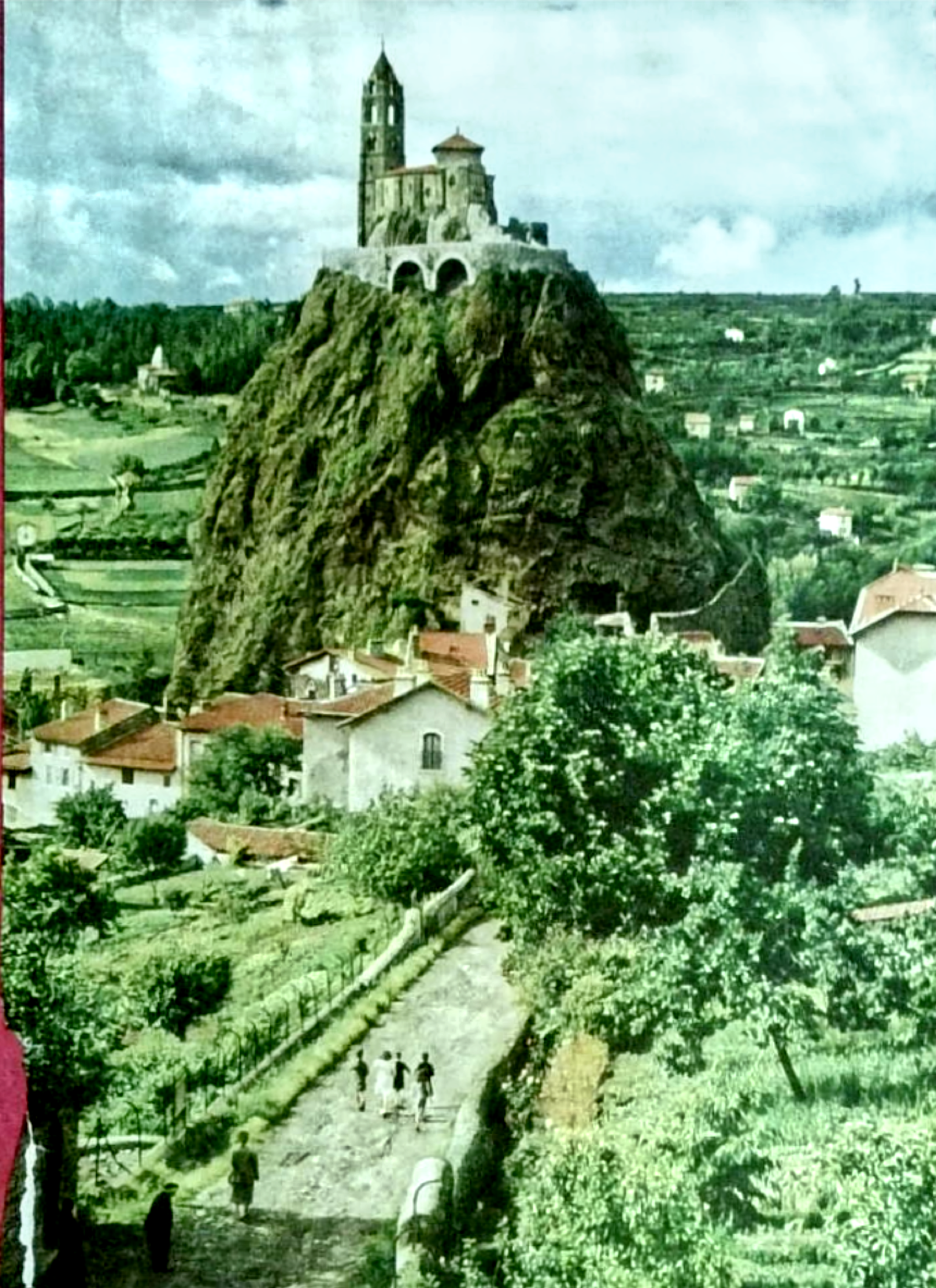
The Chapel of Saint-Michel d'Aiguilhe
The Chapel of Saint-Michel d'Aiguilhe (Saint Michael of the Needle) is in southern France and built in 962.
It is commissioned by Bishop Godescalc of Le Puy to celebrate his safe return from a 1,000-mile pilgrimage to Santiago de Compostela in Spain.
There are no roads or elevators. To reach the front door, you have to climb 268 stone steps that are carved directly into the steep volcanic cliff face.
Long before Christians arrived, prehistoric humans used the rock as a sacred space and built a stone dolmen tomb there.
Later, the Romans built a temple on top dedicated to the god Mercury.
The builders of the chapel reused the ancient prehistoric stones and the Roman stone in the columns for the chapel walls!
In 1955, archeologists cleaning the church altar discovered a secret hidden compartment. In it, they found centuries-old religious relics: an ancient wooden crucifix and a small metal box holding historical fabrics.
Five-Storied Pagoda of Kōfuku-ji, located in Nara, Japan
Built 730

The Five-Storied Pagoda of Kōfuku-ji
The Five-Storied Pagoda of Kōfuku-ji (called Gojū-no-tō), located in Nara, Japan.
This photo is a classic view of the pagoda looking across Sarusawa Pond, one of the most famous scenic photography spots in the entire country.
The pagoda is first built in 730 AD by Empress Kōmyō.Because it is made completely of wood, it burns down and is rebuilt five different times after being struck by lightning or caught in fires.
The building above is completed in 1426.
The pagoda is designated a National Treasure and serves as the primary landmark and official symbol for the entire ancient city of Nara.
It is the second tallest in Japan at 50.1 meters ( 164 feet) tall.
It is a UNESCO World Heritage listing.
Kōfuku-ji is the official family temple of the Fujiwara clan, who are the most powerful aristocratic family in Japan during the Nara and Heian historical periods.
Santa Sofia in Constantinople - Built 532 - 537

The Santa Sofia
The Santa Sofia in Constantinople known today as the Hagia Sophia in Istanbul, Turkey.
The name means Holy Wisdom in Greek.
For nearly a thousand years after its completion, it is the largest cathedral in the entire world .
It is considered one of the greatest architectural structures in human history.
It has a Floating Dome that rises 180 feet into the air.
The architects use curved triangular masonry supports, called pendentives, to rest a completely round dome on top of a square base. They ringed this with 40 windows, making the heavy stone structure look like it is floating on a ring of pure light.
It has changed religions multiple times:
It spent roughly 900 years as an Eastern Orthodox Christian cathedral.
In 1453, Ottoman Sultan Mehmed II converted into an Islamic mosque, and added four tall minaret towers.
In 1935, Turkey turned it into a secular museum.
In 202 it was changed back into a practicing mosque.
The inside walls were originally covered in millions of tiny glass, gold, and silver tiles forming Christian mosaics. When the building became a mosque, Islamic law forbade images of people, so workers covered the Christian artwork with plaster and calligraphy panels. Today, many of those 1,500-year-old golden mosaics have been uncovered and preserved.
Viking Graffiti. During the Middle Ages, the Byzantine Emperors hired Scandinavian Vikings to serve as personal bodyguards. One Viking, named Halvdan, carves his name into the marble railings. You can still see his runic graffiti today!
Church of the Daphni Monastery - Built 500
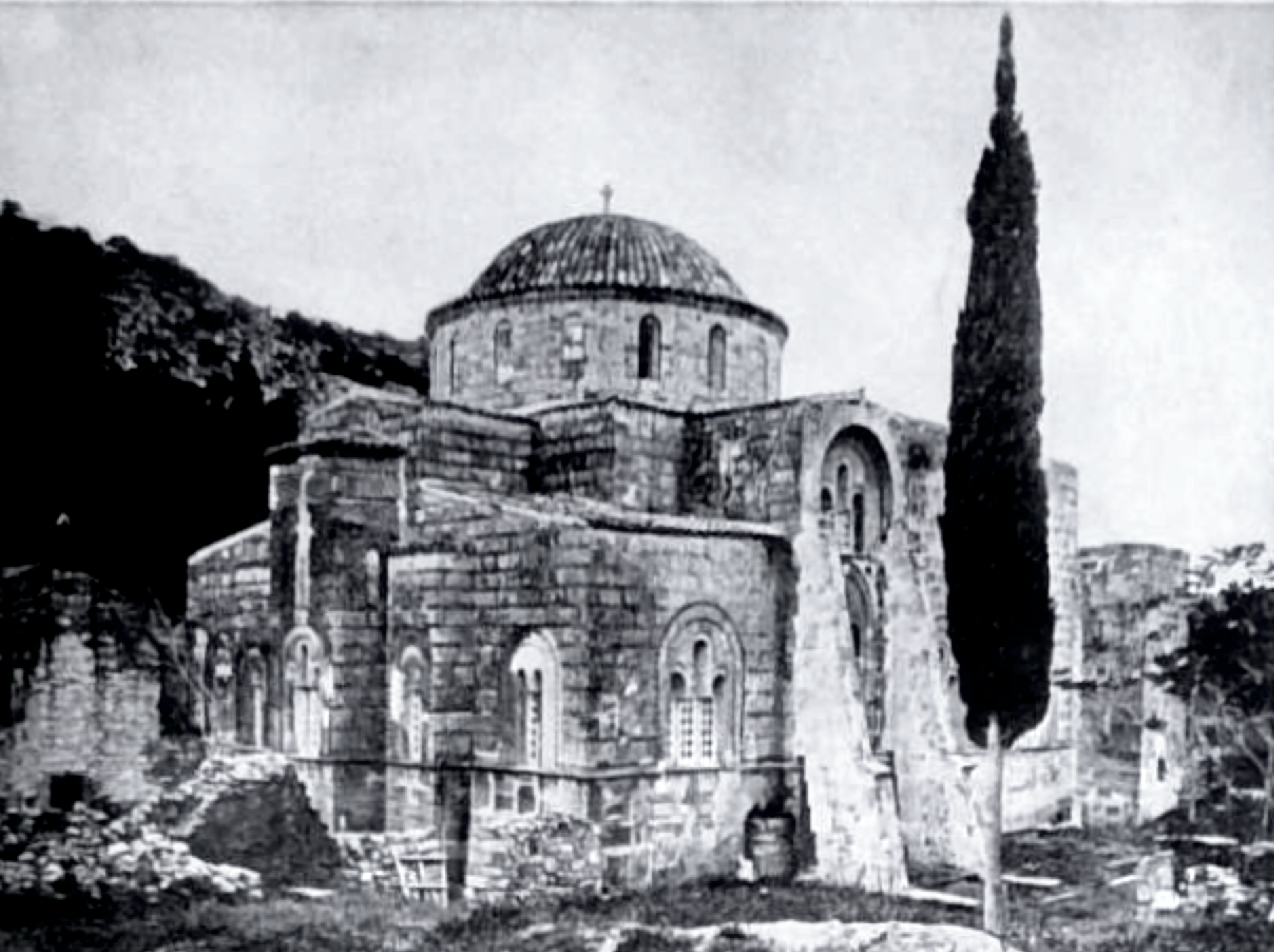
The church of the Daphni Monastery
The church of the Daphni Monastery is located on the outskirts of Athens, Greece.
The original builder or architect is not known.
It is believed to have been supported by the Byzantine Emperor Justinian I.
Petra -
Built by The Nabataean Arabs, in Southern Jordan from
Built
400 BCE to 100 CE
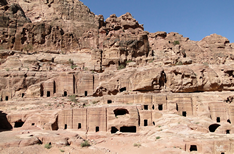
Petra
Image source Bernard Gagnon (Own work)
Petra, known as the "Rose City, is carved directly into red, white, and pink sandstone cliff faces by the Nabataeans in the desert of southern Jordan. See - Nova video (53:05)
Nabataeans create an irrigation system for their city's water needs. To do so they solve several problems for water to be moved over a long distance.
- They discover an optimal shape and size of pipes so sediment wouldn't clog the flow.
- Discover how smooth pipes need to be set so the flow rate delivers appropriate amounts of water. For example, rapid flow creates ripples and reduces water volume compared to a smooth flow.
- They conclude: shape, size, smoothness, and slope of pipes affect flow (2.5 degree of slope works best for an efficient water flow).
- Excavations show how the Nabataeans create their water supply system for their desert city. It includes: an artificial oasis, flood controls, multiple dams, storage in cisterns, and water transported in conduits from sources miles away.
Source for detailed descriptions of Petra's Water supply and distribution.
Pont DuGard Aqueduct in France - Built 50
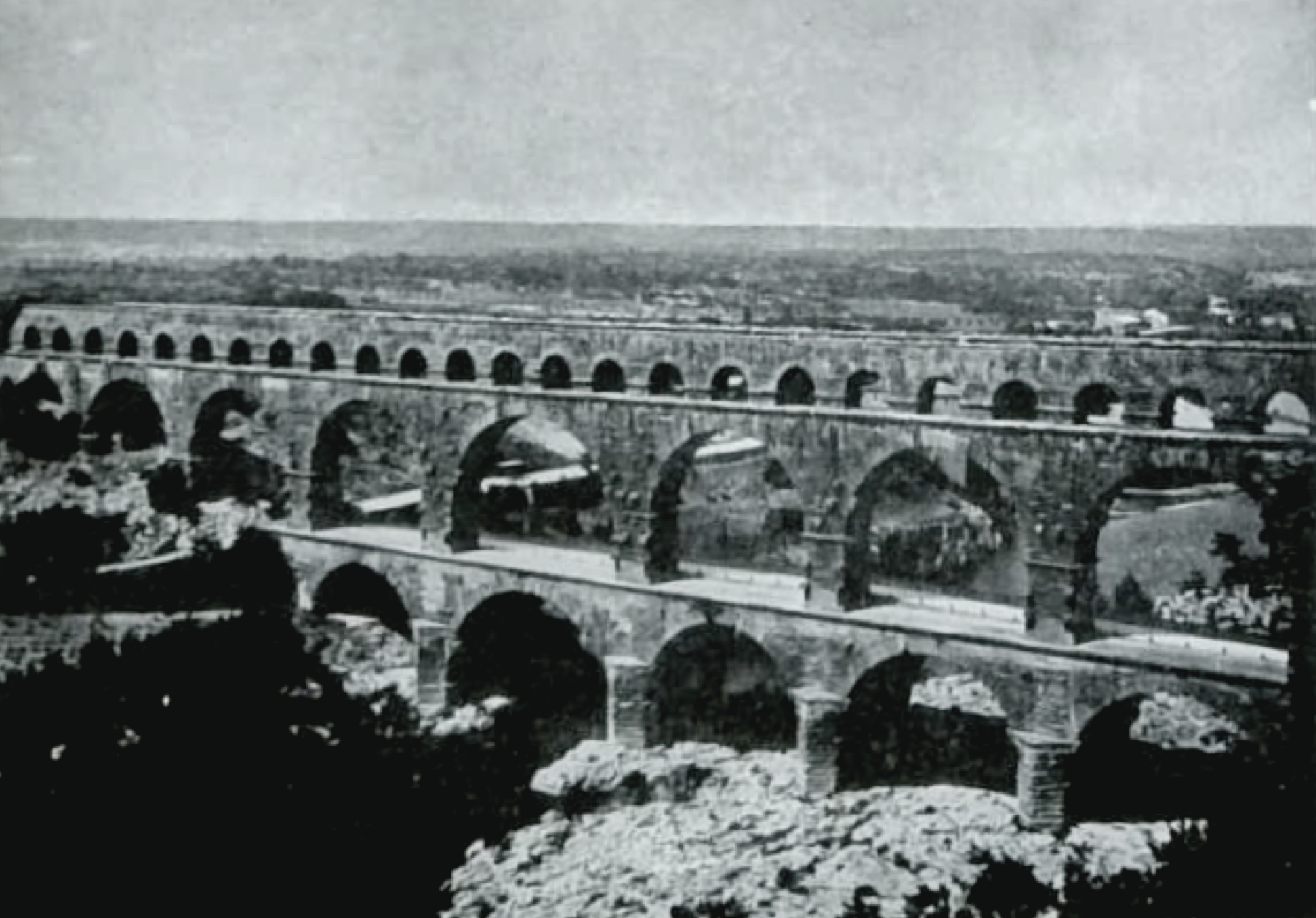
Pont DuGard Aqueduct
Constructed to carry fresh water across the Gardon River as part of a massive 50-kilometer (31-mile) canal system. It supplied water to the ancient Roman city of Nemausus, Nîmes today.
It is the highest Roman bridge in the world. At 49 meters (160 feet) tall and the highest aqueduct bridge the Romans ever built.
It is the only surviving ancient bridge with three rows of arches on top of each other.
Made of heavy local limestone blocks eith the blocks cut so perfectly they fit together tightly without using any glue, cement, or mortar. Gravity and friction are the only forces holding the 50,000 tons of stone in place!
The water channel is on the top row of arches. The water flows naturally from the mountain springs to the city by gravity. The slope is slight and precise with a 2.5 centimeters drop over the entire length of the bridge (that's 1 inch across 1,100 feet)!
After the Roman Empire fell, people stopped maintaining the water channel, and it filled up with mineral crusts. However, the bridge was never torn down because local lords realized it is perfect for crossing the deep river canyon. So they charged travelers to cross it, and the toll money paid for repairs that kept it standing for 2,000 years.
It is a protected UNESCO World Heritage Site.
More at Wikipedoa.org
Temple of Jupiter or Temple of the Sun ancient ruins of Baalbek, Lebanon - Built 16 BCE

Temple of Jupiter or Temple of the Sun
Built by the Roman Empire around 16 BCE under the reign of Emperor Augustus. It takes over two centuries to fully complete.
Later Roman emperors, including Nero, Antoninus Pius, and Philip the Arab, continually added grand courtyards, plazas, and towers to the site.
It is the largest temple ever constructed by the Roman Empire.
It had 54 stone columns that stood 65 feet (20 meters) tall.
Only six columns remain standing, yet they dominate the landscape.
It sits on a prehistoric stone platform made with three of the largest building blocks ever moved by humans in antiquity. Known as the Trilithon. Each is a perfectly cut block that weighs about 800 tons. Transported from a quarry over half a mile away and placed on a wall with millimeter precision. How puzzles modern engineers.
Temple of Apollo Delphi - Built 330 BCE
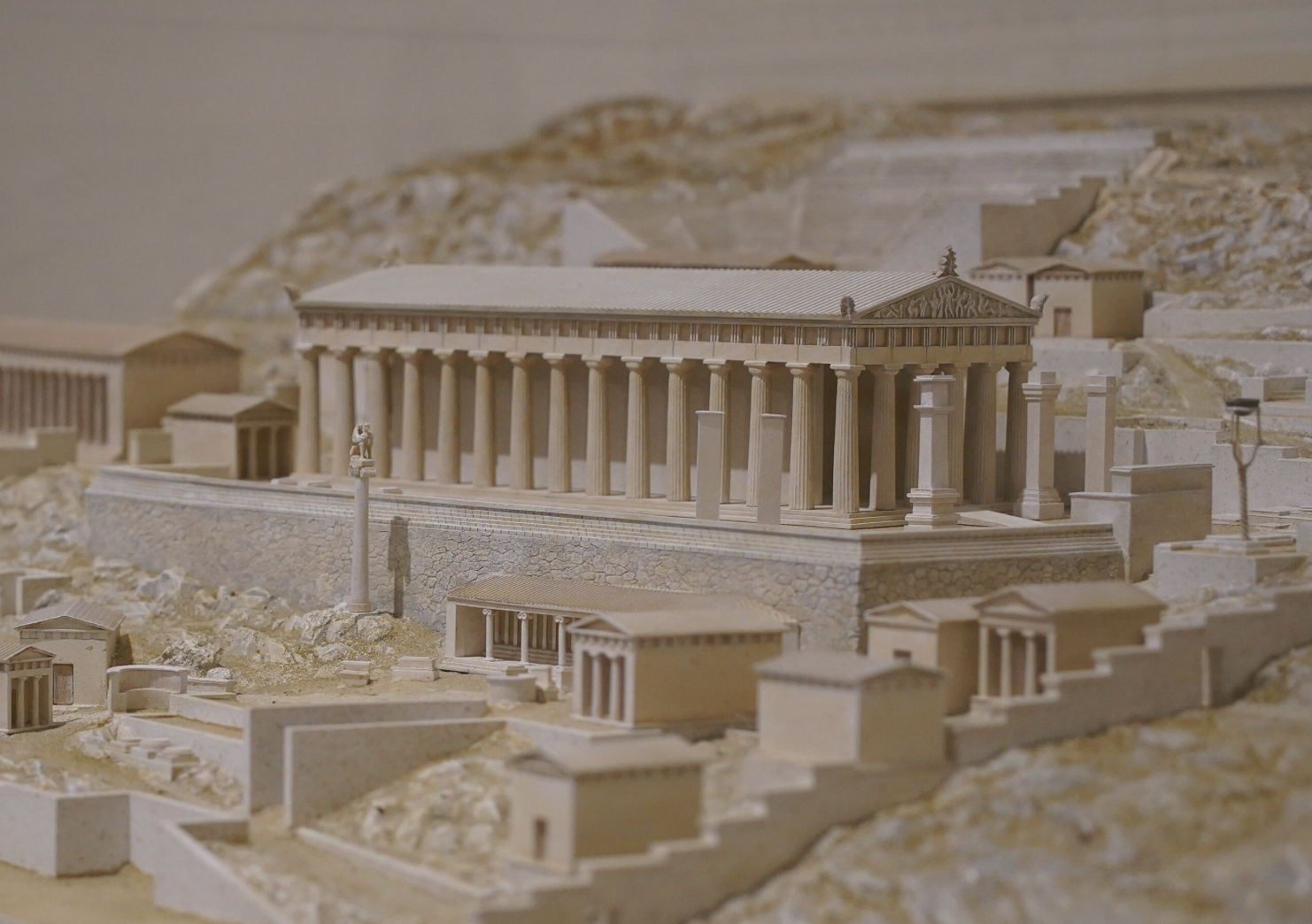
The Temple of Apollo Delphi
Ias the most important religious site in ancient Greece.
It is considered the literal center of the world.
The Hallucinogenic Oracle, Pythia, a high priestess known as the Oracle of Delphi sat over a deep crack in the earth inside the temple. Scientists discover this crack leaked natural ethylene gas. Inhaling the sweet fumes put the priestess into a trance, allowing her to speak prophecies from Apollo.
According to myth, Zeus releases two eagles from opposite ends of the earth, and they met right here.
To mark the spot, the temple houses the Omphalos, a sacred stone shaped like a beehive that symbolizes the navel of the world.
The entrance to the sanctuary is carved with famous pieces of advice from the Seven Sages of Greece. The most famous phrases are:
Know Thyself
and
Nothing in Excess
More see Wikipedia.org
The Temple of Apollo Epicurius - Built 420 BCE
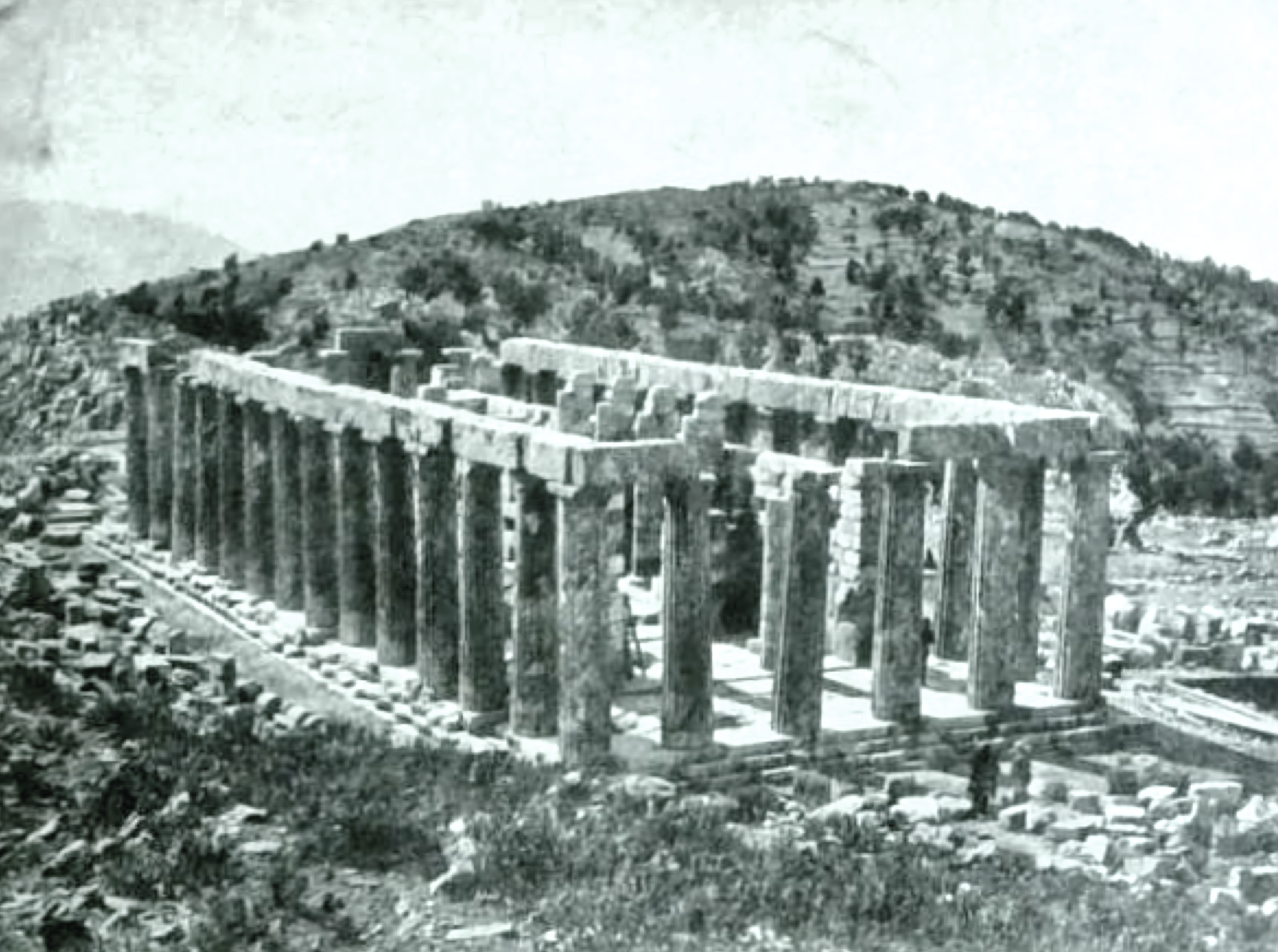
The Temple of Apollo Epicurius
The Temple of Apollo Epicurius is located in the Peloponnese mountains at Bassae, Greece, and is attributed to Iktinos, the same architect who designed the Parthenon in Athens.
The temple is erected by the people of Phigaleia to honor Apollo the "Helper," supposedly in gratitude for his aid in protecting them from a plague.
It is one of the best-preserved monuments its time, hence it has immense historical and architectural significance. Such as all three ancient Greek architectural orders – Doric, Ionic and Corinthian – are found together.
It is a protected heritage site.
Temple of Concordia located in Sicily, Italy
Built 440 BCE - 430 BCE
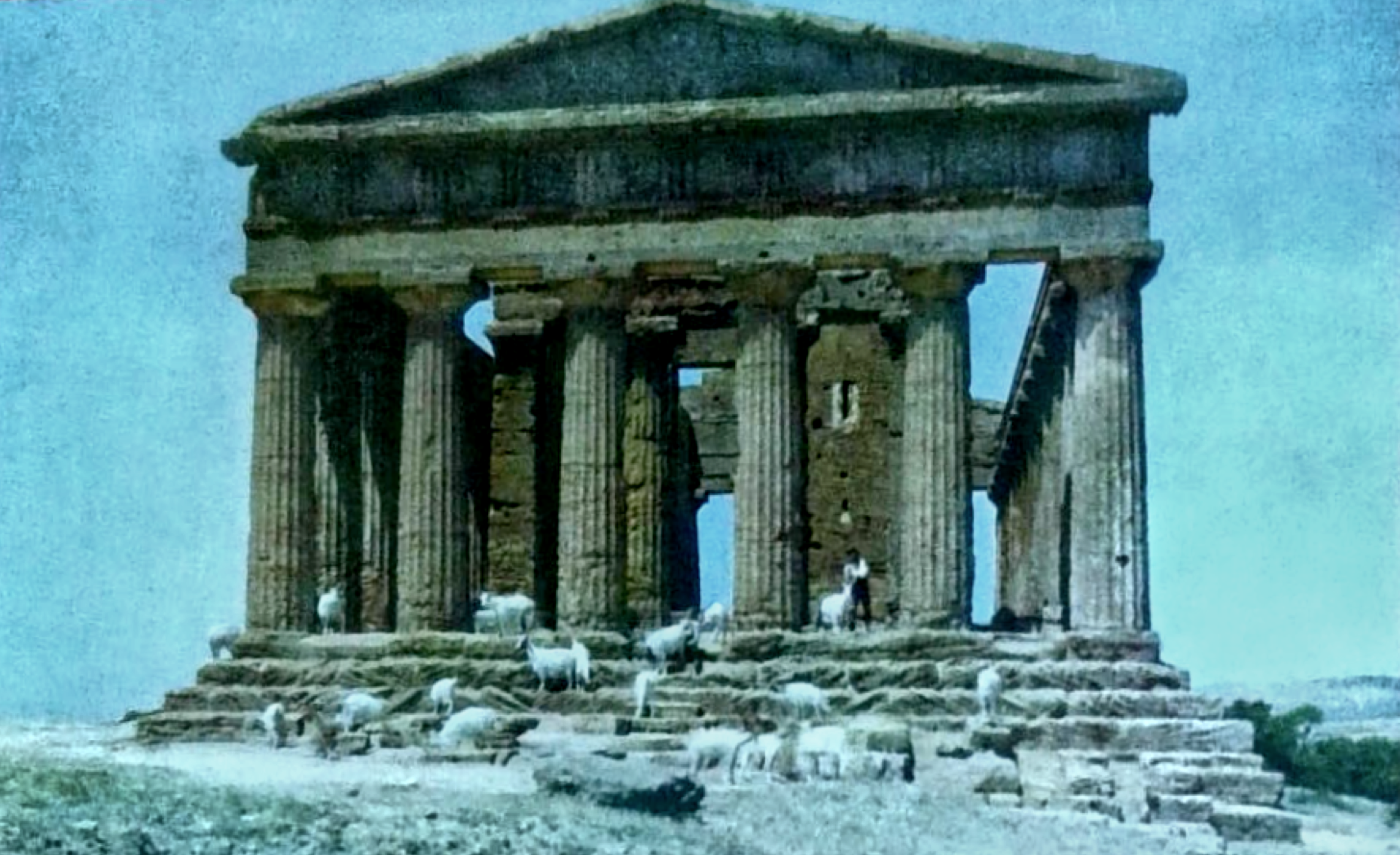
Temple of Concordia
Temple of Concordia is inside a famous archaeological park called the Valley of the Temples.
It is built by ancient Greek colonists who inhabited the ancient city of Akragas (later Girgenti, and now Agrigento) between 440 BCE and 430 BCE.
It and the Parthenon in Athens ,are considered the best preserved Doric-style Greek temple son Earth. Almost all of its original columns, crossbeams, and triangular peaks are completely intact.
It is saved in the 6th century CE, by athe Christian bishop Gregory II who converted the pagan temple into a Christian cathedral. To do this, workers filled in the gaps between the columns with walls and carved arches into the sides. This structurally reinforced the building and saved it from being torn down for spare stone.
The templeias built on a very solid, natural rocky plateau. This acts like a giant shock absorber, which has allowed the heavy stone structure to survive massive earthquakes that flattened other temples nearby.
Acropolis Athens Greece - Built 447 BCE

Acropolis Athens Greece
The Acropolis was primarily built in between 447 and 432 BCE.
The Golden Age of Athens.
It is constructed under the leadership of the statesman Pericles to celebrate victory over Persian invaders, honor the patron goddess Athena, and showcase the glory and wealth of the Athenian democratic empire.
The word Acropolis means high city in Greek.
It is built on a flat-topped rock rising 150 meters (490 feet) above Athens. This allows ancient people to easily spot attackers and defend the city.
It has no straight lines. The main temple looks perfectly straight, but it is an optical illusion!
The columns tilt slightly inward and swell in the middle. The floor also curves upward.
Ancient builders did this because completely straight lines look curved and weak to the human eye.
Today we see white marble, but ancient temples are painted in bright shades of blue, red, and gold!
Dionysus Theater - Built 534 BCE
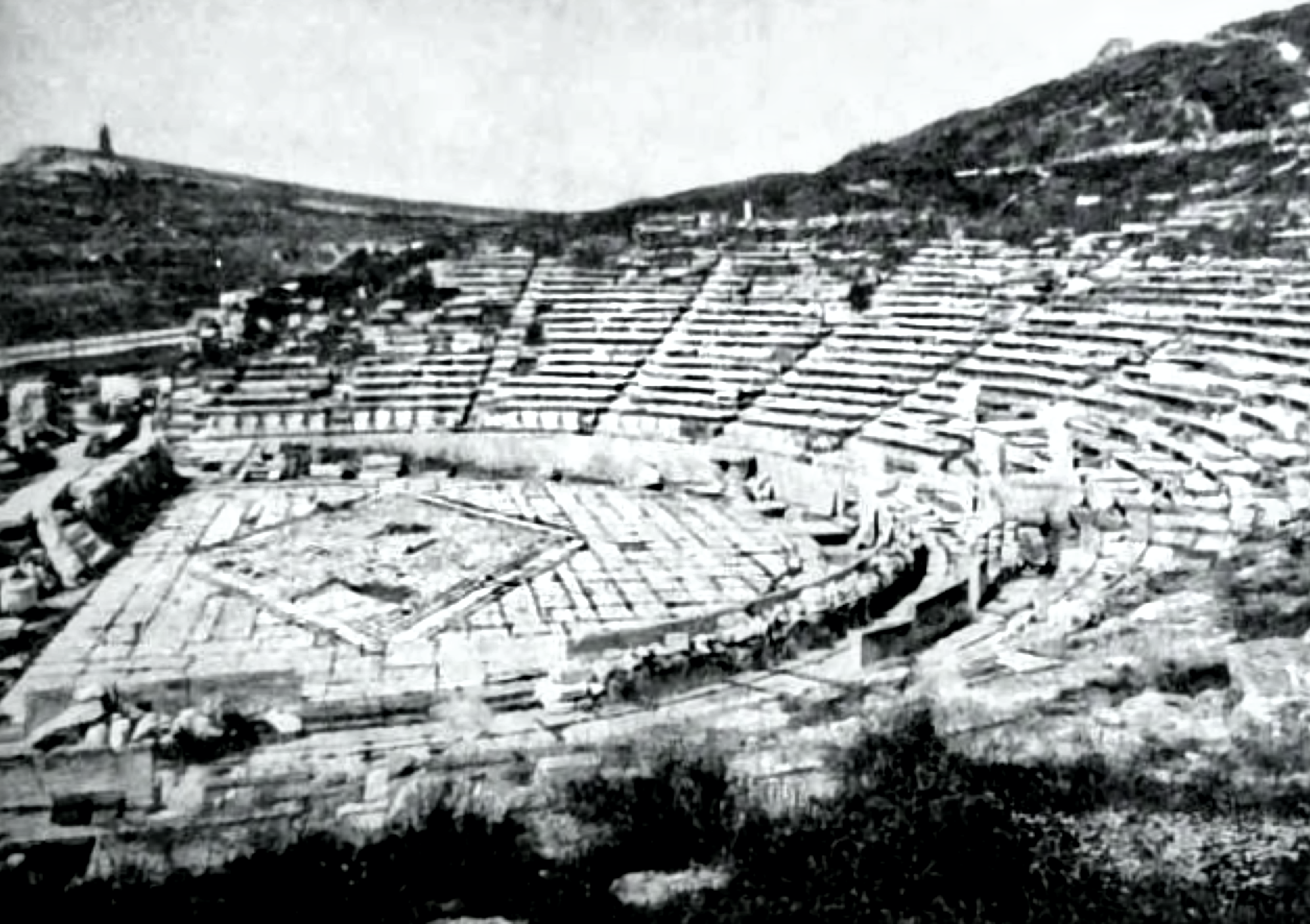
Dionysus Theater
Dionysus Theater is on the southern slope of the Acropolis hill in Athens, Greece.
It is built inside a sacred sanctuary dedicated to Dionysus, the Greek god of wine and theater.
Today, it is celebrated as the birthplace of Western drama.
In the 6th Century BC Peisistratus openes the theater as a simple, circular dirt floor (orchestra) with wooden benches for the audience.
In the 5th Century BC Pericles upgrades to improve its sound quality. The stage where Sophocles and Euripides premiere their plays.
In the 4th Century BC the old wooden benches are replaced with limestone and marble tiers that could hold up to 17,000 spectators.
Gate of Ishtar - Built 575 BCE
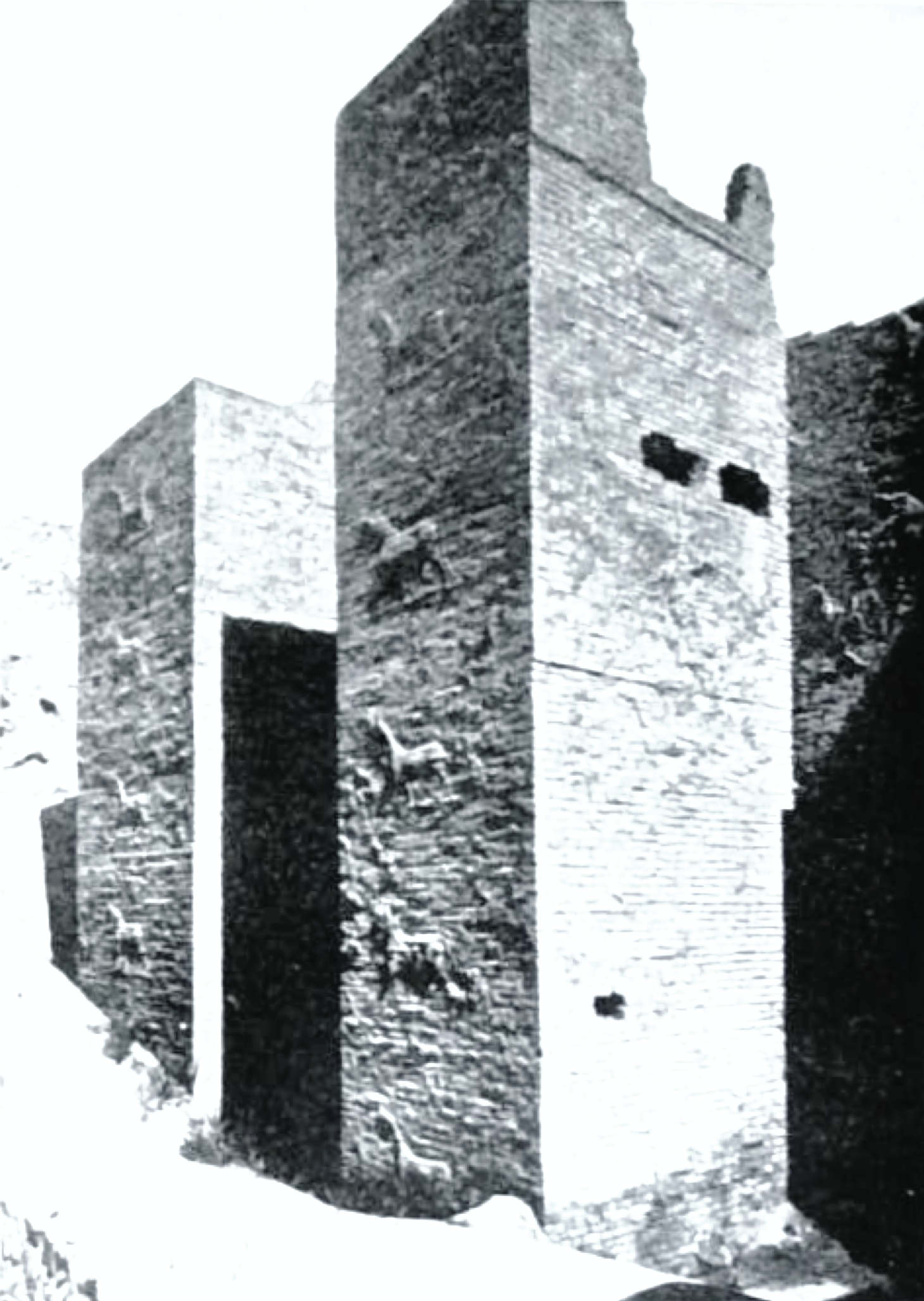
The Ishtar Gate
The Ishtar Gate is the grand northern entrance to the ancient city of Babylon, located in present-day Iraq.
It is constructed in 575 BCE by order of King Nebuchadnezzar II, who rules the Neo-Babylonian Empire at the height of power. He dedicated the magnificent structure to Ishtar, the Babylonian goddess of love, fertility, and war.
It is the eighth fortified gate to the inner city and is used during major religious festivals.
Great wall of China - Built 700 BCE.
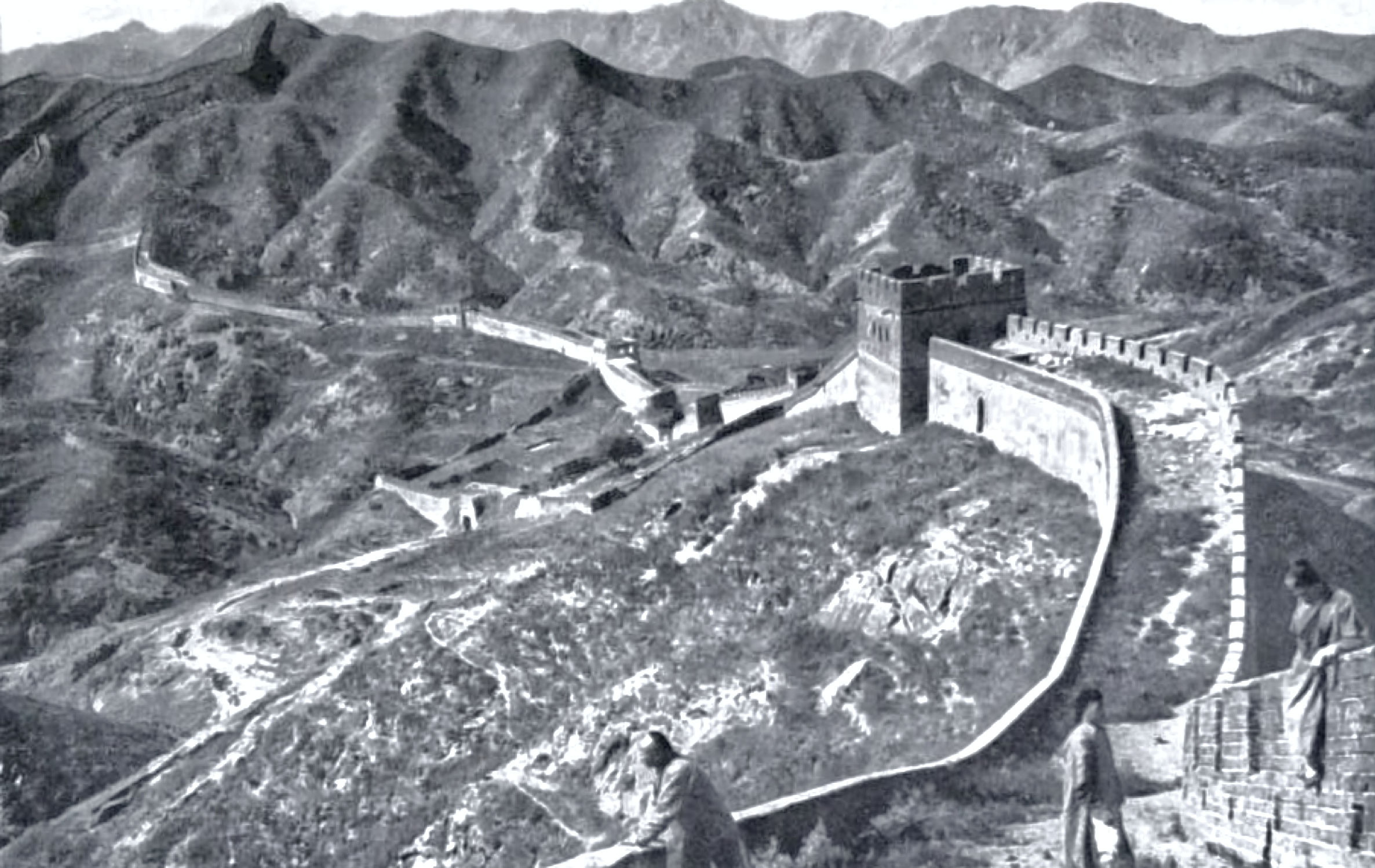
The Great wall
The Great wall is built around the 7th century BCE. During this time, local leaders built individual dirt walls for protection.
The First Unified Wall around 221 BCE became one big wall under Emperor Qin Shi Huang. In 221 BCE, he ordered his army to tear down the walls dividing the kingdoms.Then commanded them to link the northern border walls together to keep out nomadic invaders.
The Stone Wall is constructed from 1368–1640. by the Ming Dynasty. The Ming emperors spent nearly 200 years rebuilding the ancient dirt walls into massive stone fortifications complete with grand watchtowers and fortresses that made it a vast integrated military defense system.
It is the longest human-made structure in the world, stretching over 13,000 miles. towers, troop barracks, and signaling capabilities.
Assyrian Temple - Built 721 - 705 BCE
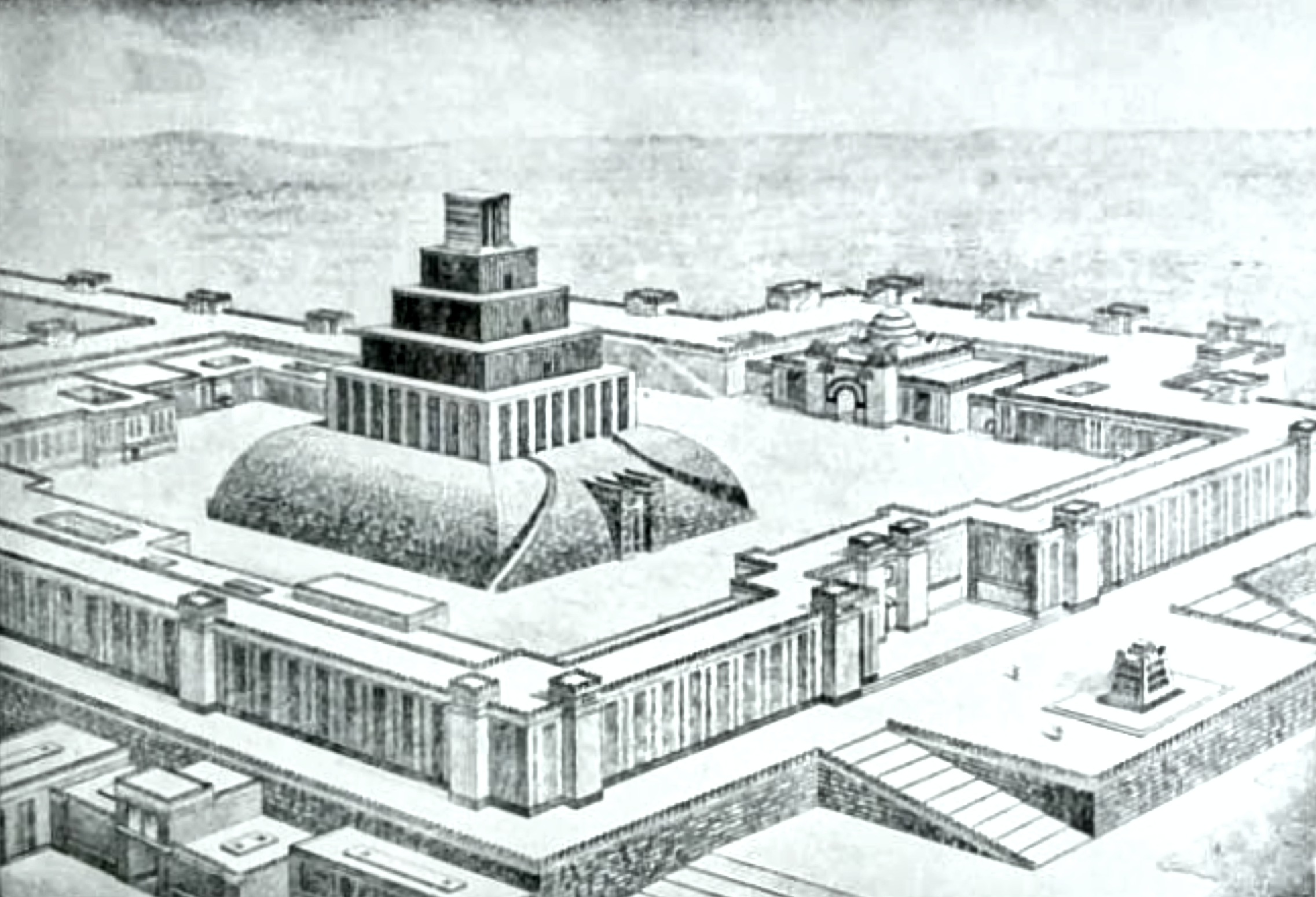
Assyrian Temple
The image depicts a reconstruction drawing of the famous Ziggurat of Dur-Sharrukin (modern-day Khorsabad, Iraq), built by the Neo-Assyrian King Sargon II between 721–705 BEC.
Source The University Prints" O series
The Ziggurat of Dur-Sharrukin (modern-day Khorsabad, Iraq) is one of the most famous and unique structural designs in ancient Mesopotamian history. King Sargon II built it as the crown jewel of his brand-new capital city, but it was largely abandoned after his death in battle.
Dolmen of Menga, Megalith in Spain - Built - 3700 BCE
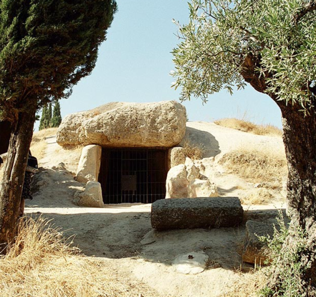
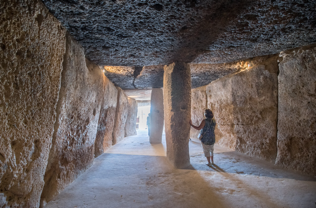
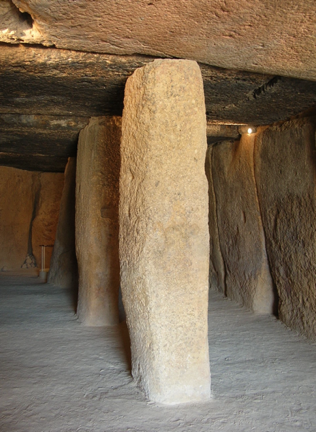
Dolmen of Menga
Dolmen is a single chamber megalithic monument and tomb on the Iberian Peninsula of Spain.
- The construction indicates they are very knowledgeable; as they seem to understand rock properties of friction, load bering capacity, mass, geometry, location, and how to move and construct with 32 limestone rocks weighing 1140 tons.
- Orienting the 32 stones, setting them into bedrock for stability, so they could support the ceiling. The ceiling stone being the largest at 150 tons with a convex shape to distribute its load to the sides. The first known use of the principle of an arch.
- The whole structure is situated precisely so that at the summer solstice the sunlight at daybreak illuminates the burial chamber. When the grave is opened and examined in the 19th century, archaeologists found skeletons of several hundred people inside.
Use of architecture to create feelings - Panic of 1857
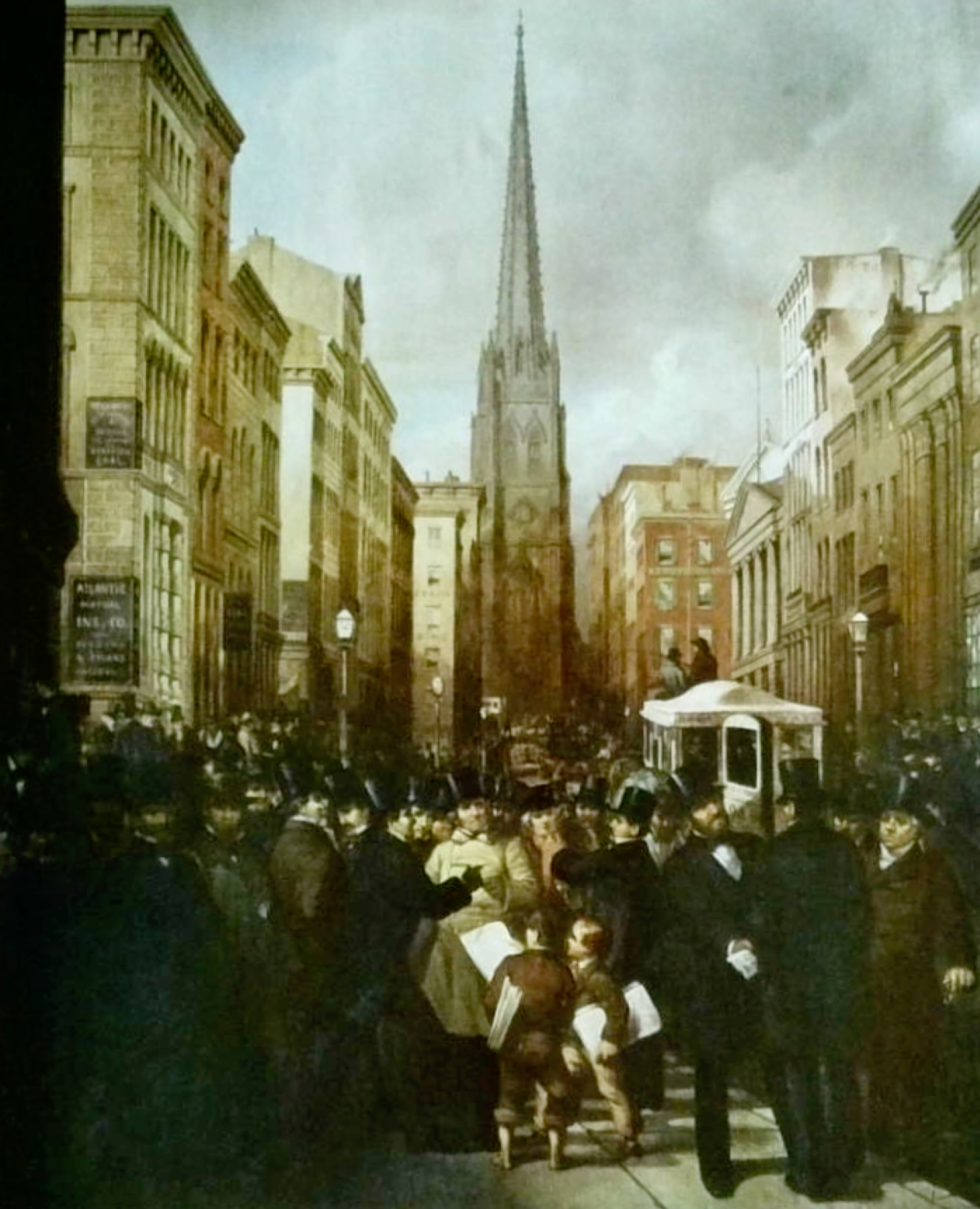
Power of architecture in illustrations
1857 oil painting titled Wall Street, Half Past Two, October 13, 1857.
It is painted together by two artists, James H. Cafferty and Charles G. Rosenberg
The painting captures the height of The Panic of 1857, one of the first major global economic crashes in history.
The archetecture represents historical details in plain sight.
The Trinity Church is the massive building towering over the center of the image. Completed 11 years earlier in 1846, its Gothic spire is the tallest structure in New York City. It stands like a calm, solid rock, contrasting heavily with the chaotic, panicked crowd of businessmen rushing around beneath it.
The view looks down Wall Street from William Street. On this afternoon at half-past two o'clock the banks along these very blocks announce they are suspending specie payments. This meant they ran out of gold and silver coins and refused to let people withdraw their cash.
These buildings represent the literal financial vaults that had just locked the public out.
More about the panic of 1857
Some more ancient wonders ...
The Colosseum is built between 72 AD 72 and 82 by Emperor Vespasian and completed by his son, Emperor Titus in Rome, Italy. It is the largest ancient amphitheater ever built, capable of holding an estimated 50,000 to 80,000 spectators. It features a complex subterranean system beneath the arena floor (the hypogeum) used to hoist gladiators, animals, and elaborate stage sets.
Chichen Itza is built in the 5th to 13th Century AD by the Maya civilization on the Yucatán Peninsula, Mexico. The site features the Temple of Kukulcán (El Castillo), a massive pyramid demonstrating extraordinary astronomical precision when during the spring and autumn equinoxes, the setting sun casts shadows on the pyramid that resemble a serpent slithering down the northern staircase.
Machu Picchu is built in the mid-15th Century AD by the Inca Empire, under Emperor Pachacuti in Urubamba Province, Peru. Located 7,970 feet up in the Andes Mountains, this Lost City is entirely built of with stone blocks fitted so perfectly together that a credit card cannot fit between them. It is widely believed to be an estate for Inca nobility or a sacred ceremonial site.
Christ the Redeemer is built in Rio de Janeiro, Brazil in 1926 to 1931. It is designed by Brazilian engineer Heitor da Silva Costa and sculpted by French artist Paul Landowski. Standing atop the 2,300-foot Corcovado mountain, this monumental Art Deco statue of Jesus Christ is the largest of its kind in the world. It stands 98 feet tall, with arms stretching 92 feet wide, and is made entirely of reinforced concrete and a mosaic of thousands of soapstone triangles.
Great Pyramid of Giza
Hanging Gardens of Babylon
Statue of Zeus at Olympia
Temple of Artemis at Ephesus
Mausoleum at Halicarnassus
Colossus of Rhodes
Lighthouse of Alexandria
Recent Marvels
The Beipanjiang Bridge sits 565 metres above the canyon floor deeper than the Empire State Building is tall, and until 2025, it was the highest bridge on Earth. … Watch how it is constructed.
End of the Trail - Built 1915
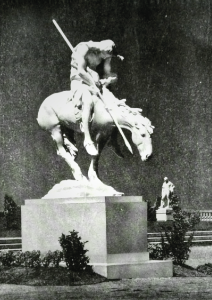
James Earle Fraser creates his End of the Trail statue for the 1915 Panama-Pacific International Exposition in San Francisco.
Since it was an 18-foot plaster version it is moved to Oklahoma for preservation.
It is replaced by a Bronze that is there today.